


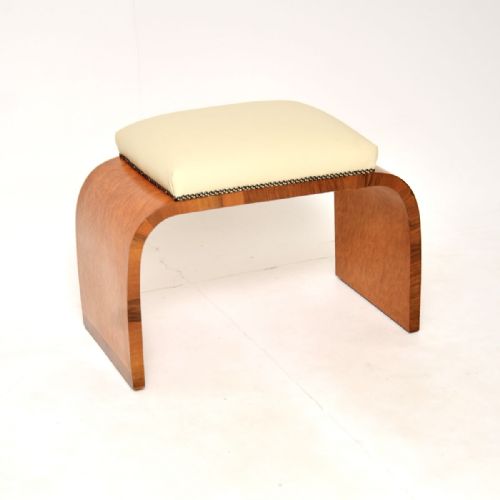

Curved Dressing Table
A curved dressing table brings geometric flow to a bedroom, combining mirrored surfaces with fitted drawers for a practical centrepiece.
Curved Dressing Table
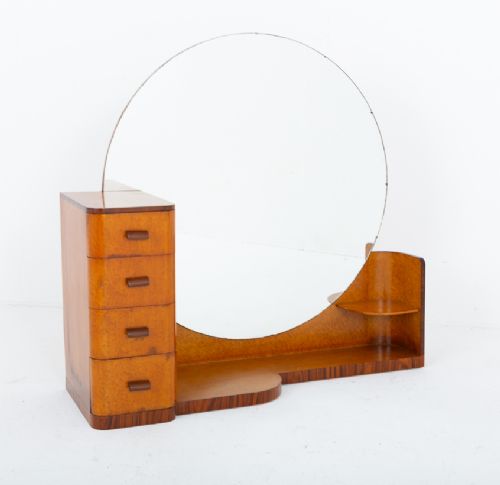
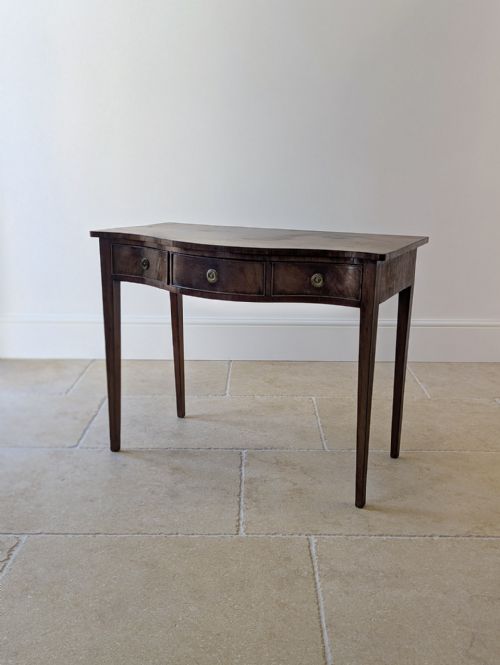
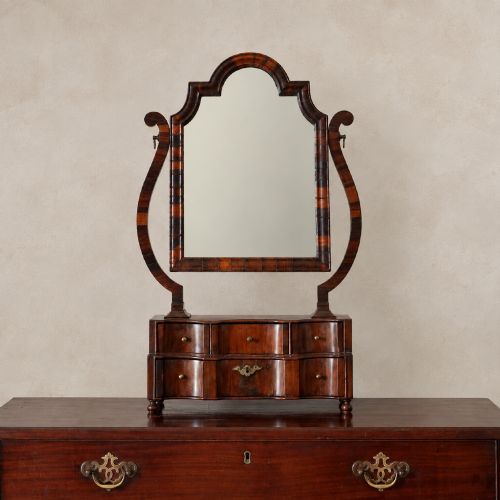
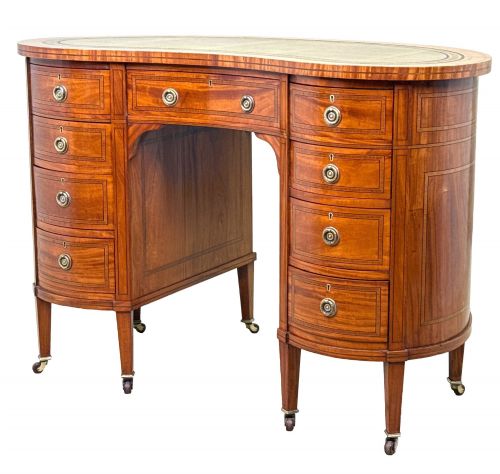
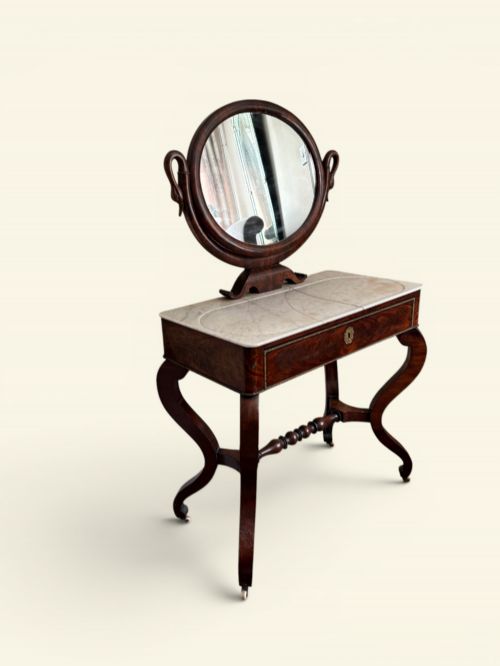
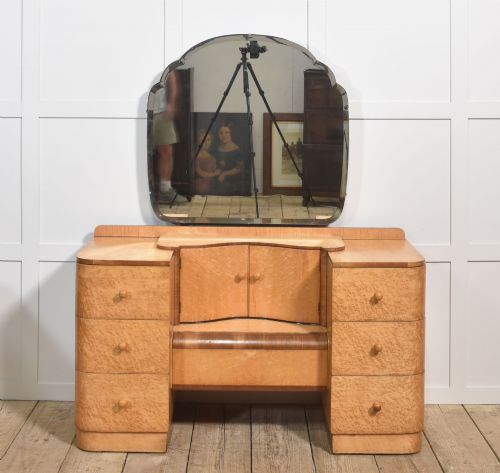
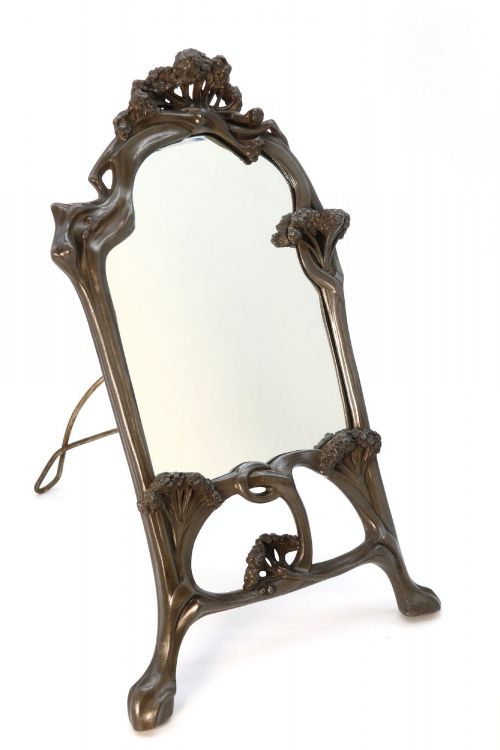
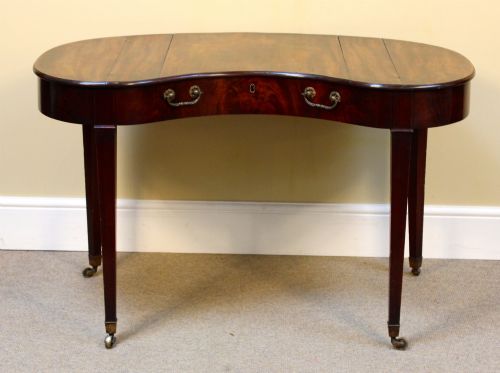
A curved dressing table is designed with serpentine, kidney-shaped, or bow-fronted outlines that soften the rigid corners of a room. These vanity pieces incorporate pivoted or fixed mirror glass alongside usable surface space for daily grooming.
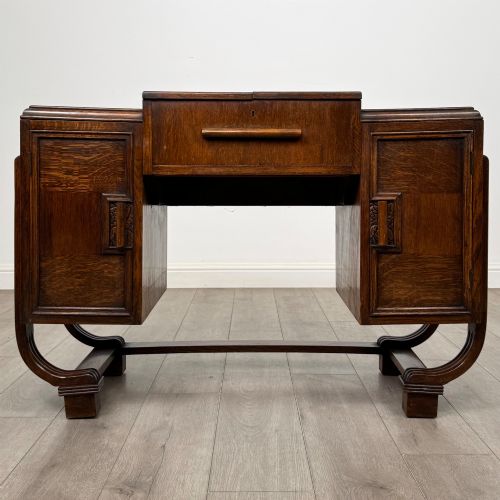
The versions most frequently met on this page belong to the Art Deco period, rendered in figured walnut, maple, and sycamore. Alongside these twentieth-century pieces, earlier Georgian, Victorian, and Edwardian examples appear in mahogany and satinwood.
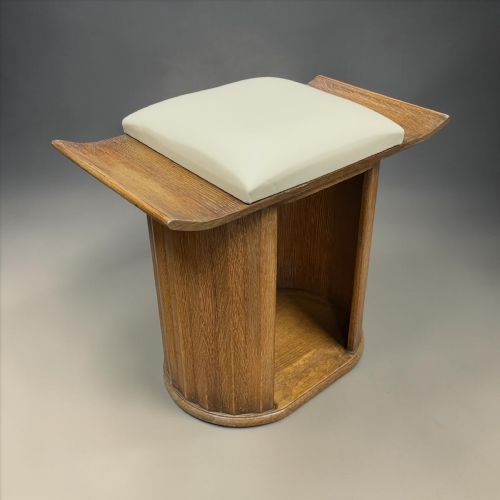
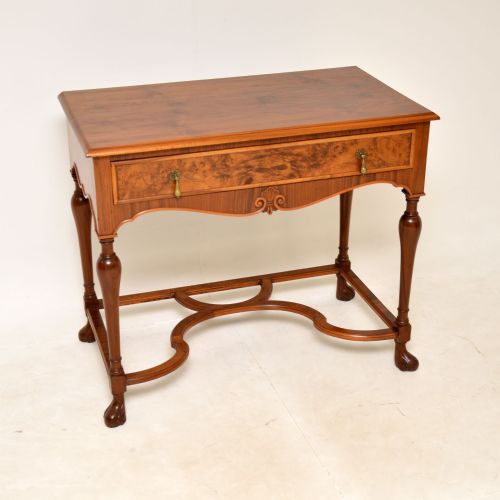
Makers and designers also produced matching stools upholstered in leather or patterned fabric to complete the vanity set. Buyers encounter companion writing tables, side tables, and console tables that share the same curved silhouette.
How they were made
Cabinet makers utilised choice timbers such as burr walnut, mahogany, satinwood, and maple, frequently applying veneers to accentuate the natural grain across sweeping radiuses. Solid hardwoods formed the structural frames, legs, and drawer linings.
Curved elements required precise steam bending or multi-ply laminate construction to achieve smooth, continuous arcs without visible joints. Glass was bevelled for mirrors and inset tops, while metal accents of brass, gilt bronze, and pewter appeared as handles and decorative mounts.
Several dressing tables arrive paired with flowery new top covers on their stools, proving that comfort triumphs over historical strictness.
What varies in quality
The standard of timber selection and veneer matching defines the visual weight of a piece, particularly where grain patterns flow symmetrically across curved drawer fronts. Superior execution ensures that doors and drawers operate smoothly within radial housings without binding.
The integrity of the original mirror glass and the precision of the joinery at complex structural angles indicate the maker's skill. Finer examples retain integrated matching stools and original hardware rather than replaced mounts.
Louis Auguste Moreau·Maurice Adams·Harry and Lou Epstein
The Curved Dressing Table Glossary
- Serpentine
- A shape featuring a convex centre flanked by concave curves, creating an undulating front edge. This contour requires advanced woodworking skill to execute cleanly on solid timber or veneer.
- Kidney-shaped
- A curved outline resembling a bean, historically favoured for writing tables and vanity desks to allow the user to sit closer to the centre. It presents a smooth, unbroken perimeter.
- Bow front
- A convex, outwardly curved front profile popular in Georgian and later cabinet making. It softens rectangular furniture forms.
- Burr walnut
- A highly prized wood timber taken from the growth growths of the walnut tree, showing intricate swirling patterns. It is typically applied as a decorative veneer on statement furniture.
- Satinwood
- A durable hardwood yielding a lustrous, pale golden yellow sheen, often used in Georgian and Edwardian stringing or marquetry. It takes a fine polished finish.
Curved Dressing Table: Frequently Asked Questions
How do I style a curved dressing table?
Place the table against a flat wall where its rounded profile can contrast with surrounding architecture. Keep tabletop clutter minimal to let the grain and form remain visible.
Position a matching low stool underneath when not in use. Ensure adequate lighting from adjacent wall sconces or natural sources to complement the mirror glass.
Are these tables suitable for modern bedrooms?
Art Deco and mid-century curved designs integrate well into contemporary spaces due to their clean lines and warm wood tones. Their organic shapes soften minimalist interiors.
Compact footprints allow them to function effectively in smaller modern bedrooms as both a vanity and a compact desk.
How do I care for walnut veneer surfaces?
Dust regularly with a dry, soft cloth and avoid commercial silicone polishes that build up over time. Use wax sparingly to maintain the natural sheen of the wood.
Keep pieces away from direct heat sources and strong sunlight to prevent the veneers from drying out or fading unevenly.
What is the difference between Georgian and Art Deco models?
Georgian versions rely on solid mahogany, subtle bow fronts, and classical proportions intended for formal dressing rooms. Their design emphasises understated elegance and traditional joinery.
Art Deco examples embrace bold curves in burr walnut and maple, often incorporating built-in mirrors and modernist geometric geometry for a dramatic visual impact.