

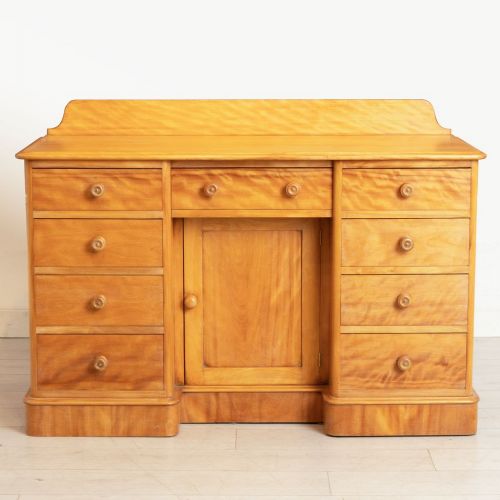


Blonde Wood Vanity
A blonde wood vanity brings bright grain and clean lines to a bedroom, offering a practical surface for morning routines alongside striking period design.
Blonde Wood Vanity
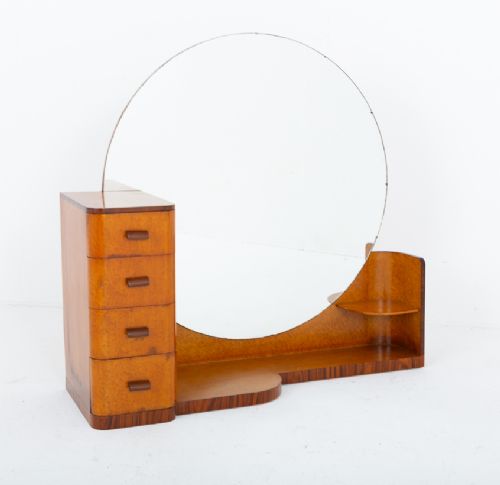
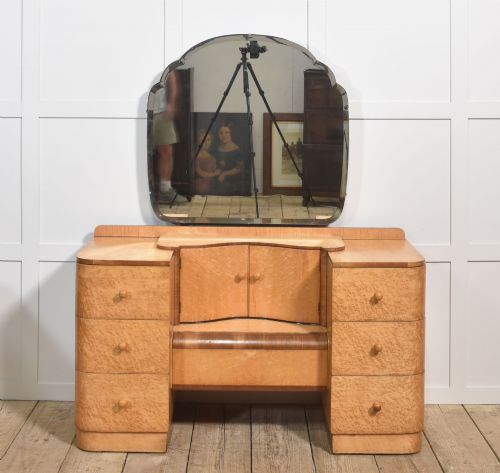
Makers and workshops utilised distinctive light timbers such as birds-eye maple, satin birch, sycamore, and satinwood to create these surfaces. Pieces range from straightforward kneehole desks and dressing mirrors to elaborate modernist designs complete with integrated mirrors.
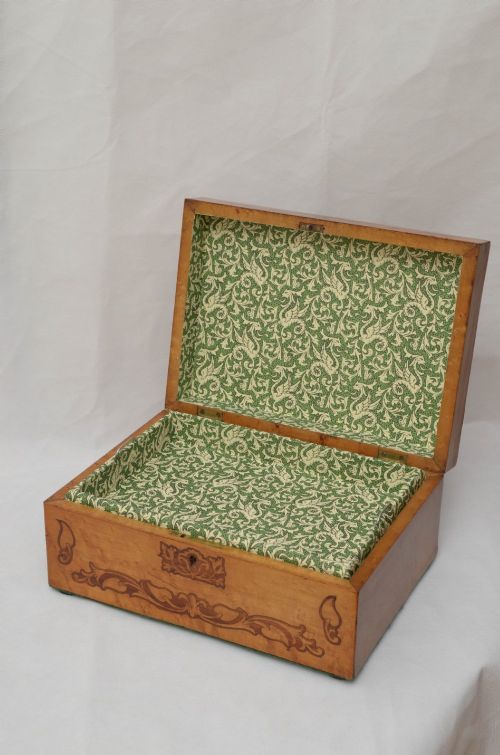
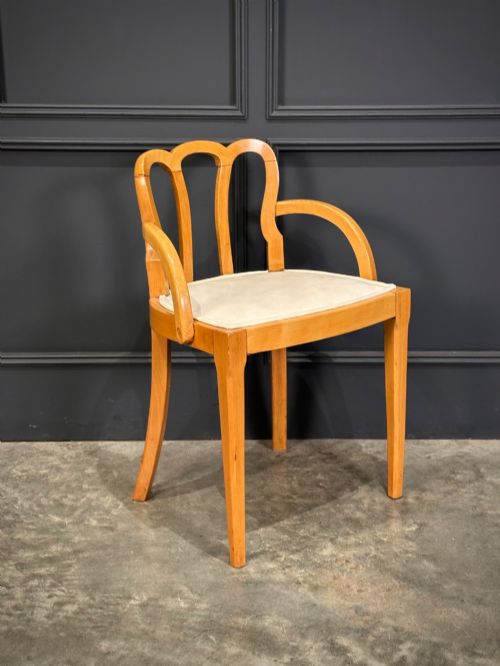
Buyers will encounter various associated furnishings within this grouping, including bedroom chairs, stools with fabric covers, writing tables, and jewellery boxes. Swedish Biedermeier and French styles sit alongside English pieces, showing how diverse light wood cabinet-making became across Europe.
Materials and construction methods
Cabinet-makers relied on figured light veneers like birds-eye maple and burr maple applied to carcases, highlighting natural patterns in the grain. Satin birch and satinwood added a pale, shimmering quality to 19th-century and Art Deco dressing furniture.
Makers incorporated brass hardware, mirror glass, and glass panels to complement the pale wooden frames. Upholstered elements on stools and bedroom chairs utilised fabric and newer top covers to complete the seating pieces.
Distinguishing quality in light wood pieces
The choice of veneer figures and timber selection determines the visual impact of each dressing table or desk. Highly figured birds-eye maple and finely matched burr maple separate standard examples from exceptional ones.
Attribution to known workshops or specific designers elevates certain Art Deco and period items. Integration of original mirrors, matching stools, and precise inlay work such as tulipwood further define the upper tier of quality.
Harry and Lou Epstein·Betty Joel·Heals·John Taylor of Edinburgh
The Blonde Wood Vanity Glossary
- Birds Eye Maple
- A figure in maple wood resembling tiny swirling eyes caused by local depressions in the annual rings. It creates a highly decorative mottled surface favoured in Victorian and Art Deco furniture.
- Satin Birch
- A pale, lustrous timber derived from birch trees, possessing a natural golden sheen. It was widely used by 19th-century makers for desks and dressing tables.
- Biedermeier
- A Central European style dating from the 19th century emphasising clean lines and utility over excessive ornament. Swedish interpretations in satin birch appear frequently among light wood seating.
- Art Deco
- A design movement from the 1920s and 1930s characterised by streamlined geometric forms and modern materials. Dressing tables from this period often incorporate bold curved mirrors and striking veneers.
- Kneehole Desk
- A freestanding desk or dressing table featuring a central recess for the legs flanked by pedestals of drawers. Victorian examples in satin birch demonstrate this functional form.
Blonde Wood Vanity: Frequently Asked Questions
How do I care for blonde wood furniture?
Keep light wooden surfaces away from direct sunlight to prevent the pale grain from darkening or fading over time. Dust gently with a dry cloth and avoid harsh chemical polishes that can damage historic finishes.
Ensure spills are wiped away immediately, particularly on dressing tables where cosmetics or perfumes might sit. Using coasters and protective mats preserves the delicate satin birch and maple veneers.
What periods do these vanities come from?
The pieces span from the Georgian period and the 19th century through to the 1920s and 1930s. Victorian examples often feature satin birch or birds-eye maple with traditional joinery.
Later 20th-century items lean heavily into Art Deco design, showcasing streamlined silhouettes and modernist geometry. Swedish Biedermeier examples from the 1880s represent earlier continental pale wood traditions.
Are mirrors usually original to the dressing tables?
Many dressing tables retain their original pivoting or fixed mirrors, particularly the Art Deco and 1930s examples designed as unified suites. Examining the silvering on the glass and the matching timber frame helps determine if the mirror belongs.
Georgian and Victorian pieces occasionally lost their original dressing mirrors over the decades, leading to later replacements. Checking the mounting points and wood ageing provides clues to their authenticity.
Can I use a vanity desk as a workspace?
Many dressing tables and kneehole desks offer ample surface area and sturdy construction suited for writing or light computer work. The inclusion of drawers in pieces like the Victorian satin birch desks makes them practical for daily use.
Consider the knee clearance and height of the matching stool or chair to ensure comfortable seating over longer periods. Preserving delicate antique writing surfaces may require a protective leather blotter.