

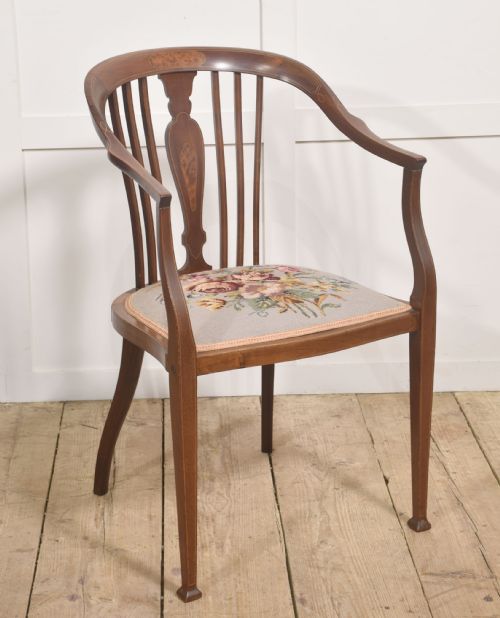


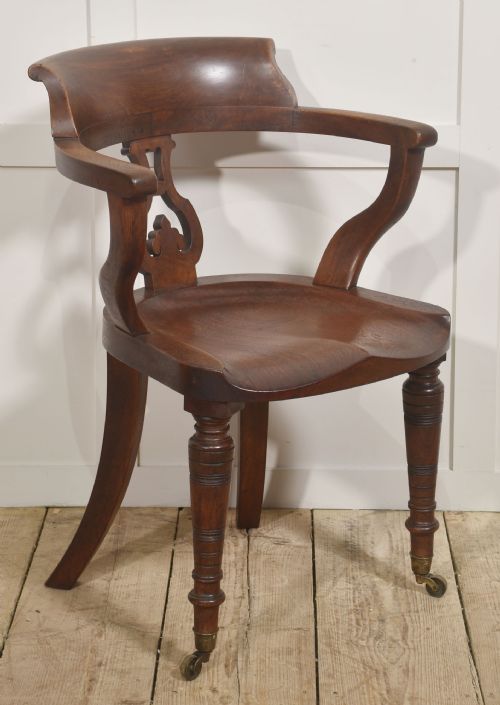

Curved Back Desk Armchair
A curved back desk armchair provides firm support for long hours of writing, bringing sturdy timber frames and enveloping backs to any study.
Curved Back Desk Armchair
A curved back desk armchair serves those who need a practical seat for working at a table or writing bureau. Buyers hunting for a curved back desk armchair will frequently encounter Victorian and Edwardian examples built with solid timber frames and supportive enclosed backs.
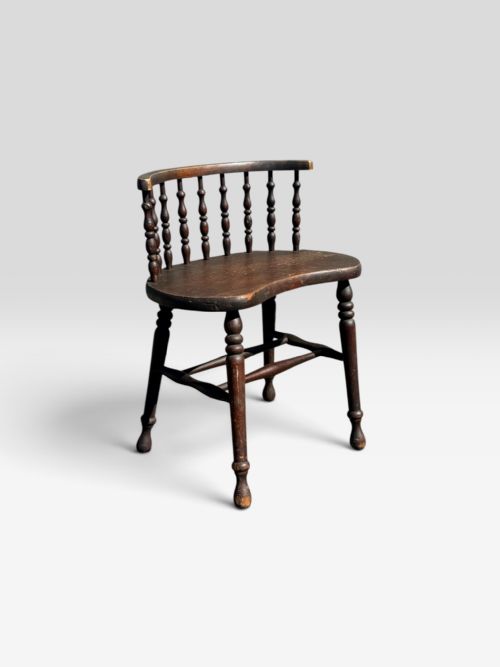
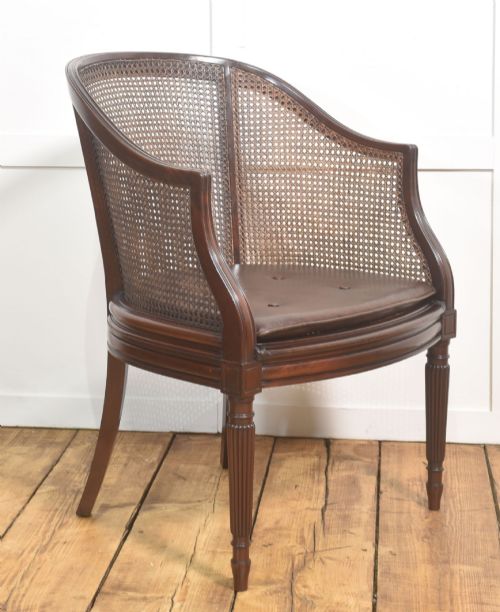
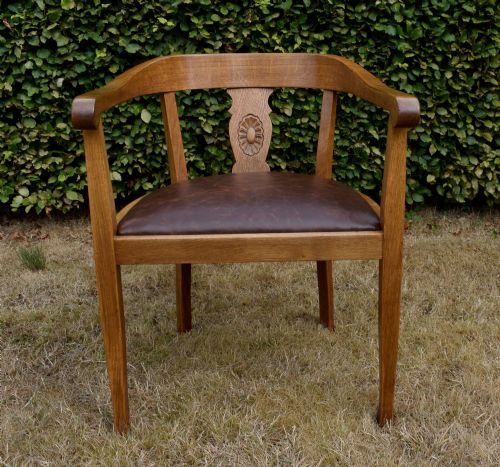
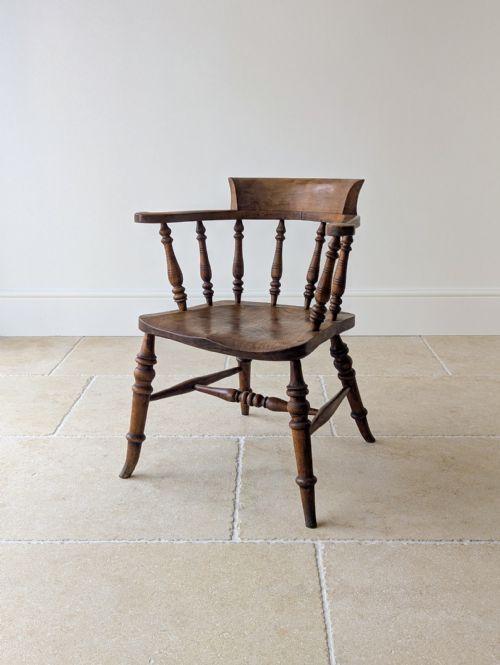
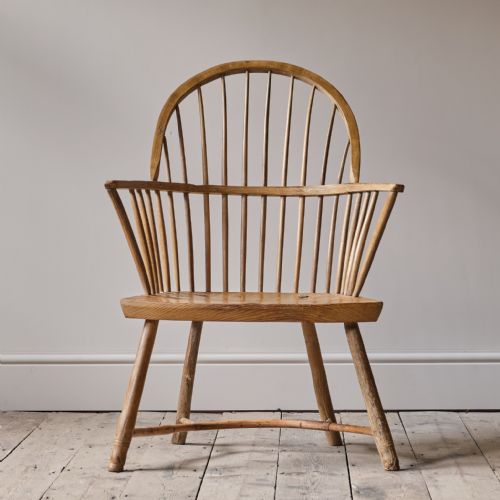
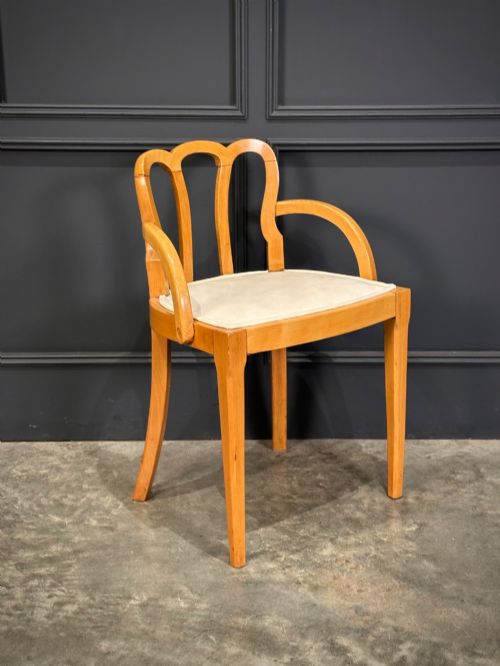
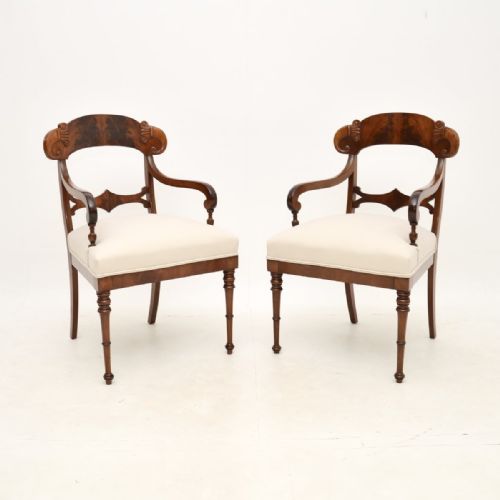
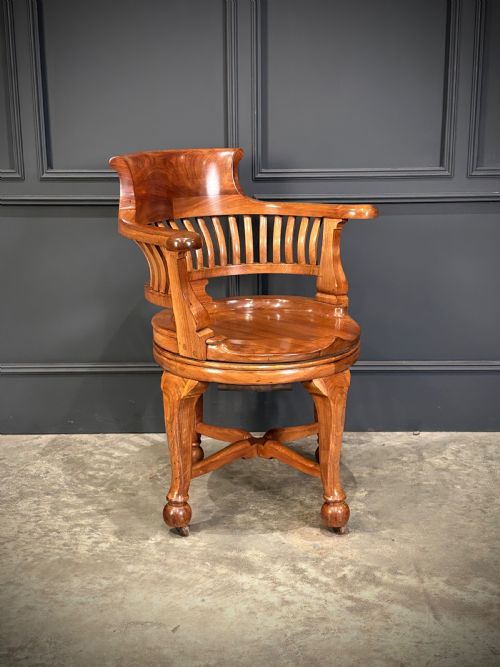
The selection ranges from traditional captain's chairs and Windsor forms in elm or yew to mahogany tub chairs and oak revolving office seats. These pieces originate from various periods including the nineteenth century, the Edwardian era, and the early twentieth century.
Makers often shaped the timber into continuous loops or hoop backs designed to cradle the sitter comfortably during tasks. Such designs combine domestic comfort with functional workspace requirements without sacrificing traditional cabinet-making standards.
Materials and construction methods
Cabinet-makers relied on robust native and imported timbers like mahogany, oak, elm, beech, and yew to construct durable frames. These woods were chosen for their grain strength, allowing craftsmen to steam-bend or carve continuous curved arm rails and backrests.
Joinery methods involved traditional mortise and tenon joints, spindle turnings, and occasional brass fittings or swivel mechanisms on later office models. Seat pads frequently incorporated leather, fabric, or oil cloth swabs supported by cane or solid wood bases.
Design influences span the Victorian era, Arts and Crafts movement, Regency period, and Aesthetic Movement.
What defines superior quality
Quality rests upon the integrity of the timber framing and the fluidity of the curved back construction. Chairs featuring well-figured mahogany, burr elm, or dense yew wood demonstrate superior material selection by the maker.
The balance between comfortable proportions and solid joinery distinguishes finer pieces from ordinary utility seating. Original swivel mechanisms, intact cane work, and minimal structural alterations also elevate the standing of an individual armchair.
Edward William Godwin·Benjamin Gilling
The Curved Back Desk Armchair Glossary
- Captain's chair
- A sturdy wooden armchair featuring a low curved back rail supported by spindles above a solid saddle seat. These chairs were designed for stability and long periods of administrative work.
- Tub armchair
- An upholstered or cane-sided chair where the back rail curves continuously around to form enclosed arms. This shape offers a secure, enveloping seat suitable for desks and studies.
- Windsor chair
- A traditional chair constructed with a solid wooden seat into which the legs and back spindles are separately tenoned. They often feature distinctive bentwood bows forming the backrest.
- Smoker's bow
- A low-backed Windsor-style armchair with a continuous curved arm rail, traditionally used in smoking rooms and offices. They provide robust everyday seating with generous proportions.
- Swivel mechanism
- An under-seat hardware assembly allowing the chair to rotate on a central axis. Found on later nineteenth and early twentieth-century office models.
Curved Back Desk Armchair: Frequently Asked Questions
How do I choose the right curved back desk armchair for my workspace?
Consider the height of your desk and the amount of legroom required beneath the writing surface. Swivel models offer mobility, while traditional wooden captain's chairs provide a stationary, upright posture.
Check the dimensions of the curved back against your seating preferences to ensure adequate lumbar support. Different eras offer varied arm heights, so measuring your table clearance prevents clearance issues.
Are these chairs comfortable for daily working?
Many examples are designed specifically for long administrative tasks, featuring supportive curved backrests that cradle the torso. Solid wooden seats or upholstered pads provide a firm foundation for extended use.
Some period chairs include leather or oil cloth cushions for added padding. You can also place loose squabs on wooden bases without altering the historic frame.
How do I tell Victorian chairs from Edwardian ones?
Victorian examples often display heavier proportions, darker mahogany or walnut timbers, and robust turnings. They frequently include captain's chairs and swivel designs intended for commercial or domestic studies.
Edwardian pieces tend to show lighter construction, sometimes incorporating satinwood inlay, cane panels, or brighter mahogany frames. Aesthetic Movement influences from this transition also favor clean lines and exposed structural joinery.
Can I use a Windsor style chair at a modern desk?
Windsor chairs make practical desk seats because their spindle backs and saddle seats are built for sustained sitting. Their organic wood tones complement both contemporary and traditional interior schemes.
Ensure you check the seat height against your modern desk before purchasing. Many older chairs were made lower than standard modern office furniture.