
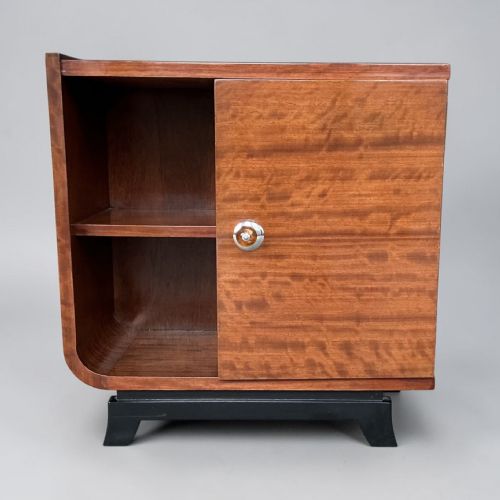

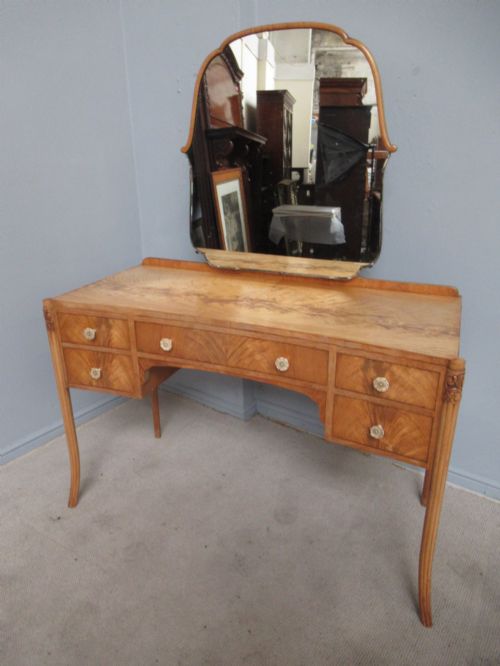
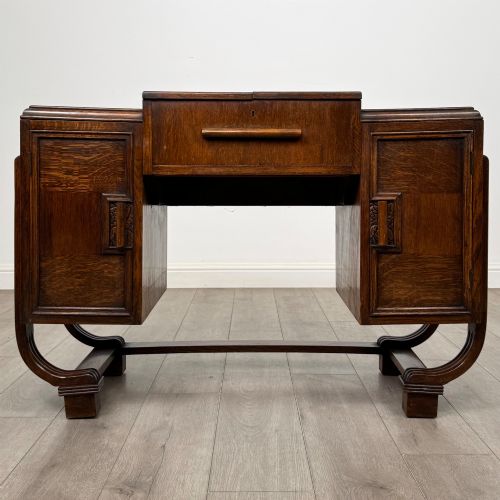
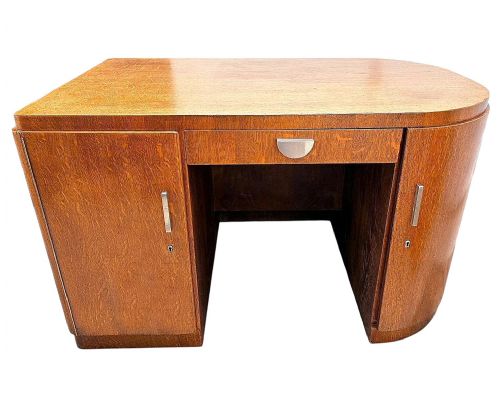
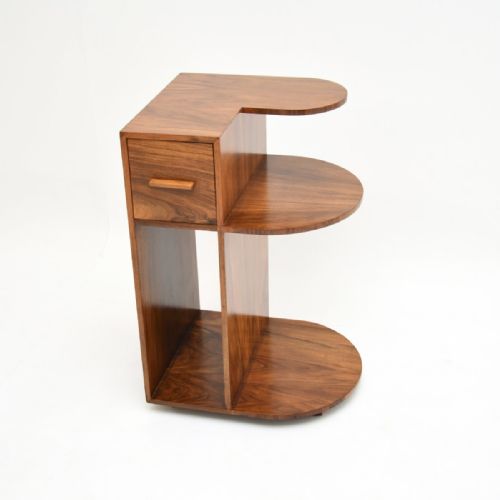
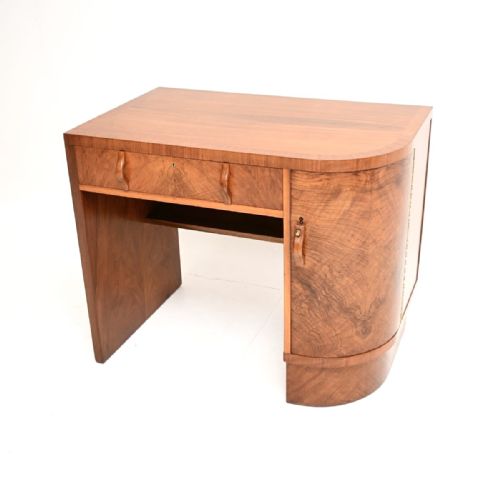
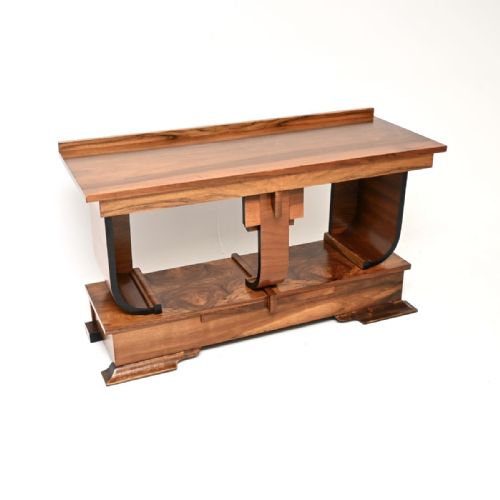
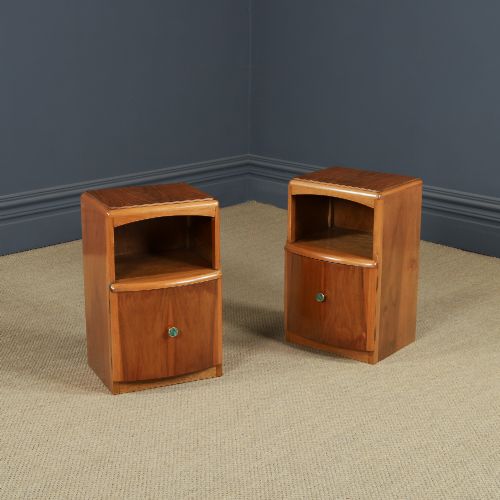
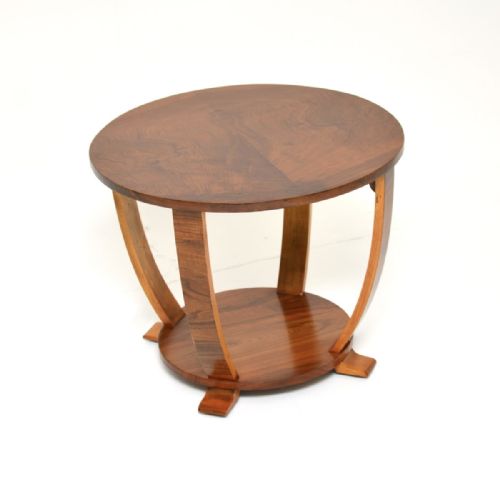
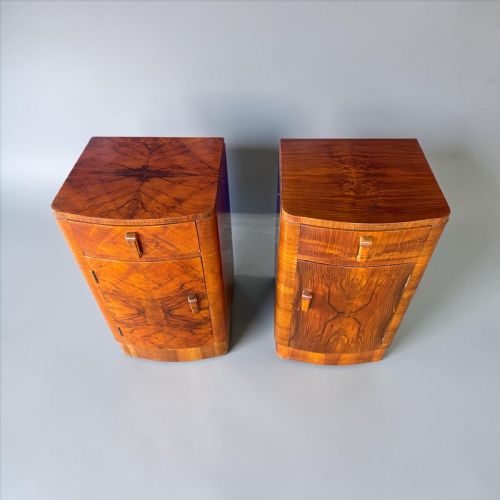
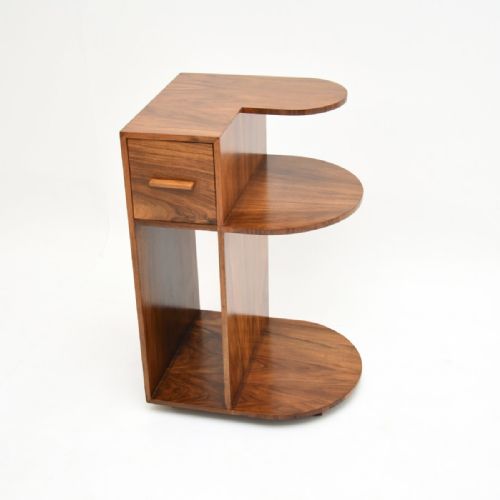
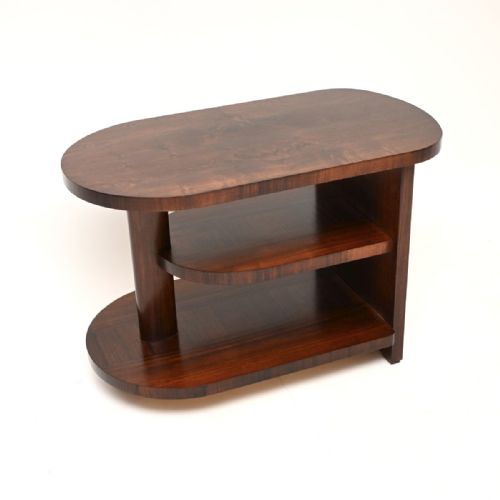
Curved Art Deco Table
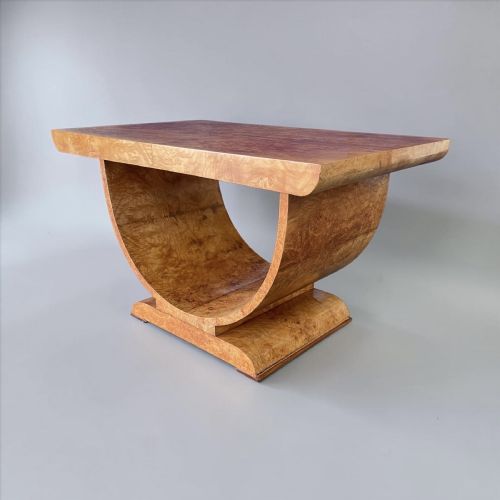
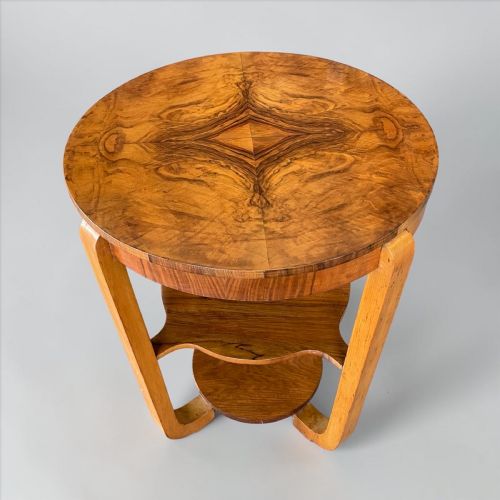
A curved art deco table brings geometric rhythm and rich timber grain to an interior, shaped by the design ambition of the interwar decades.
Curved Art Deco Table
When you search for a curved art deco table, you encounter a variety of forms designed to serve practical roles in sitting rooms, hallways, and bedrooms. Coffee tables, side tables, and occasional tables dominate the selection, alongside consoles, desks, and dressing tables.
The majority of these pieces originate from the 1930s, embodying the period's preference for sweeping lines and rounded corners. Alongside English examples, pieces reflect international modernist work and Amsterdam School influences from earlier decades.
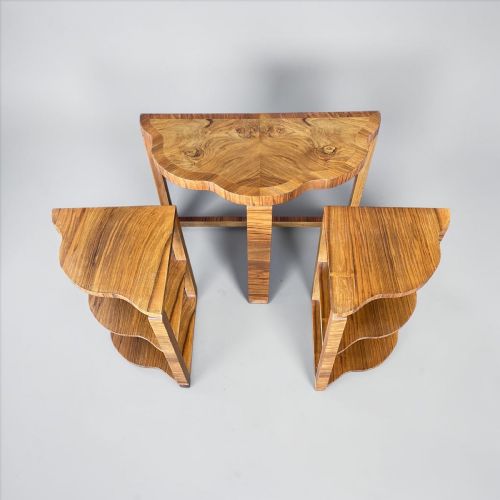
Design vocabulary embraces occasional tiered structures, nested sets, and D-end configurations. These shapes soften rigid room layouts while retaining the architectural solidity characteristic of the era.
Materials and construction
Cabinet makers utilised a foundation of solid woods overlaid with decorative veneers to achieve striking visual patterns. Walnut, burr walnut, maple, birds eye maple, and rosewood feature prominently across the surfaces.
Curved profiles required advanced timber-bending techniques and meticulous application of veneer over shaped carcases. Glass inserts, leather writing surfaces, and occasional metal accents completed the functional assemblies.
A solitary mantel clock appears among the tables, proving that time management was taken very seriously indeed.
Distinctions in quality
Quality rests in the selection and book-matching of timber veneers across curved surfaces. Finer pieces display symmetrical grain patterns that flow uninterrupted around rounded corners and edges.
Construction integrity distinguishes workshop production from standard commercial output. Robust joinery, well-fitted drawers, and balanced proportions mark the work of notable interwar makers.
Hille Furniture Company·Maurice Adams·Harry and Lou Epstein·Gilbert Rohde
The Curved Art Deco Table Glossary
- Veneer
- A thin slice of decorative timber applied over a secondary wood base. This technique allowed makers to utilise dramatic grain figures without destabilising the structure.
- Burr walnut
- A prized timber harvested from the growths of walnut trees, yielding complex swirling grain patterns. It forms the primary decorative surface on many high-status tables.
- D-end
- A rectangular table shape featuring a rounded semi-circle at one or both ends. This geometry suits dining configurations and compact writing desks.
- Nesting tables
- A set of graduated tables designed to slide neatly beneath one another. They offer flexible surface space in compact modern interiors.
- Amsterdam School
- An early twentieth-century architectural and design movement known for expressive brickwork, rounded organic forms, and rich timber detailing.
Curved Art Deco Table: Frequently Asked Questions
Where should I place a curved table?
These tables suit corners, sofa ends, and central hallway spaces where rounded edges ease traffic flow. Their curved silhouettes complement upholstered seating arrangements.
Matching a low coffee table with generous armchairs creates a cohesive seating zone within a living space.
How do I clean walnut veneer?
Wipe surfaces gently with a soft, slightly damp cloth to remove dust. Avoid harsh chemical polishes that can degrade the vintage finish.
Apply a quality beeswax periodically to nourish the timber and maintain a soft lustre.
Are nesting tables practical?
Nested sets provide expandable surface area for entertaining while occupying minimal floor space when stored together. Individual tables can be distributed around a room as needed.
They offer versatile utility in smaller sitting rooms and studies.
How do I identify a 1930s piece?
Examine the timber choices, construction methods, and geometric styling typical of the interwar period. Characteristic woods include figured walnut, maple, and sycamore.
Curved lines and absence of traditional ornamentation signal the shift towards modernist design.