
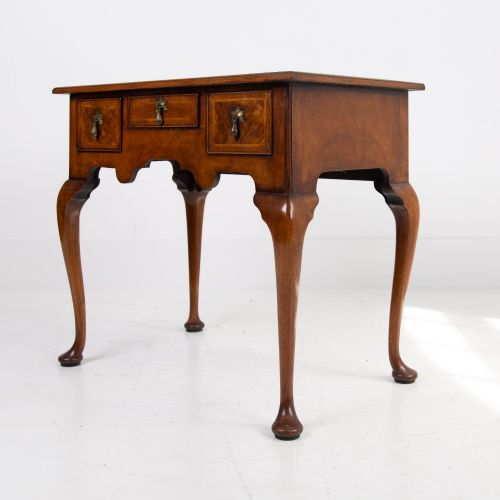


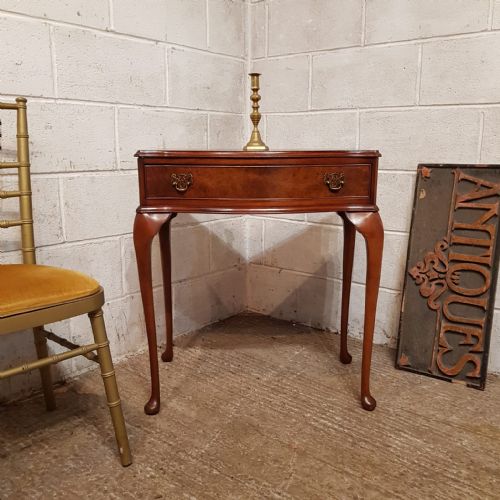


1920s Walnut Console Table
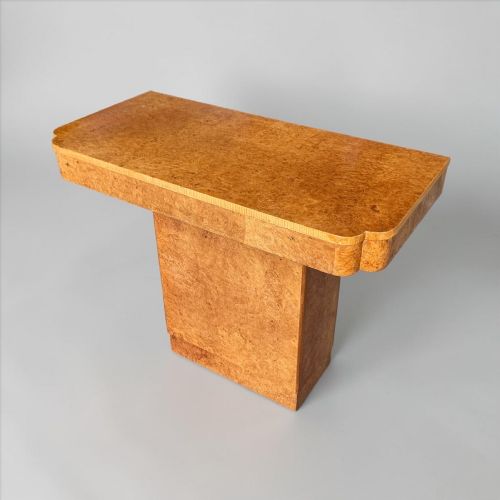
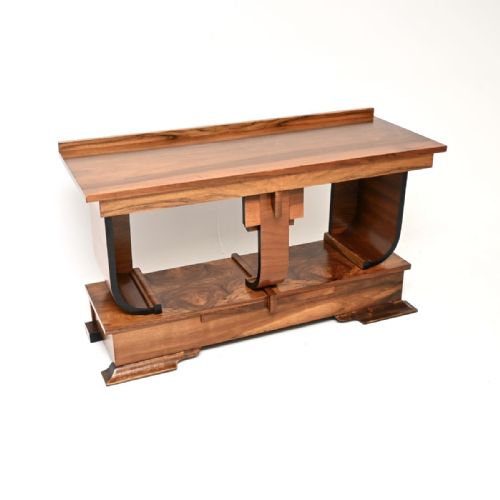
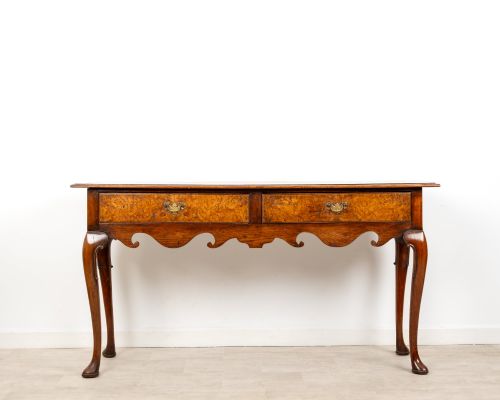
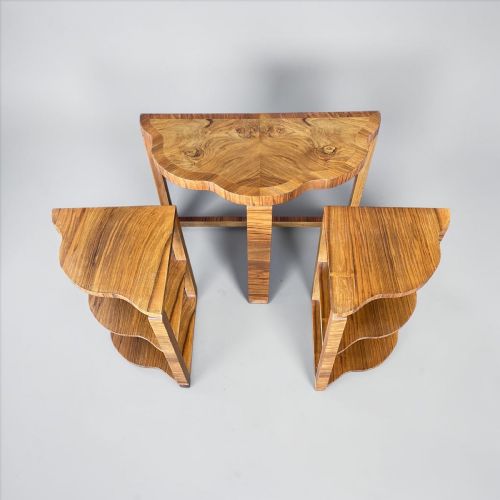
A 1920s walnut console table brings rich timber grain and period character to a hallway or reception room.
1920s Walnut Console Table
A 1920s walnut console table is a narrow surface designed to stand flat against a wall, frequently appearing in forms that span the Art Deco and Queen Anne Revival styles. Buyers searching for this phrase encounter various related formats, including side tables, lowboys, card tables, and occasional nests of tables.
The prevailing examples on this page date predominantly from the 1920s and 1930s, drawing upon Edwardian traditions and later modernist lines. These pieces often feature specific silhouettes such as serpentine fronts, bow fronts, or demi-lune folding designs suited to compact spaces.
Makers of the period utilised distinct regional aesthetics, ranging from English workshop traditions to Italian serpentine forms. Such diversity ensures that a buyer finds everything from restrained classical revival designs to geometric Art Deco shapes.
How they were made
Cabinet makers of the era built these surfaces using solid timbers combined with decorative veneers like burr walnut, figured walnut, and burr birch. Wood veneer was skillfully applied over stable carcase woods to display dramatic grain patterns across the primary surfaces.
Metal components such as brass hardware frequently complemented the dark, polished wood tones. Selected pieces also incorporated ebonised wood details to create sharp visual contrasts characteristic of the period.
The inventory combines Queen Anne Revival and Art Deco aesthetics across various console and lowboy formats.
What varies in quality
The visual impact of a 1920s walnut console table often rests upon the selection and matching of the veneer. Figured and burr walnut surfaces demand precise cutting and placement to achieve symmetry and depth across the top.
Structural refinement distinguishes the standard production from finer examples. Subtle details like serpentine or bow fronts require expert carpentry to shape the timber accurately while maintaining long-term stability.
The 1920s Walnut Console Table Glossary
- Console table
- A wall-mounted or freestanding narrow table designed primarily for display rather than heavy dining use. These tables often stand beneath mirrors or in entrance halls.
- Burr walnut
- Timber taken from the warted growth on a walnut tree, yielding highly complex and swirling grain patterns. It is sliced into thin veneers for decorative effect.
- Lowboy
- A small table with drawers, typically raised on tall legs, functioning as a dressing or side table. The form originates earlier but was frequently revived in the twentieth century.
- Demi-lune
- Half-moon shaped furniture designed to sit flush against a wall. Folding versions often serve dual purposes as card tables.
- Ebonised wood
- Timber treated to imitate ebony through staining or painting. This technique creates a dark, dense finish often used for contrasting trim.
1920s Walnut Console Table: Frequently Asked Questions
Where should I place a console table?
These narrow surfaces suit entrance halls, narrow corridors, or living rooms where floor space is limited. They provide a convenient spot for lamps, decorative objects, or post.
Because they stand flat against a wall, they do not obstruct traffic flow while adding a distinct period focal point to the room.
How do I identify Art Deco pieces?
Art Deco furniture from this era relies on clean geometric lines and striking wood veneers rather than historical revival ornamentation. Look for symmetrical grain patterns and streamlined silhouettes.
These designs emerged strongly in the 1930s, moving away from the curved cabriole legs of earlier revival styles.
What is burr walnut?
Burr walnut comes from a growth on the walnut tree where the grain has grown in a distorted, swirling manner. Cabinet makers slice this timber into veneers to create richly patterned surfaces.
It is prized for its decorative movement and depth, which standard straight-grained walnut does not possess.
Can these tables be used for dining?
Console tables are generally too narrow and light for everyday dining use. Folding card tables provide a temporary surface for games or writing rather than heavy meals.
Their primary function remains decorative and supportive for small ornamental items.