


Curule Style Stool
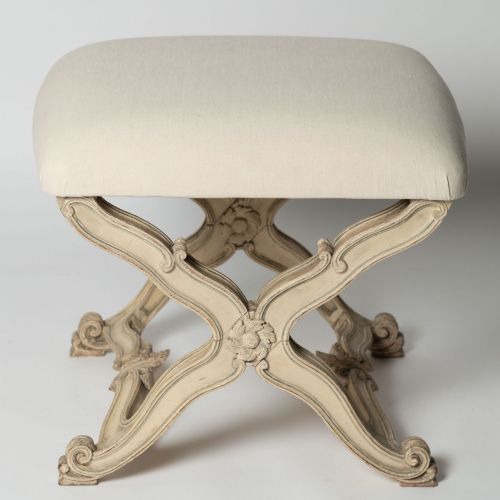
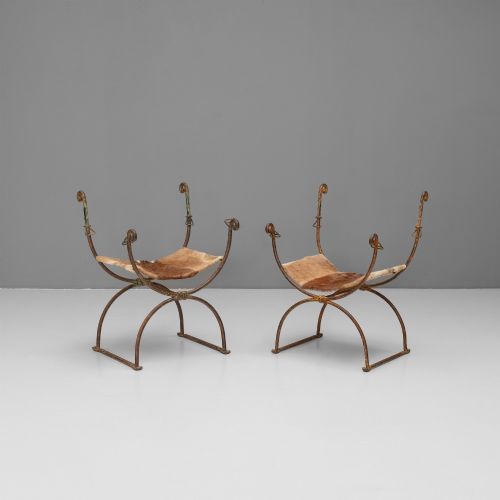
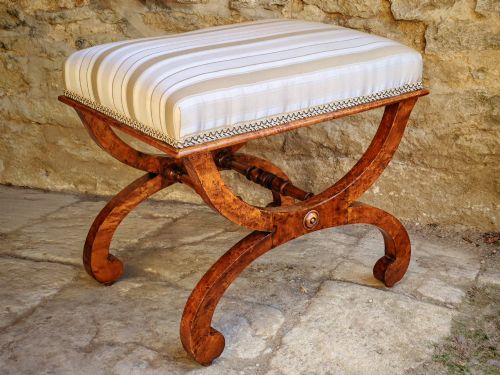
These curule style stool pieces are classical X-frame seats that bring a commanding architectural silhouette to any room.
Curule Style Stool
A curule style stool takes its defining X-frame shape from ancient Roman folding magistrate seats, translating an imperial symbol into domestic seating. Buyers searching for a curule style stool will find pieces predominantly from the nineteenth century, alongside earlier eighteenth-century examples and later twentieth-century interpretations.
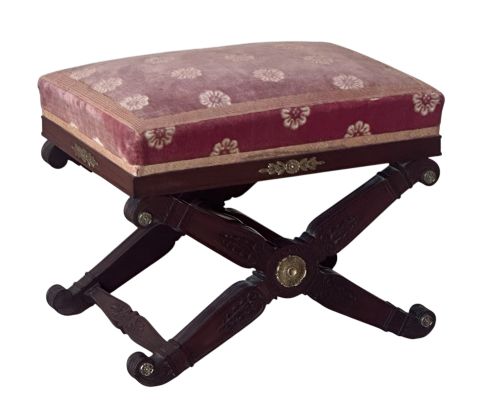
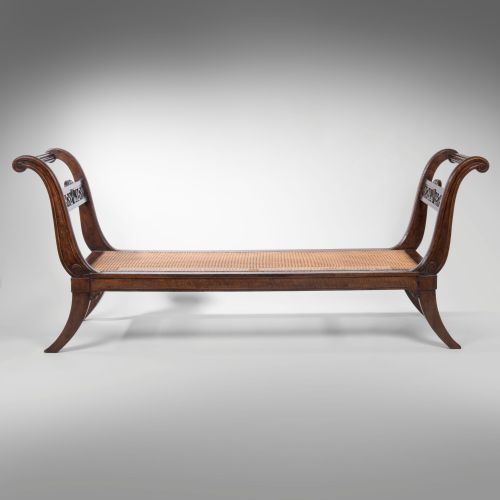
The forms vary across this selection from compact footstools and ottomans to grand window seats and side chairs. Most frequently, you will encounter nineteenth-century French Empire and Neoclassical iterations featuring characteristic crossed legs that support upholstered tops.
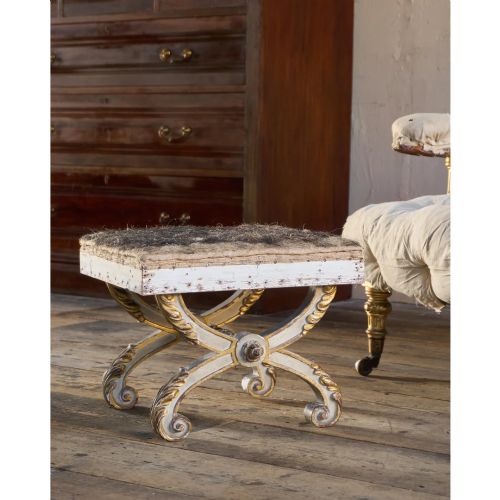
Origins span across English, French, Italian, and Irish workshops, showing how diverse makers adapted the curule framework over centuries. Whether you encounter a giltwood Italian piece or a burr maple English variant, the structural DNA remains rooted in the intersecting curved supports.
Materials and construction
Construction relies heavily on timbers such as mahogany, walnut, burr maple, and oak, often shaped into flowing, curved legs that intersect centrally. Giltwood and gesso finishes appear frequently, adding a layer of reflective opulence to Neoclassical and French Empire frames.
Upholstery forms a vital component of the construction, utilising velvet, silk damask, and cane to finish the seating surfaces. Brass mounts and subtle carved details frequently accent the wooden frames, highlighting the structural intersections without obscuring the form.
Listings feature woods including mahogany, walnut, burr maple, and oak alongside giltwood frames.
Distinctions in quality and execution
Quality reveals itself in the crispness of the timber carving and the architectural proportion of the intersecting X-frames. Finer examples display meticulous joinery at the central pivot and finely rendered giltwood or gesso surfaces rather than flat, heavy mouldings.
The choice of secondary materials, from figured burr maple to rich walnut, separates standard production from exceptional cabinet work. Furthermore, the integration of period-appropriate textiles like red damask or quality velvet completes the execution of the higher-tier pieces.
Miles & Edwards
The Curule Style Stool Glossary
- Curule
- An ancient Roman X-shaped seat form associated with high magistrates, revived during Neoclassical and Empire periods. This architectural framework defines the entire category of X-frame seating.
- Giltwood
- Timber treated with gold leaf or gold paint to create a lustrous surface. It is frequently found on Neoclassical and French Empire frames to enhance decorative presence.
- Gesso
- A plaster-based mixture applied to wood surfaces and carved before gilding. This technique allows for sharp, intricate ornamental detail on frames.
- Burr maple
- A highly figured wood veneer showing swirling grain patterns created by tree growths. Cabinet makers utilised this timber on select nineteenth-century pieces for striking visual texture.
- Damask
- A reversible, figured fabric woven on a jacquard loom, often utilised for historic upholstery. Red damask frequently appears on nineteenth-century neoclassical seating.
Curule Style Stool: Frequently Asked Questions
What is a curule stool?
A curule stool is a seat featuring intersecting X-shaped legs inspired by ancient Roman magistrate chairs. This classical form has been reinterpreted across various European periods.
These pieces function primarily as statement accent seats, window benches, or decorative footstools within traditional and eclectic interiors.
How old are these stools?
The pieces available range predominantly from the nineteenth century, with select examples dating to the eighteenth and early twentieth centuries. Styles reflect historical revivals such as French Empire and Neoclassical.
Identifying the age involves examining the timber species, joinery techniques, and the application of finishes like gesso or hand-carved ornamentation.
Where should I place a window seat?
Window seats and long stools suit placement beneath low windows, at the foot of a bed, or flanking a fireplace. Their low profile ensures they do not block natural light or views.
Consider matching the scale of the room to the width of the X-frame bench to maintain balanced architectural proportions.
How do I care for antique upholstery?
Historic upholstery fabrics like velvet and damask require gentle, regular brushing and protection from direct sunlight to prevent fading. Professional textile cleaning helps preserve delicate fibres.
Maintaining the surrounding wooden frame involves dusting with a dry cloth and avoiding harsh chemical polishes that can degrade original finishes.