


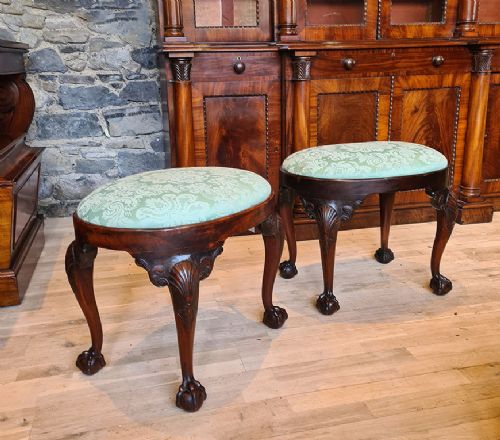


Pair of Dressing Stools
These pair of dressing stools bring matched historic seating to a bedroom or boudoir, offering proportion and decorative presence.
Pair of Dressing Stools
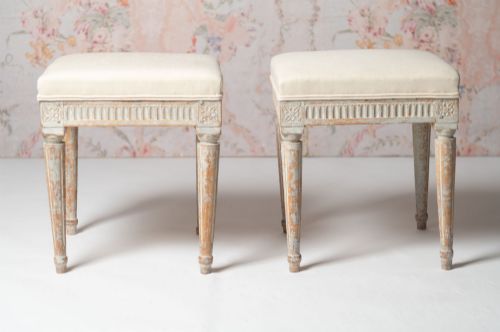
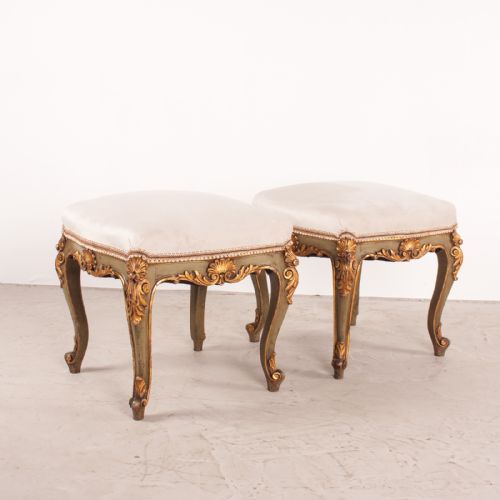
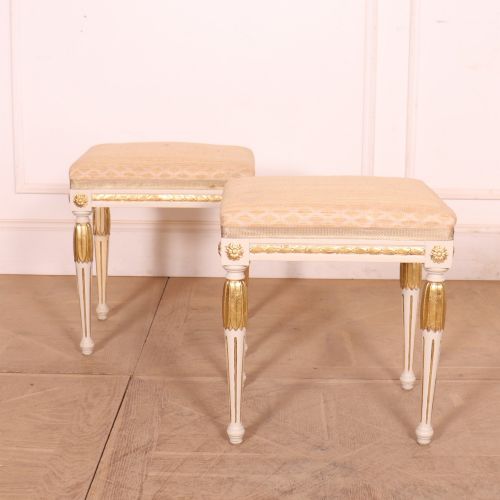
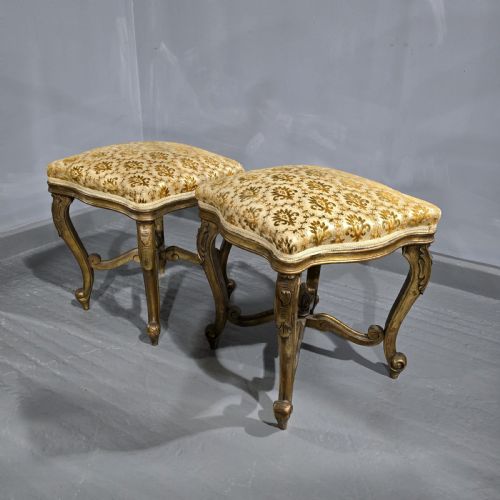
A pair of dressing stools provides matched seating intended for a bedroom, dressing room, or vanity area. When searching for a pair of dressing stools, buyers encounter examples ranging from eighteenth-century Georgian and Swedish Gustavian forms to nineteenth-century Victorian, Regency, and Louis XV style pieces.
The selection includes painted wood, giltwood, satin birch, and mahogany frames, frequently upholstered in fabric, velvet, or linen. Forms span simple rectangular shapes to carved cabriole leg variants and "X" framed Regency designs.
Origin points stretch across Britain, Ireland, Sweden, and France, reflecting diverse continental and domestic tastes from the eighteenth century through to the nineteen-thirties.
How they were made
Makers shaped these frames from solid timbers such as mahogany and satin birch, or utilised softwoods for painted and gilded finishes. Carved detail appears on giltwood and wood frames, incorporating gold leaf and painted surfaces.
Upholstered elements rely on traditional textiles including linen, velvet, and various woven fabrics fixed across the seat tops. Joinery methods range from pegged joints on earlier frames to sturdy nineteenth-century mahogany construction.
Listings feature painted wood, mahogany, and giltwood frames paired with velvet, linen, and fabric upholstery across eighteenth and nineteenth-century periods.
What varies in quality
The distinction between tiers rests upon the crispness of the timber carving and the integrity of the original painted or gilded surfaces. Refined proportions and balanced turnings or cabriole legs separate superior examples from standard production.
The handling of the upholstery webbing and the selection of covering materials indicate the level of craftsmanship invested in the piece. Original paint and surface patination contribute significantly to the character of painted and gilded frames.
The Pair of Dressing Stools Glossary
- Gustavian
- A Swedish neoclassical style originating in the late eighteenth century, known for pale painted finishes and restrained classical carving.
- Giltwood
- Timber coated with gold leaf or metallic powder, frequently seen on decorative French and Continental frames.
- Cabriole leg
- A furniture leg featuring a double curve, bulging outward at the knee and tapering inward toward the foot.
- Biedermeier
- A Central European style popular during the nineteenth century, prioritising utilitarian comfort and clean lines in woods like satin birch.
- X framed
- A cross-form structural base utilised in Regency stool designs for added stability and classical styling.
Pair of Dressing Stools: Frequently Asked Questions
Where should I place a pair of dressing stools?
These stools sit naturally in front of a dressing table or vanity unit in a bedroom.
They also function effectively as low occasional seats or footstools in a living space.
Are these stools sturdy enough for daily sitting?
Most historic frames are built from solid mahogany, birch, or dense hardwoods designed for weight bearing.
Upholstered tops can be re-secured or re-webbed if needed to restore structural firmness.
How do I identify a Swedish Gustavian stool?
Gustavian pieces typically feature light painted surfaces with subtle carved fluting or floral motifs.
The aesthetic derives from French neoclassical design interpreted through a brighter, pared-down Scandinavian lens.
What is the difference between Georgian and Regency stools?
Georgian stools often display square or oval forms with straight or cabriole legs reflecting eighteenth-century sensibilities.
Regency examples incorporate classical revival motifs, such as cross-frame "X" supports and bolder mahogany grains.