


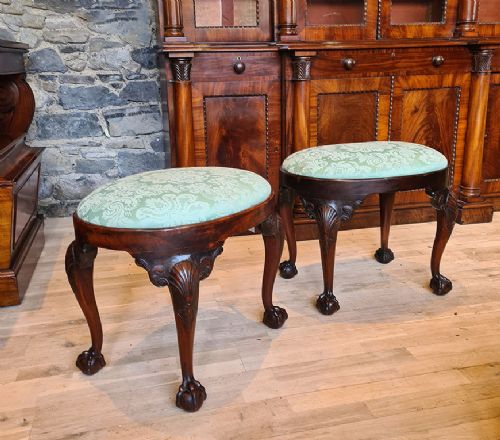


Pair of Georgian Stools
A pair of georgian stools brings genuine period proportion and timber warmth into a room, offering versatile seating that works just as well beside a fireside or beneath a window.
Pair of Georgian Stools
A pair of georgian stools encompasses seating forms designed across the eighteenth century and subsequent revival periods, spanning simple footstools to substantial long window seats and candle stands. The pieces seen here demonstrate a notable variety in domestic utility, ranging from low dressing stools to iron hall seats and heavy country house examples.
How they were made
Makers utilised dense native and imported timbers, with mahogany predominating alongside walnut, oak, yew wood, and beech. Frames were constructed using traditional joinery methods suited to bearing weight while maintaining slender proportions.
Surface detailing often incorporates brass studwork framing leather upholstery, alongside turned supports and carved mahogany frames. Iron is also utilised in specific utilitarian examples, while seating surfaces rely on tightly fitted fabric, damask, or buttoned leather.
Pair of Georgian Stools Retail Price Guide 2026
Typical asking prices for pair of georgian stools among the pieces listed under this phrase on Sellingantiques today, from the lower quarter to the upper quarter. They describe what is for sale here now, not the wider market.
Listings span four distinct centuries, featuring mahogany, walnut, oak, yew wood, and beech alongside brass and iron elements.
What varies in quality
Quality rests primarily in the choice of timber and the crispness of any carved detail on the frame. Denser grain figures in the mahogany and more refined turning on the legs distinguish finer examples from simpler vernacular pieces.
The integrity of the frame construction and the quality of the materials used in the upholstery also define the tier of the piece. Well-balanced proportions and harmonious wood colour separate exceptional items from standard workshop productions.
The Pair of Georgian Stools Glossary
- Mahogany
- A durable hardwood prized for its deep reddish-brown colour and stable grain, heavily utilised in eighteenth-century furniture construction. It takes a fine polish and allows for sharp carving.
- Regency
- A style period spanning the early nineteenth century characterised by classical revival motifs and refined architectural lines. Pieces from this era often feature distinctive wood figures or brass accents.
- Damask
- A reversible figured fabric traditionally woven with patterns visible on both sides. It frequently appears as a sophisticated upholstery choice on period seating.
- Window seat
- A long, narrow form of stool or bench specifically proportioned to sit within the recess of a bay or traditional sash window. These often feature upholstered tops designed for extended sitting.
- Footstool
- A low piece designed to support the feet when seated in an armchair or by the hearth. Eighteenth and nineteenth-century examples often mirror the stylistic detailing of larger seating.
Pair of Georgian Stools: Frequently Asked Questions
Where were these stools used?
These pieces served multiple functions throughout the home, from dressing rooms and bedrooms to grand reception spaces and hallways. Smaller variants functioned as footstools by the hearth, while longer forms served as window seats or benches.
In country houses, pairs were often placed against walls or beneath windows to provide flexible seating that could be moved easily when required.
How do I tell periods apart?
Distinguishing between periods relies on observing timber selection, structural form, and decorative vocabulary. Eighteenth-century pieces typically display understated proportions and robust mahogany or oak frames.
Later nineteenth-century and revival examples often incorporate bolder turning, alternative woods like yew or beech, or stylistic hints borrowed from earlier reigns.
Are these pieces comfortable?
Comfort depends entirely on the upholstery style, which ranges from firm buttoned leather to sprung or padded fabric surfaces. Many surviving examples were designed primarily for formal posture rather than lounging.
When placed by a window or used as a dressing stool, they offer adequate support for shorter periods of sitting.
How should I care for the wood?
Maintaining timber surfaces requires keeping them away from direct heat sources and sudden humidity changes to prevent wood splitting. Regular dusting with a dry, soft cloth preserves the natural finish without building up residue.
Occasional application of traditional wax helps nourish older mahogany and walnut timbers while maintaining their natural sheen.