
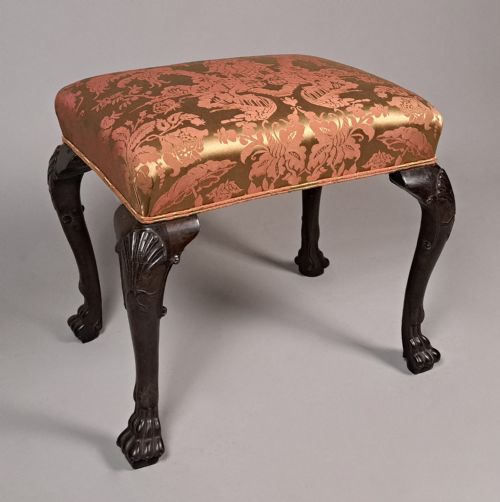
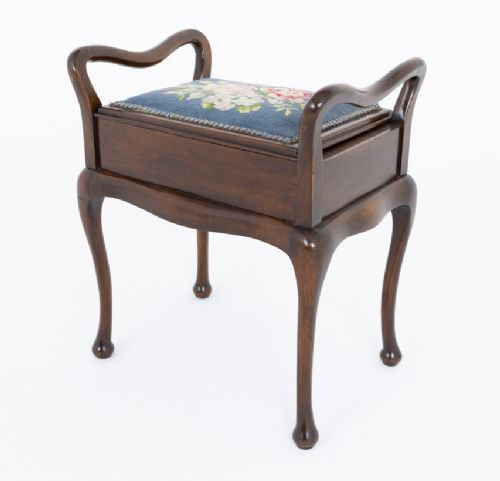


Mahogany Cabriole Leg Stool
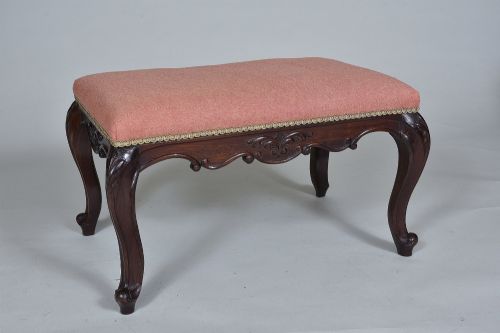
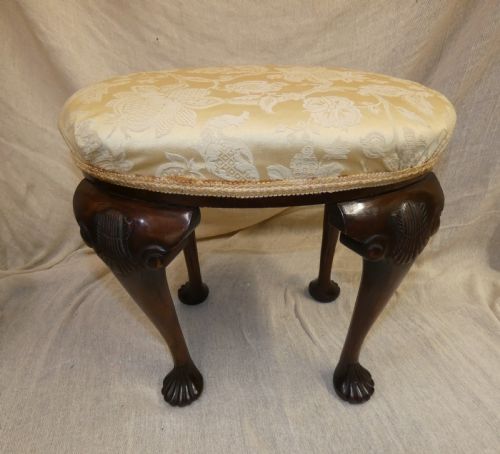
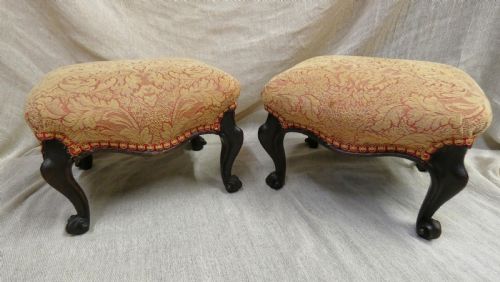
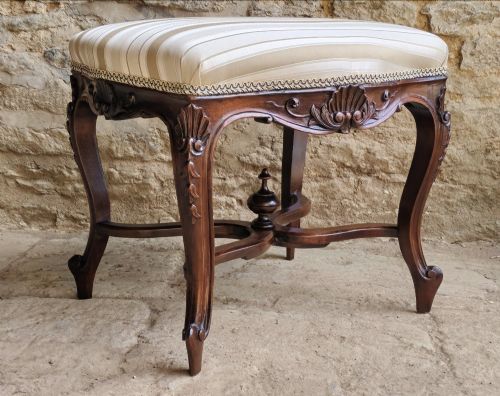
These mahogany cabriole leg stools combine solid timber frames with curving, scroll-topped supports designed for practical seating and domestic display.
Mahogany Cabriole Leg Stool
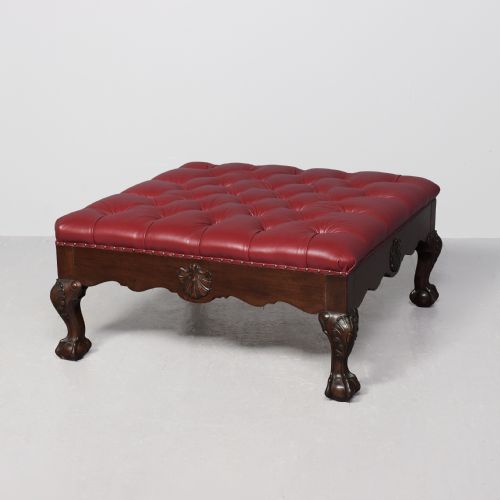
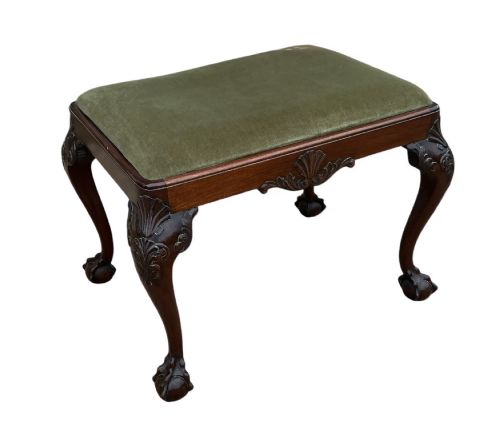
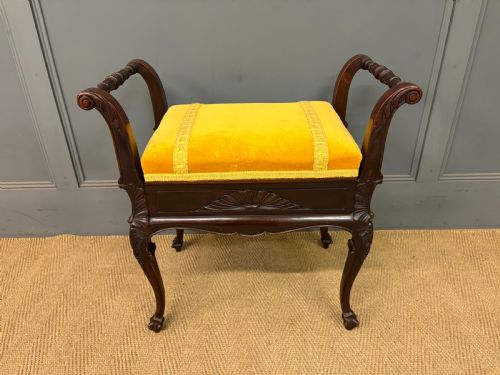
A mahogany cabriole leg stool takes many domestic forms, appearing frequently as a footstool, dressing stool, piano stool or window seat. These low seats serve multiple functions across the parlour, bedroom and music room, often designed to match larger suites of furniture.
The inventory spans from the eighteenth century through the Victorian and Edwardian eras into the early twentieth century. Pieces from the Georgian period sit alongside nineteenth-century interpretations and later revival styles, reflecting enduring popularity across generations.
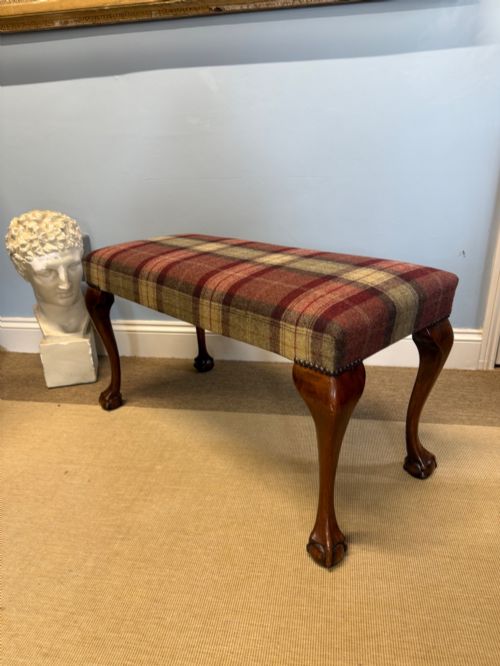
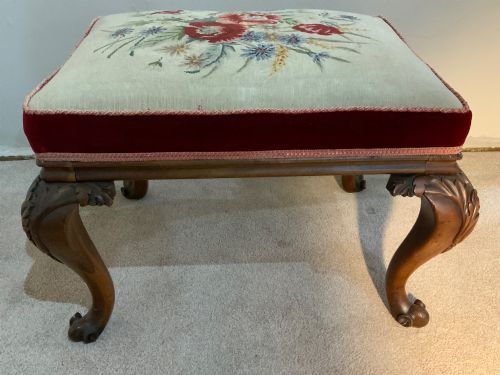
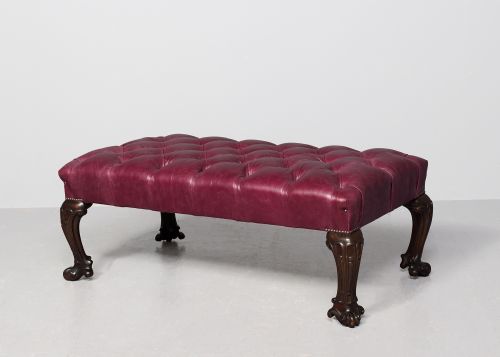
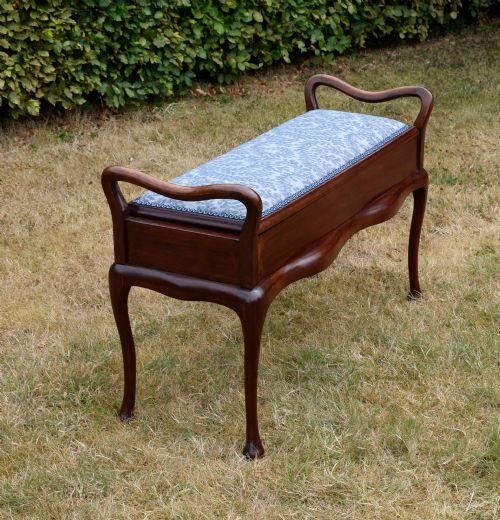
Makers produced everything from compact square footstools to large rectangular duet seats and long benches. The characteristic curving leg supports frames upholstered in leather, velvet, tapestry and needlework.
How they were made
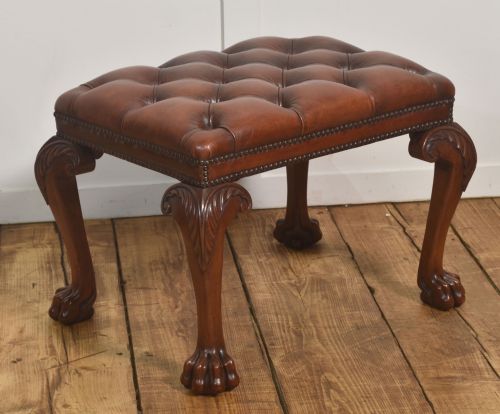
Craftsmen built the structural frames from dense mahogany, shaping the distinctive double-curved leg profile from solid timber rather than applying applied veneers to the primary supports. Carved knees frequently flow down into claw and ball feet or pad feet.
Upholstery methods varied by period, employing traditional stuffing beneath top covers of wool, velvet, leather, or textile. Buttoning and hand-tacked borders secure the heavy fabrics to the timber rails.
Many a Victorian pianist found unexpected rhythm in a revolving stool that decided to spin independently during an energetic sonata.
What varies in quality
Subtlety of timber selection and depth of carving define the higher tier of these pieces. Crisp detailing on the cabriole knees and well-proportioned scrolling distinguish superior workshops from later mass-produced examples.
The integrity of the frame construction and the quality of the upholstery materials dictate the overall standing of an individual stool. Original upholstery and substantial timber scantlings command greater attention from discerning collectors.
The Mahogany Cabriole Leg Stool Glossary
- Cabriole leg
- A furniture leg that curves outward at the knee and tapers inward toward the foot, mimicking animal limbs. This form gained widespread popularity during the eighteenth century.
- Ball and claw foot
- A furniture foot carved to represent a bird's talon grasping a spherical ball. It frequently terminates the bottom of a cabriole leg on finer pieces.
- Needlework
- Hand-stitched textile used for upholstery, often worked in wool or silk threads on a canvas ground. Surviving period examples display intricate floral or geometric patterns.
- Serpentine
- A furniture edge or outline shaped with a central concave curve flanked by two convex sweeps. This undulating form adds visual movement to the seat rails.
- Duet stool
- An elongated piano stool designed to seat two musicians side by side. These wider forms often incorporate hinged seats for sheet music storage.
Mahogany Cabriole Leg Stool: Frequently Asked Questions
What were mahogany cabriole leg stools used for?
These versatile seats served multiple domestic purposes depending on their proportions and height. Smaller examples functioned as footstools by firesides, while taller variations acted as dressing table seats or piano benches.
Longer forms often stood in hallways or acted as window seats for looking out across gardens. Their sturdy construction allowed them to move easily from room to room as household needs shifted.
How do I date a mahogany cabriole leg stool?
Dating relies on examining the timber characteristics, the sharpness of the carved details, and the underlying construction methods. Eighteenth-century examples display hand-cut joinery and dense, dark mahogany with patination accumulated over generations.
Victorian and Edwardian revivals often incorporate machine-cut elements and softer secondary woods behind the primary mahogany surfaces. Upholstery webbing and stuffing techniques also offer clues to the era of manufacture.
Are piano stools different from regular footstools?
Piano stools are specifically proportioned for seated musicians, frequently featuring longer rectangular dimensions or revolving mechanisms for height adjustment. Duet versions provide extra length to accommodate two players at once.
Standard footstools sit much lower to the ground and lack the mechanical or rotating elements common to music room seating. Both types, however, share the characteristic curving leg supports.
How do I care for antique upholstery?
Preserving original fabric requires gentle vacuuming with a soft brush attachment to remove dust without stressing fragile textile fibres. Direct sunlight should be avoided to prevent fading on sensitive wools and dyed velvets.
Leather surfaces benefit from occasional specialist conditioning to keep the hide supple and prevent cracking. Maintaining stable room humidity protects both the delicate upholstery materials and the internal stuffing.