
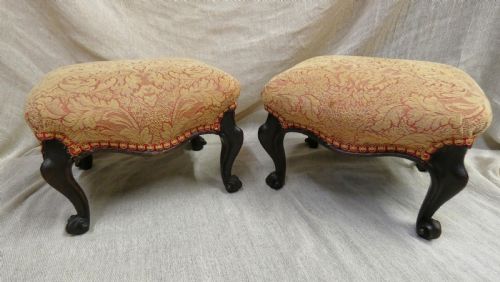
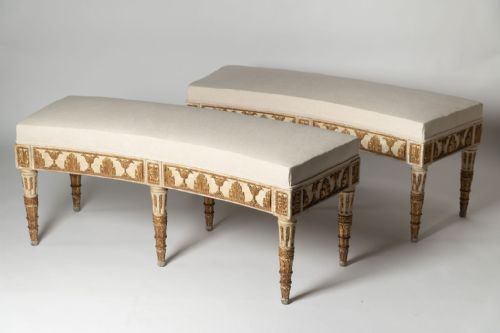
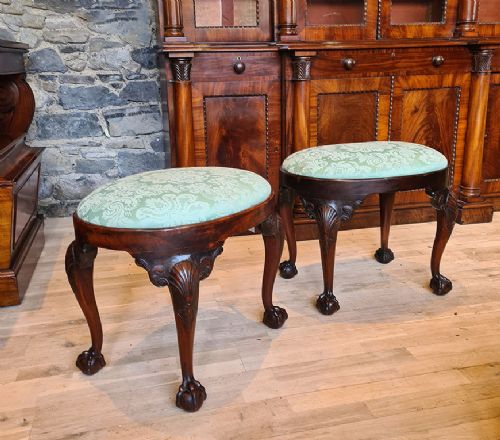


Antique Padded Stool Pair
These antique padded stool pair selections offer matched seating from various historical periods, combining traditional timber frames with period textiles to anchor a room.
Antique Padded Stool Pair
An antique padded stool pair brings matched historic seating into a room, typically taking the form of footstools, window seats, or ottomans. These items serve both functional and decorative roles, often flanking a fireplace or sitting beneath a window.
The pieces listed on this page span several centuries, with Victorian examples and nineteenth century interpretations appearing most frequently. Buyers encounter diverse regional expressions, from Irish George III oval stools to French walnut window seats.
Makers designed these pairs in styles ranging from Queen Anne Revival and Italian Neoclassical to Louis XIV Revival and French Rococo Revival. Such variety allows collectors to match specific period interiors or introduce contrasting historic accents.
Materials and construction methods
Carpenters constructed the underlying frames using dense hardwoods such as mahogany and walnut, often applying hand-carved details to legs and rails. These wooden supports provide the structural integrity required to bear weight over generations.
Upholsterers finished the seating surfaces with traditional textiles including velvet, damask fabric, and various woven upholstery materials. Padding underneath these coverings was built up using natural stuffings secured by webbing and tacks.
Metal elements occasionally appear in the form of brass mounts, castors, or decorative nailheads that accent the wooden frames and textile edges. Craftsmen shaped these components by hand to complement the prevailing style of each period.
Listings feature periods spanning from the eighteenth century through to the twentieth century, constructed in mahogany, walnut, and painted wood.
Distinctions in quality
The refinement of the wooden carving separates standard production from superior examples, with crisp lines and deeply undercut foliage indicating skilled handwork. Plain or mechanically turned legs generally reflect simpler workshop output.
Upholstery execution also dictates value, where hand-stitched borders, high-grade damask or velvet, and well-sprung or firmly stuffed foundations demonstrate superior craftsmanship. Inferior pieces often display slack fabric tension and basic padding methods.
Cohesion within the pair matters greatly, as pieces that retain identical timber grain, matching frame dimensions, and uniform wear patterns command greater respect than assembled matches. Subtle discrepancies in proportion reveal whether two stools were truly created together.
The Antique Padded Stool Pair Glossary
- Cabriole leg
- A furniture leg that curves outward at the knee and tapers inward toward the ankle, ending in a foot. This form derives from animal legs and became popular during the eighteenth century.
- Damask fabric
- A reversible figured fabric woven on a loom, featuring patterns created through contrasting warp and weft threads. It is frequently utilised in historic upholstery for its rich texture.
- Window seat
- A long, narrow form of stool or bench designed specifically to fit within the recess of a window. These pieces often feature padded tops and low arms or backs.
- Aesthetic Movement
- A late nineteenth century design style that emphasised visual beauty and artistic expression over strict historical revival. Pieces from this movement often incorporate simplified forms and refined surface decoration.
Antique Padded Stool Pair: Frequently Asked Questions
How were these stools originally used?
These pairs functioned primarily as movable seating near firesides, dressing tables, or deep window recesses. Footstools specifically provided low support for resting feet while seated on larger armchairs.
Larger window seats and ottomans offered auxiliary seating for guests during gatherings in formal drawing rooms. Their portable nature allowed servants to reposition them around the home as daily domestic routines required.
Where should I place a pair in my home?
Placing a matched pair at the foot of a bed creates a balanced focal point while offering a convenient place to sit when dressing. They also work effectively positioned opposite a fireplace or beneath a hallway console table.
Smaller footstools sit comfortably before armchairs or beneath drawing room windows. Their matched appearance helps anchor symmetry in interior design schemes without overwhelming spatial limits.
How do I care for antique upholstery?
Protect delicate textiles such as velvet and damask from direct sunlight to prevent fading and fibre degradation over time. Gentle vacuuming with a soft brush attachment removes surface dust without damaging the weave.
Avoid using liquid cleaners on historic fabrics, as moisture can weaken underlying natural stuffings and wood frames. Professional conservation cleaning remains the safest method for addressing stubborn marks.
How can I tell the period of a frame?
Examining the timber species and carving style offers primary clues to a piece's age, with walnut dominating earlier eras and mahogany rising in prominence later. Tool marks left by hand saws or chisels on hidden underside surfaces also indicate historic manufacturing methods.
Stylistic markers such as cabriole legs point toward eighteenth century revivals, while simpler geometric lines often suggest later Victorian or twentieth century production. Comparing joinery techniques helps confirm whether a frame aligns with its purported era.