



Vintage Window Seat Stool
These vintage window seat stool designs offer practical seating beneath low sills, pairing compact proportions with period character.
Vintage Window Seat Stool
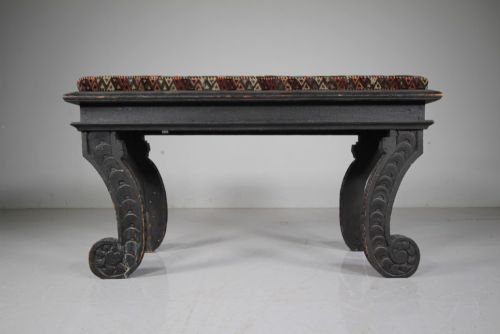
A vintage window seat stool combines the low profile of a footstool with the elongated form of a bench, designed specifically to sit beneath low sills without obscuring the glass. The selections here draw from nineteenth century, Edwardian, and early twentieth century periods, spanning forms from simple piano benches to elaborate French carved banquettes.
The most frequent encounters on this page are Edwardian mahogany frames and nineteenth century pieces displaying Regency or William IV styling. These versatile forms serve equally well at the foot of a bed, along a hallway, or acting as low coffee tables in reception rooms.
Materials and Construction
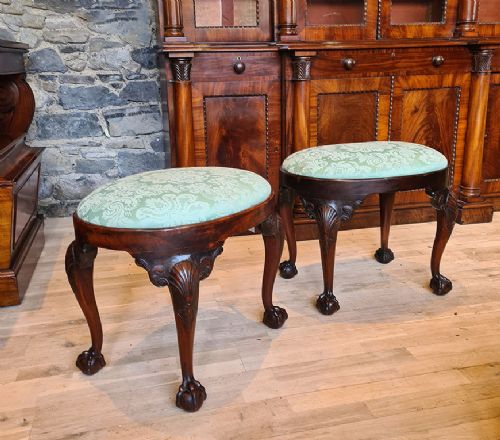
Frames rely predominantly on timber foundations of mahogany, walnut, painted pine, and beech, frequently shaped with hand-carved details or ebonised finishes. Supporting structures range from rigid box forms to delicate curule shapes and turned legs featuring brass accents or ball and claw feet.
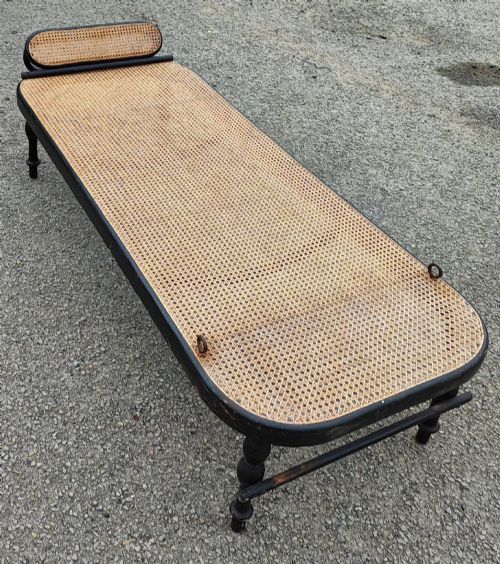
Upholstery methods vary from traditional horsehair stuffing beneath leather, kilim, and tapestry textiles to woven cane panels fitted directly into wooden rails. Gilt touches and painted surfaces appear on pieces influenced by French Provincial and Régence aesthetics.
Design influences recorded here range from strict Regency and William IV to French provincial and Louis XV styles.
Assessing Craftsmanship and Proportion
The distinction between ordinary workshop output and finer pieces rests in the integrity of the joinery and the subtlety of the timber turning. Superior examples display crisp hand-carving on the frame rails and sound structural framing that withstands regular sitting without looseness.
Textile selection and upholstery execution further divide the range, where hand-stitched leather, traditional kilims, and neatly tensioned cane work elevate a utilitarian bench into a considered decorative object.
Hallett & Sons·Morris & Co.
The Vintage Window Seat Stool Glossary
- Curule stool
- A form of seating featuring intersecting curved legs derived from ancient Roman magistrate chairs. This X-frame design appears frequently in Regency and classical revival pieces.
- Duet stool
- An elongated seating form originally built to accommodate two piano players side by side. These pieces often incorporate internal storage beneath the upholstered lid.
- Ebonised
- Timber treated with a chemical stain or black finish to imitate costly ebony. This dark surface treatment found favour in nineteenth century aesthetic and Victorian interiors.
- Banquette
- An upholstered bench or long seat with or without a back. French examples often incorporate exposed carved beech frames and woven cane side panels.
- Kilim
- A flat-woven carpet or textile used traditionally in the Near East. These durable geometric fabrics occasionally appear reupholstered onto nineteenth century footstools.
Vintage Window Seat Stool: Frequently Asked Questions
What is a window seat stool used for?
These pieces provide low seating positioned specifically beneath windows without blocking natural light or outside views.
Beyond the window ledge, they function effectively as end-of-bed benches, hallway seating, or impromptu coffee tables.
How do I identify an Edwardian window seat?
Edwardian examples typically feature lighter mahogany or walnut timbers, sometimes incorporating inlaid stringing and restrained classical revival motifs.
Their proportions tend to be neat and upright, reflecting early twentieth century domestic requirements for smaller drawing rooms.
Are these seats comfortable for daily sitting?
Comfort depends entirely on the underlying padding and suspension, which ranges from firm webbed upholstery to sprung frames.
Many period pieces were designed for brief periods of sitting, though longer duet stools offer generous proportions.
Can I use a duet stool at a piano?
Duet stools were specifically constructed with wider spans to allow two musicians to sit together while practising keyboard instruments.
Their generous length also makes them suitable as standalone benches in large hallways or living spaces.