

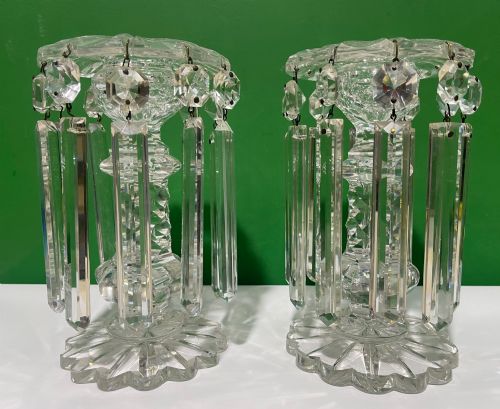
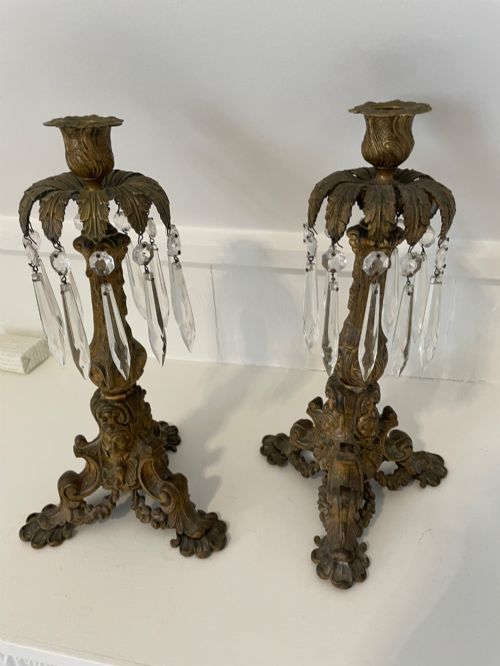
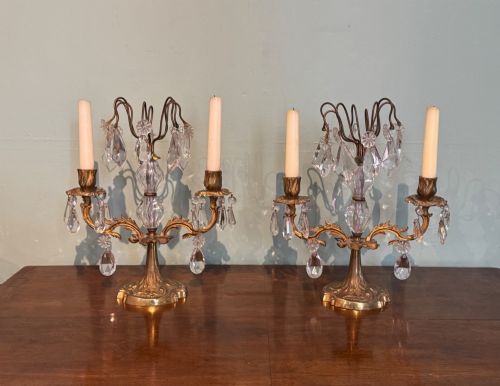
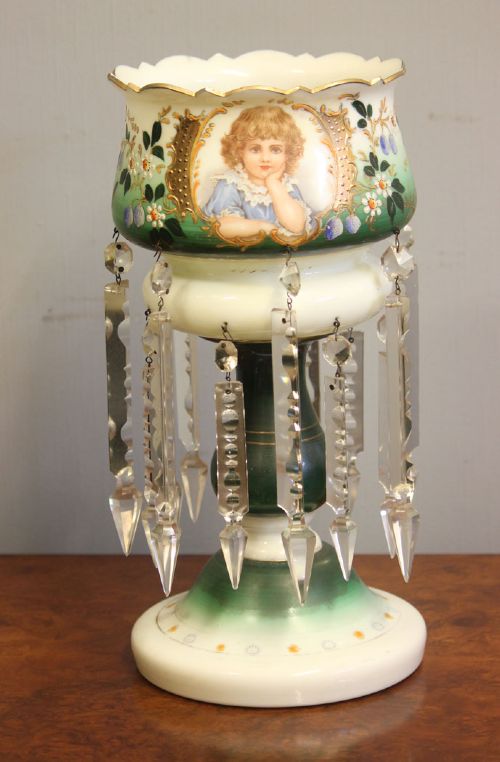
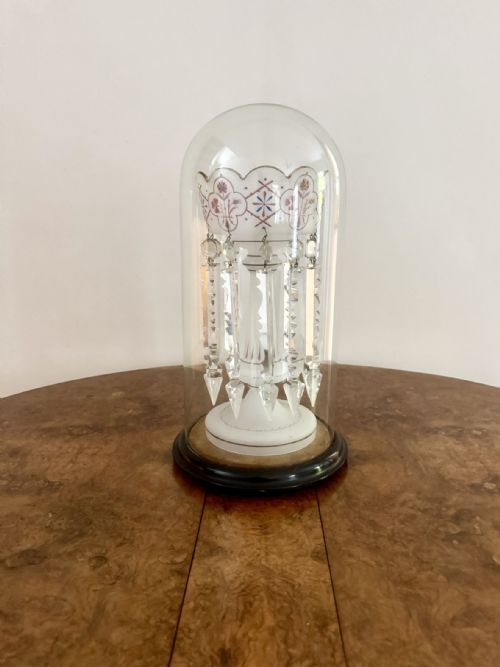


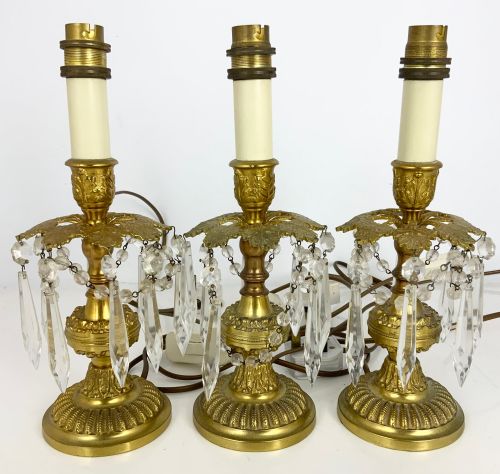


Crystal Prism Drop Candlesticks
Crystal prism drop candlesticks catch and scatter the flickering light of a room through suspended glass droplets.
Crystal Prism Drop Candlesticks
When you search for crystal prism drop candlesticks, you encounter decorative lighting pieces designed to illuminate tables and mantels with added optical brilliance. These objects combine candle holders with hanging glass ornaments that multiply the flame's reflection across the room.
The versions met on this page span the Victorian and Regency periods, stretching from the early nineteenth century into the opening decades of the twentieth. They appear in forms including standard candlesticks, mantel lustres, table lamps, and candelabra.
Makers shaped these items in varied configurations, sometimes pairing glass bodies with gilt brass, ormolu, or bronze mountings. Coloured glass varieties, particularly ruby and cranberry tones, sit alongside clear lead crystal pieces.
How they were made
The primary construction relies on cut glass, lead crystal, and plain glass formed into sturdy shafts and wide bases to support the weight of the hanging drops. Artisans cut facets into the body and the dangling prisms to maximise the refraction of light.
Metal components incorporate gilt brass, ormolu, bronze, and metal wire to secure the hanging drops and form structural frames. Enamel decoration occasionally appears on the glass bodies to add surface colour and pattern beneath the drops.
Crystal Prism Drop Candlesticks Retail Price Guide 2026
Typical asking prices for crystal prism drop candlesticks among the pieces listed under this phrase on Sellingantiques today, from the lower quarter to the upper quarter. They describe what is for sale here now, not the wider market.
Period styles recorded here span French Rococo Revival, French Empire, French Chateau, Regency, and Victorian designs.
What varies in quality
The standard of cutting on both the body and the individual prism drops determines much of the visual weight and brilliance of the piece. Crisp, deep facets catch the candlelight sharply, whereas softer moulding lacks the same optical clarity.
The choice and combination of materials also set examples apart, with heavy lead crystal and finely chased ormolu mounts indicating more ambitious workshop production. Matching sets retain greater visual harmony compared to assembled pairs with mismatched drops.
The Crystal Prism Drop Candlesticks Glossary
- Lustre
- A decorative table ornament featuring a central candle holder hung with cut glass prisms. These pieces gained popularity during the Victorian and Regency eras.
- Prism drop
- A faceted piece of glass or crystal suspended from a lighting fixture by wire. Each drop moves slightly in air currents to disperse light.
- Ormolu
- Finely ground high-carat gold applied to a bronze base in a mercury gilding process. This technique gives metal mounts a rich yellow lustre.
- Candelabra
- A branched candlestick holding multiple lights instead of a single candle. They often incorporate hanging crystal drops around the central stem.
Crystal Prism Drop Candlesticks: Frequently Asked Questions
What are crystal prism drop candlesticks?
These items are decorative lighting pieces that combine a candle holder with suspended glass prisms designed to catch and reflect light.
They emerged in forms such as mantel lustres and table candelabra during the Regency and Victorian periods.
How were they used historically?
Households placed them on dining tables, sideboards, and fireplace mantels to brighten rooms before electric lighting became common.
The suspended glass drops multiplied the illumination from wax candles during evening gatherings.
How do I live with them?
Position them where natural daylight or evening candlelight can pass directly through the hanging glass drops to create shifting patterns on nearby surfaces.
Keep them away from busy household traffic to prevent accidental contact with the delicate glass prisms.
How do I tell periods apart?
Regency examples often feature bronze and ormolu mounts alongside clean clear cut-glass bodies.
Victorian pieces frequently introduce rich ruby or cranberry glass colours alongside elaborate enamel work.