




Glass Lustre Candle Holders
Glass lustre candle holders are decorative mantel and table pieces hung with crystal prisms, designed to catch and refract candle flame.
Glass Lustre Candle Holders
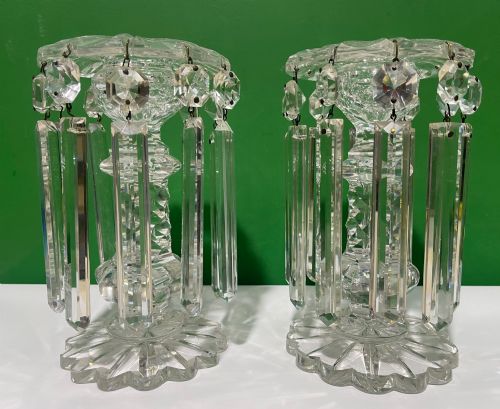
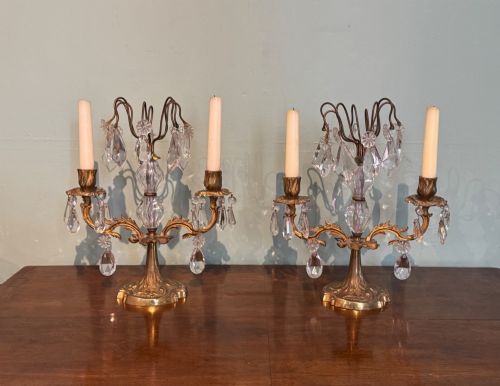
Glass lustre candle holders appear in forms such as mantel lustres, table lustres, and candelabra designed for domestic illumination. These pieces originate across the eighteenth, nineteenth, and early twentieth centuries, spanning periods from Regency and William IV to the Victorian era.
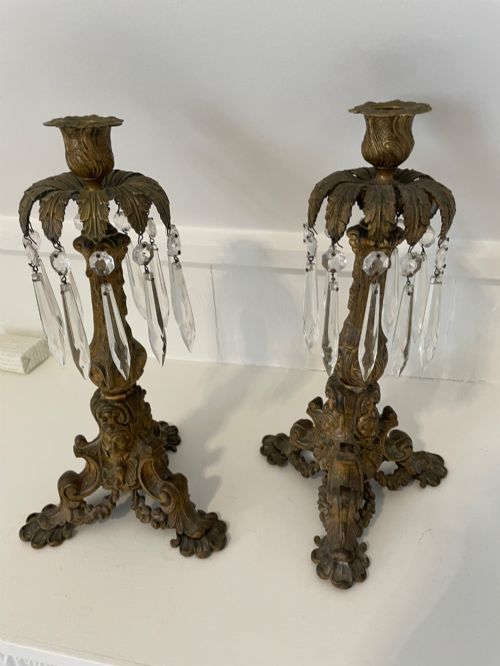
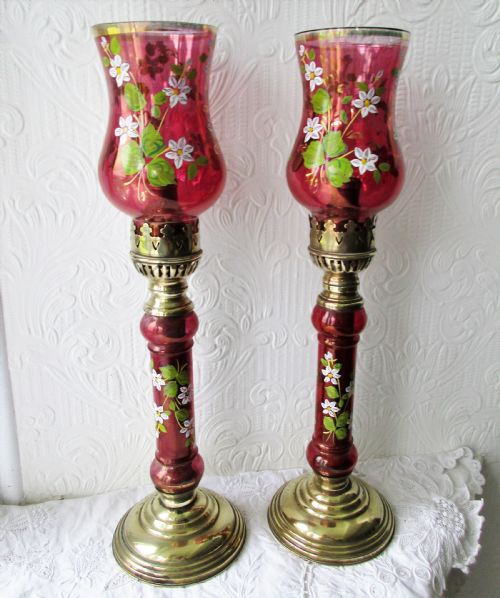
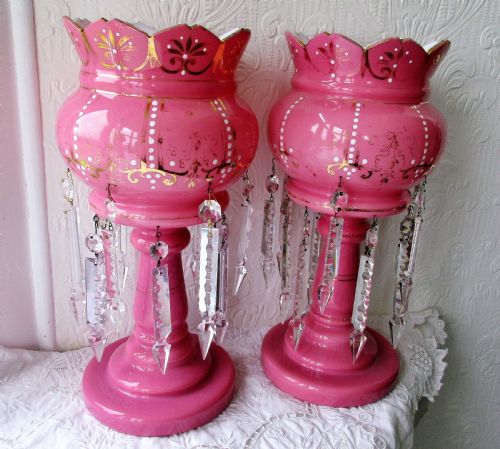
The most common version met on this page is the Victorian pair, typically fashioned from coloured or cut glass and fitted with hanging crystal prisms. Makers employed varied hues including ruby, green, pink, and clear crystal, often elevated on brass, bronze, or ormolu bases.
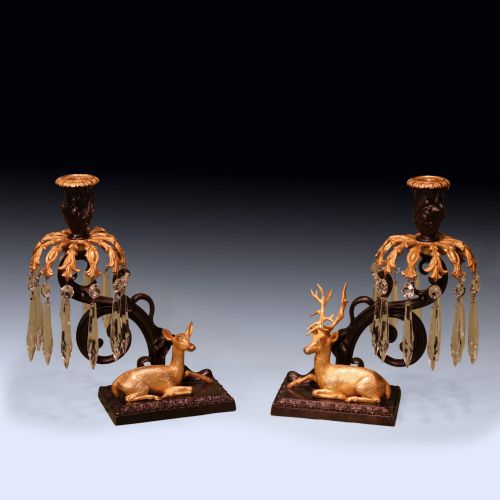
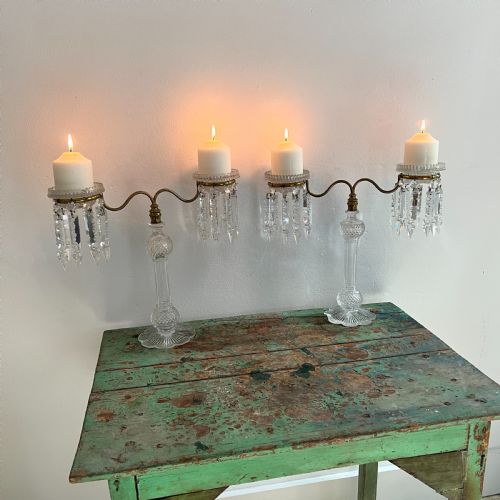
Object types include standard candlesticks combined with lustre drops, candle lamps with storm shades, and elaborately mounted stag and doe figures. Buyers encounter single items as well as matched pairs suited for fireplace mantelpieces and dining tables.
How they were made
Glassmakers utilised techniques of cutting, overlay, and flash glass to create coloured bodies that reveal clear crystal underneath. Overlay and flash methods involve fusing a thin layer of coloured glass over a clear or contrasting core before wheel-cutting decorative panels and motifs.
Metal components such as brass, ormolu, gilt bronze, and metal wire provide structural support and decorative mounts for the glass bodies. Enamel and gold leaf frequently add surface embellishment to the glass bowls and stems, secured through firing and gilding processes.
Glass Lustre Candle Holders Retail Price Guide 2026
Typical asking prices for glass lustre candle holders among the pieces listed under this phrase on Sellingantiques today, from the lower quarter to the upper quarter. They describe what is for sale here now, not the wider market.
Some Victorian lustre pairs feature bronze stag and doe figures standing beneath the candle sockets, ready to hold your illumination.
What varies in quality
The sophistication of the glass cutting and the depth of the metal casting distinguish finer examples from simpler production. Crisp facet-cutting on the crystal body and intricate chasing on the bronze or brass mounts indicate superior craftsmanship.
The presence of complete, matching crystal drops and original storm shades or ormolu details elevates an example. Weight, clarity of the glass, and the richness of coloured glass hues such as deep ruby or layered bohemian overlay mark the upper tier.
Clarkes
The Glass Lustre Candle Holders Glossary
- Lustre
- A ornamental candlestick or vase fitted with a ring of hanging glass pendants that catch and reflect light. These pendants are often termed prisms or drops.
- Prism
- A cut glass pendant suspended from the rim of a lustre to refract candlelight. They take various shapes, including spear, teardrop, and button forms.
- Ormolu
- Gilt bronze mounted onto furniture, clocks, and lighting fixtures during the eighteenth and nineteenth centuries. The technique involves applying a mercury and gold amalgam to bronze.
- Flash glass
- A vessel comprising a thin layer of coloured glass cased over a body of clear glass. Cutting through the outer coloured layer exposes the clear glass beneath to form patterns.
- Cricklite
- A brand of patent table lamp and candelabra produced during the late Victorian period. These pieces frequently incorporate specialised glass shades and brass stands.
Glass Lustre Candle Holders: Frequently Asked Questions
What are glass lustre candle holders?
Glass lustre candle holders are decorative pieces featuring a central socket for a candle surrounded by dangling crystal prisms. They were designed to refract light from candles placed on mantelpieces and tables.
These items combine glass bodies in colours like ruby, green, and clear crystal with brass, bronze, or ormolu mounts. The hanging drops move and sparkle when air currents stir the room.
How were lustre candle holders used?
People placed lustre candle holders on drawing room mantelpieces, sideboards, and dining tables to provide ambient illumination. The glass prisms amplified the flicker of the candle flame.
Some examples included storm shades to protect the flame from drafts, while others functioned purely as decorative ornaments flanking clocks or mirrors.
How do I care for my lustre candle holder?
Careful dusting with a soft, dry cloth preserves the glass surfaces and metal gilding. Prisms can be washed individually in warm soapy water and dried thoroughly before rehanging.
Avoid using harsh chemical cleaners on brass or ormolu mounts, as these can strip the original patination and gilt finishes. Handle the hanging crystal drops gently to prevent chipping.
How do I identify Victorian glass lustres?
Victorian examples often feature vibrant coloured glass such as ruby, green, or pink, sometimes combined with Bohemian overlay techniques. They frequently rest on brass, bronze, or ormolu bases.
Proportions tend to be sturdy, and the cutting on the glass body reflects nineteenth-century manufacturing methods. Matching pairs are particularly characteristic of this period.