




Victorian Cut Glass Ornaments
Victorian cut glass ornaments bring brilliant sparkle and period charm to a room, catching the light in a way few other decorative objects can.
Victorian Cut Glass Ornaments
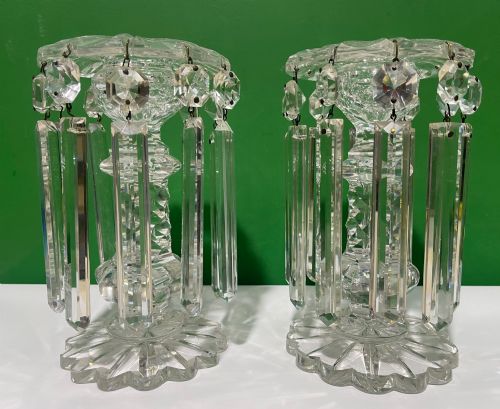
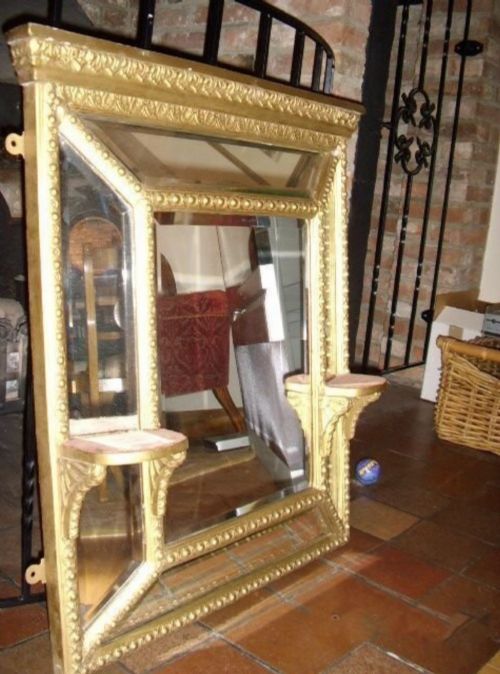
Victorian cut glass ornaments encompass decorative table lustres, mantel lustres, and bevel cut mirrors dating from the nineteenth century. These items were designed to sit upon mantelpieces and side tables, reflecting candlelight and gaslight through cut facets and hanging prisms.
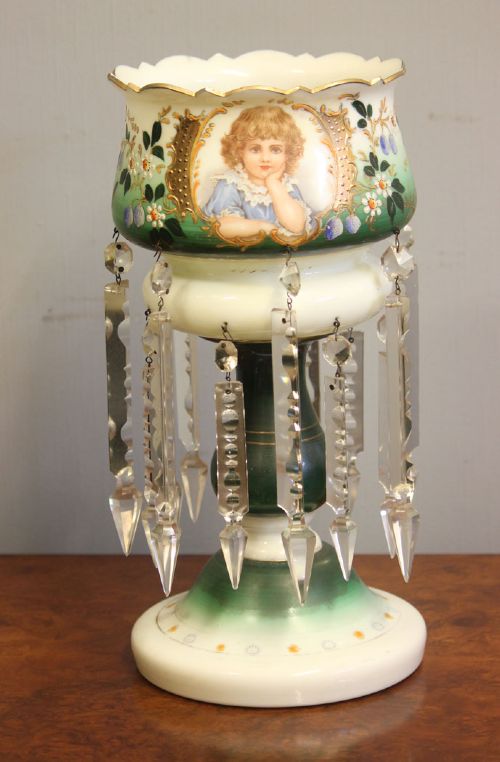
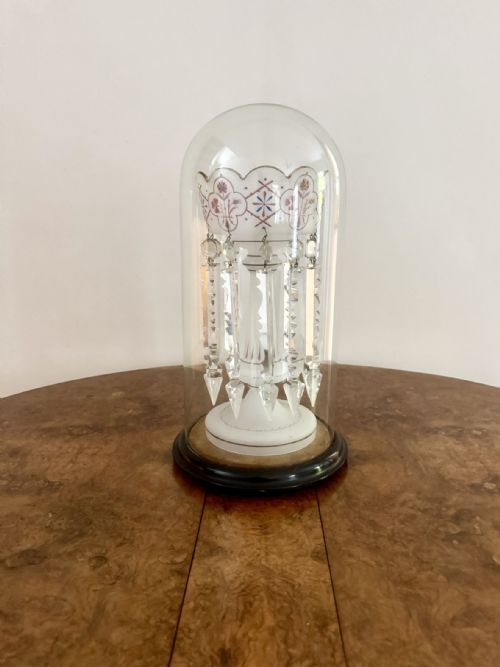
The most common version met on this page is the lustre, usually found as a pair featuring a central column with hanging crystal drops. They span various colours including green and ruby glass, alongside clear lead crystal, reflecting the diverse tastes of the nineteenth century.
How they were made
Glassmakers shaped these ornaments using lead crystal and coloured glass, often applying enamel or gilt decoration to the surface. Molten glass was blown or moulded into form before skilled artisans cut geometric patterns by hand against a revolving wheel.
Hanging glass prisms and drops were wired onto the rims using metal wire, completing the assembly of lustre ornaments. Wall mirrors incorporated bevel cut glass plates mounted alongside ornament shelves.
Victorian Cut Glass Ornaments Retail Price Guide 2026
Typical asking prices for victorian cut glass ornaments among the pieces listed under this phrase on Sellingantiques today, from the lower quarter to the upper quarter. They describe what is for sale here now, not the wider market.
Listings feature items from the 19th century, specifically the Victorian era, spanning clear crystal and coloured glass materials.
What varies in quality
Quality rests upon the crispness of the glass cutting and the clarity of the crystal material itself. Finer examples display deep, sharp facets that refract light brilliantly, whereas lesser pieces show softer, shallower grinding.
The richness and depth of coloured glass, such as ruby or green hues, alongside the fineness of any enamel and gilt work, distinguish superior items. The presence of matching sets of original hanging prisms further elevates an ornament.
The Victorian Cut Glass Ornaments Glossary
- Lustre
- A ornamental tabletop vase or stand fitted with hanging crystal prisms designed to reflect light. They were immensely popular during the Victorian period for mantelpiece decoration.
- Lead crystal
- A heavy, brilliant form of glass containing lead oxide that increases sparkle and makes cutting easier. This material is standard for finer nineteenth-century decorative pieces.
- Bevel cut
- An edge cut at an angle rather than perpendicular to the surface, creating a framed effect on mirrors. It reflects light at different angles to add depth.
- Ruby glass
- A deep red decorative glass produced by adding gold chloride to the molten batch. It appeared frequently in Victorian table ornaments and lustres.
Victorian Cut Glass Ornaments: Frequently Asked Questions
What is a mantle lustre?
A mantle lustre is a decorative tabletop ornament featuring a central stem and a bowl hung with crystal prisms. They stood upon fireplace mantelpieces to catch and multiply the flickering light of candles.
During the nineteenth century, these pieces served both as functional light reflectors and as grand decorative statements in formal rooms.
How do I clean cut glass lustres?
Cleaning requires warm soapy water and a soft cloth, washing each hanging glass prism individually by hand. Harsh chemicals must be avoided to protect any gilt or enamel surface details.
Metal wire connections holding the prisms should be handled with care to prevent bending or detaching the delicate crystal drops during the process.
Are these ornaments always found in pairs?
Many Victorian decorative pieces were manufactured as symmetrical pairs to flank a central clock or ornament on a mantelpiece. Surviving matching pairs remain highly desirable for traditional interior displays.
Single pieces do appear occasionally due to the separation of sets over long periods of domestic use and shifting ownership.
What colours did Victorian glassmakers use?
Victorian makers produced decorative glass in clear crystal alongside vibrant hues such as rich ruby red and deep green. Enamel and gilt highlights were frequently applied over these base colours to add ornate contrast.
Colour selection often reflected prevailing tastes of the nineteenth century, shifting from vivid tones to clear lead crystal depending on the decade.