

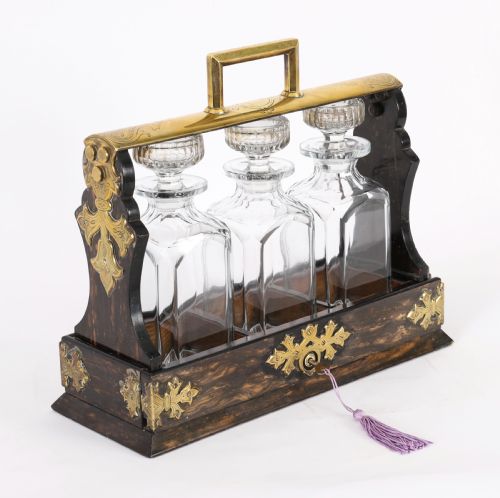


Crystal Decanter Tantalus
A crystal decanter tantalus locks away fine spirits behind a clever metal bar, combining security with display for the Victorian and Edwardian dining room.

Crystal Decanter Tantalus
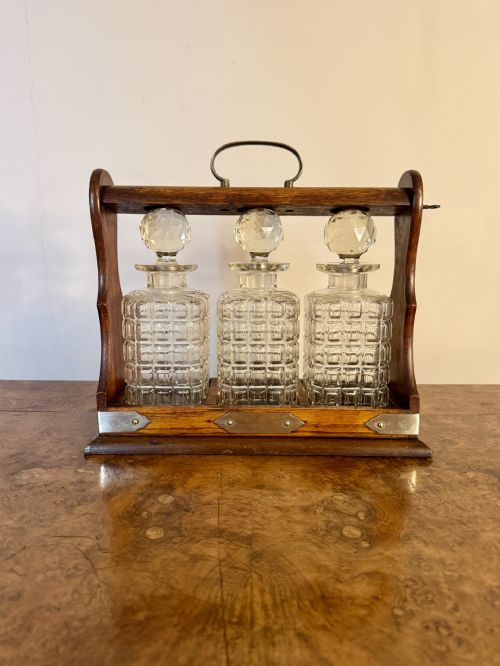
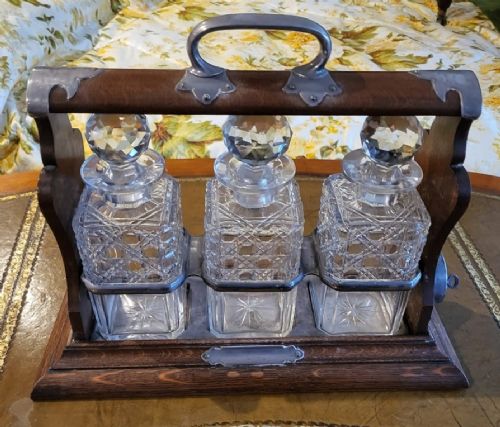
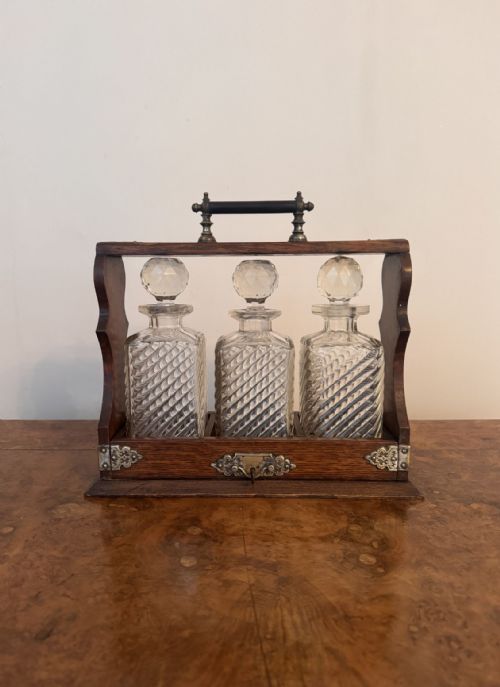
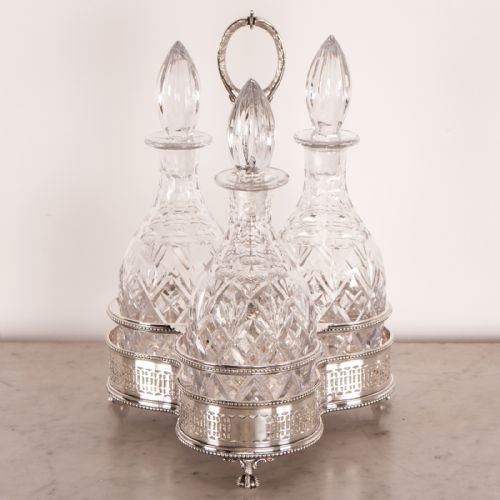
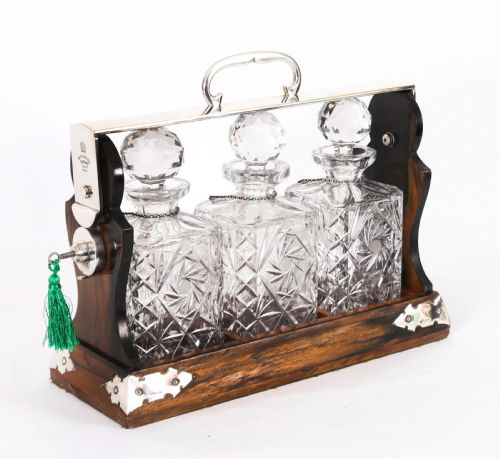
A crystal decanter tantalus houses two or three cut glass or crystal bottles inside a secure frame fitted with a locking mechanism. The design prevents unauthorized access to the liquor by trapping the stoppers beneath a metal bar when locked.
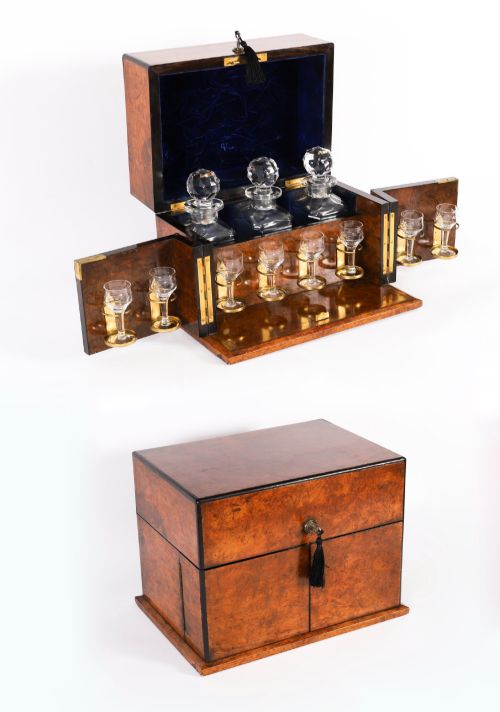
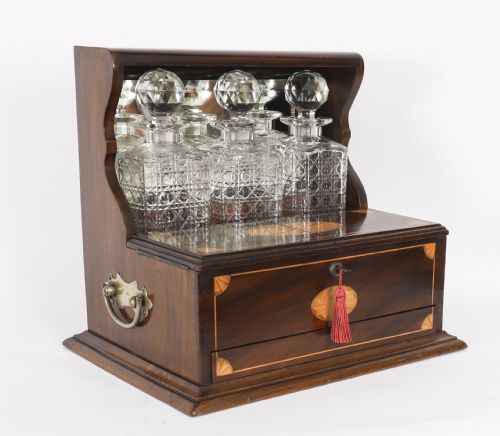
Most examples encountered on this page stem from the Victorian and Edwardian eras, constructed from timbers such as oak, walnut, and coromandel. These pieces frequently incorporate silver-plated mountings and sometimes double as games compendiums or dry bars with hidden drawers.
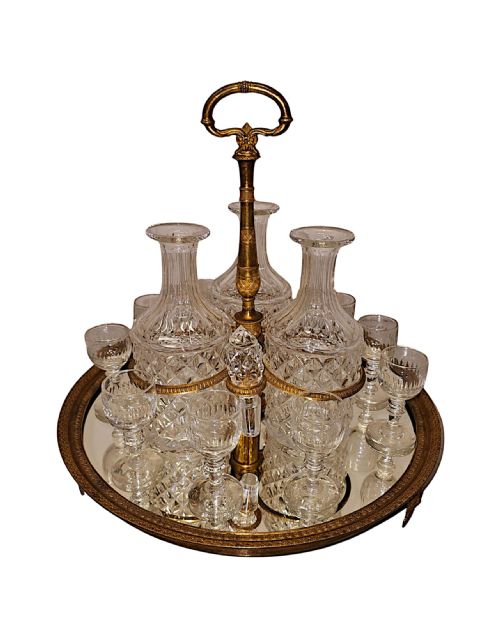
Makers housed these drinking vessels in everything from compact single bottle cases to elaborate multi-bottle frames complete with matching glasses and tot pails. French variations, often termed cave a liqueur, feature ormolu mounts and delicate glass sets within hinged boxes.
How They Were Made
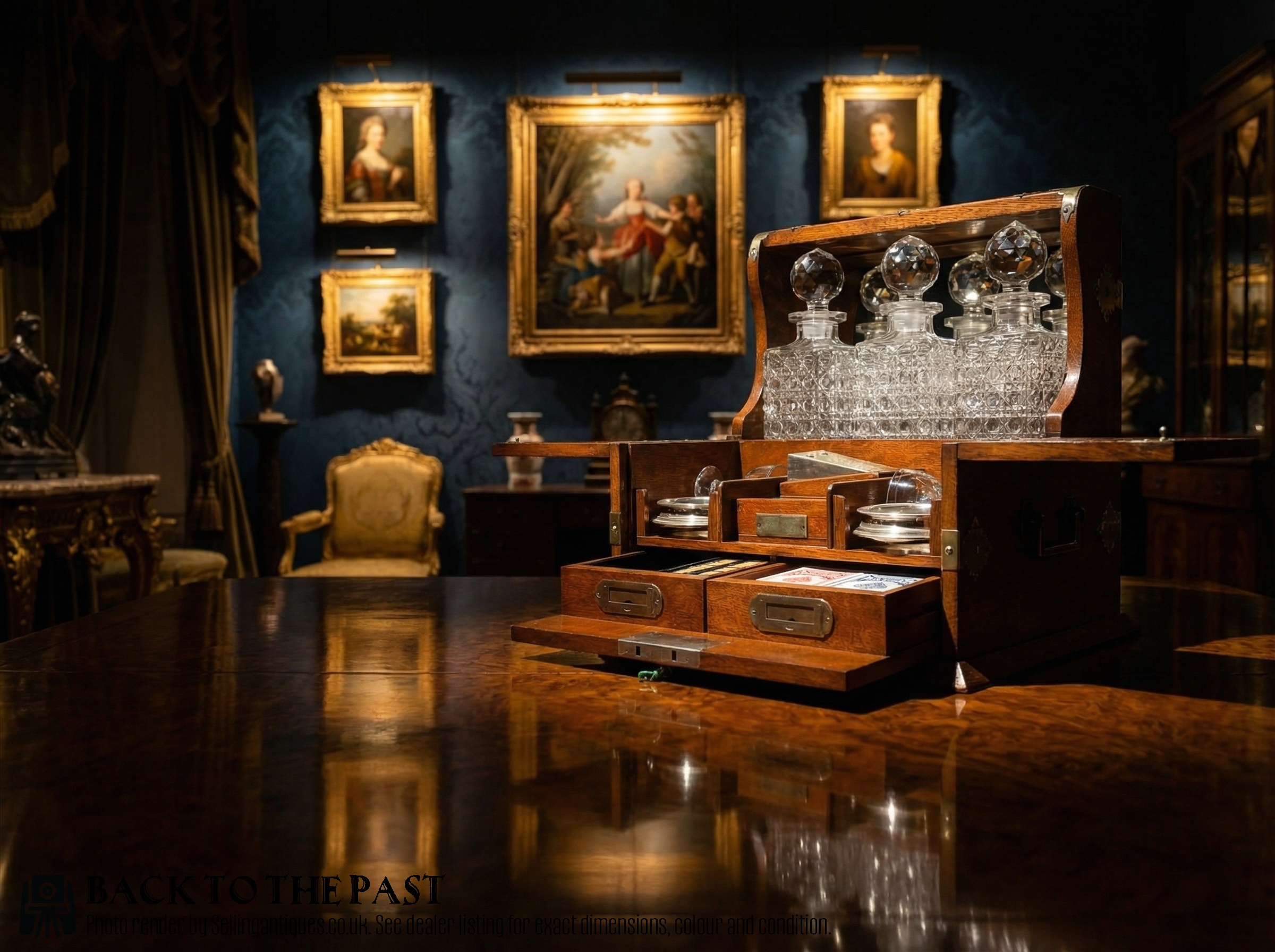
Cabinetmakers constructed the wooden frames using solid and veneered hardwoods like pollard oak, burr walnut, satinwood, and exotic coromandel, frequently incorporating intricate marquetry and brass carrying handles. These enclosures required precise joinery to house internal games boards, cribbage pegs, and velvet-lined compartments alongside the beverage bottles.
Metalworkers fabricated the locking security bars and carrying handles from brass, chrome, or heavy silver plate over a base metal, engineered to slide smoothly when unlocked with a key. Silversmiths and electroplaters stamped their marks onto the metalwork of the framework and bottle collars.
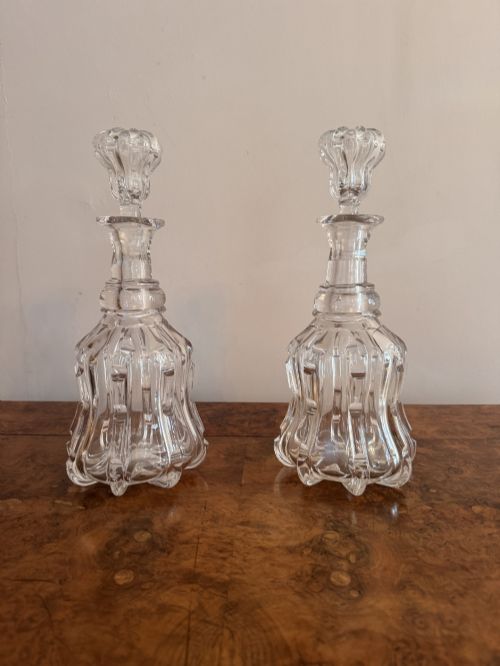
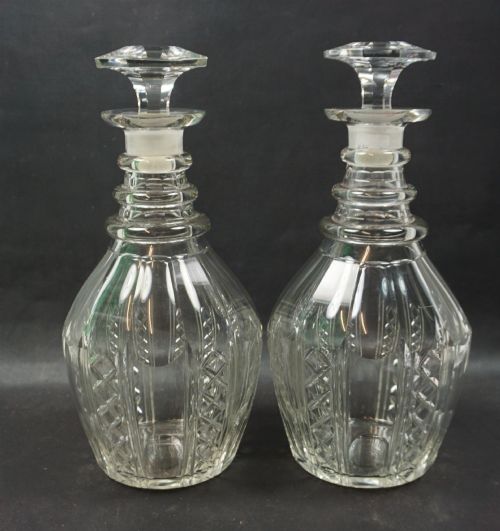
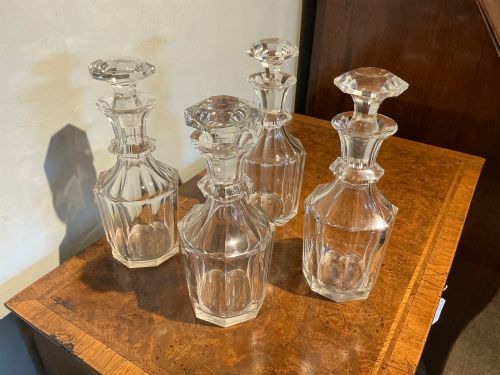
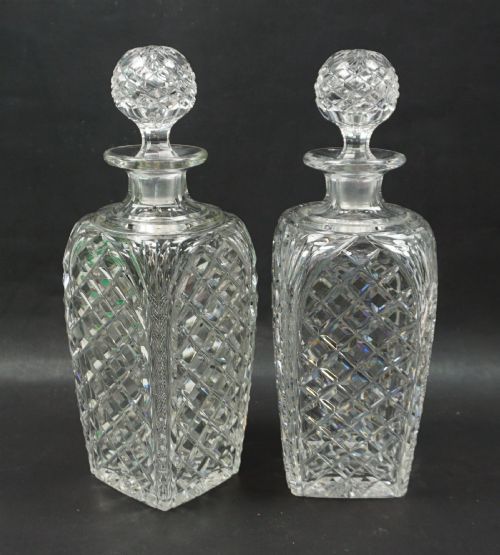
Glassmakers produced the decanters using heavy cut crystal or moulded glass, often featuring deep diamond cuts, fluting, or star bottoms to refract light through the liquor. Stoppers were hand-ground to fit specific bottle necks tightly, preventing evaporation of the contents.
Crystal Decanter Tantalus Retail Price Guide 2026
Typical asking prices for crystal decanter tantalus among the pieces listed under this phrase on Sellingantiques today, from the lower quarter to the upper quarter. They describe what is for sale here now, not the wider market.
Listings feature oak, walnut, coromandel, and mahogany frames paired with cut crystal decanters and silver-plated metalwork.
What Varies In Quality
The choice of cabinet timber and complexity of the internal fittings dictate the tier of the piece, moving from plain oak frames to richly figured burr walnut and coromandel with extensive inlay. Inclusion of integrated games compendiums, cribbage boards, and secret drawers elevates the scope and ambition of the work.
The sophistication of the locking mechanism and the weight of the silver plate or brass mounts distinguish standard production items from high-end maker pieces. Hallmarked silver components and patented locking systems indicate superior workshop standards.
The clarity, weight, and depth of the cut glass decanters affect the overall standard, particularly when matched with original stoppers and complete sets of supplementary glasses. Uniformity in the crystal cutting and the absence of replacement bottles preserve the integrity of the ensemble.
Walker & Hall·Betjemann·Elkington·Baccarat·Hukin and Heath·The Goldsmith Co.
The Crystal Decanter Tantalus Glossary
- Tantalus
- A locking drink container frame that displays decanters while frustrating would-be drinkers by trapping their stoppers. Named after the mythical Greek figure Tantalus who was condemned to stand in water that receded when he tried to drink.
- Cave a liqueur
- A French-style boxed liquor set featuring fitted compartments for bottles and small glasses. These containers often rely on hinged opening lids and doors rather than sliding security bars.
- Silver plate
- A thin layer of silver fused or electroplated onto a base metal foundation such as copper or nickel brass. This technique allowed manufacturers to create decorative mountings at a lower cost than solid silver.
- Coromandel
- A dense, heavily figured timber imported from Asia and used for luxury Victorian cabinetwork. It displays dark brown and black grain patterns that contrast sharply with lighter woods.
- Compendium
- A multi-purpose box containing games, cards, or writing equipment alongside the primary liquor storage. These pieces combined social entertainment elements into a single fitted cabinet.
Crystal Decanter Tantalus: Frequently Asked Questions
How does a tantalus lock work?
The locking bar drops down over the glass stoppers of the decanters, preventing them from being lifted out of their individual recesses in the wooden base. Turning a key in the mechanism secures the metal arm in place.
When the key is turned to open the lock, the bar slides sideways or tilts upward to free the stoppers so the bottles can be lifted.
What is a liquor cave?
A liquor cave, or cave a liqueur, is a continental European boxed drinks cabinet that houses decanters and glasses within a hinged wooden case. Unlike traditional English tantalus frames, these containers enclose the entire glassware set behind doors or lids.
Many examples feature ormolu mounts and velvet-lined interiors designed for formal drawing room entertaining.
Are the decanters original to the frame?
Decanters frequently became chipped or broken through heavy use, leading to period replacements being fitted into the wooden bases. Matching the cut glass patterns and the precise fit of the stoppers helps determine if the bottles belong to the original housing.
Makers often numbered the base of the decanters and the interior wood to ensure the correct bottle returned to its specific slot.
How should I clean the wood and metal?
Wooden surfaces require gentle cleaning with a soft cloth and traditional wax polish to maintain the finish without stripping the historic patina. Moisture must be kept away from veneered surfaces and old locking mechanisms.
Silver-plated mounts benefit from minimal polishing using non-abrasive cloth to preserve the underlying plating on brass and base metal foundations.