

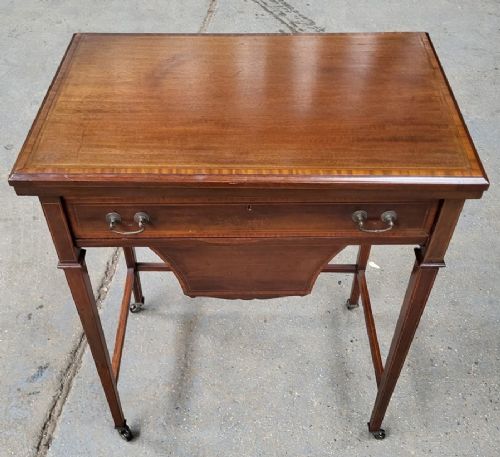
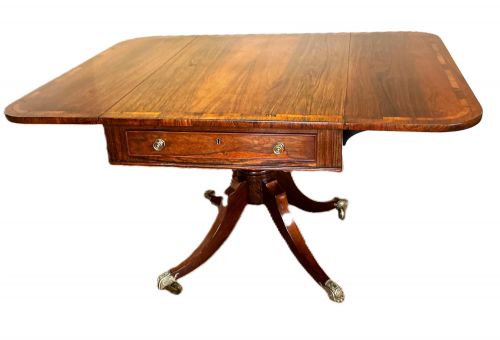

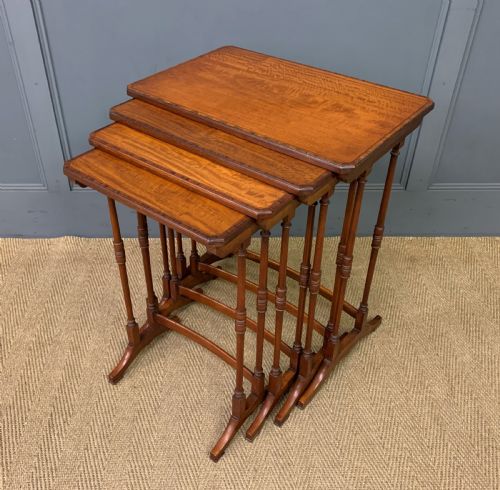
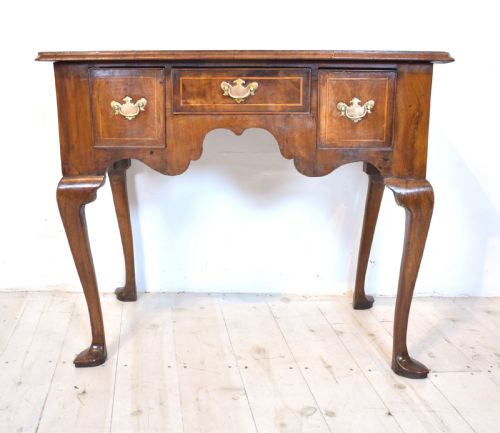

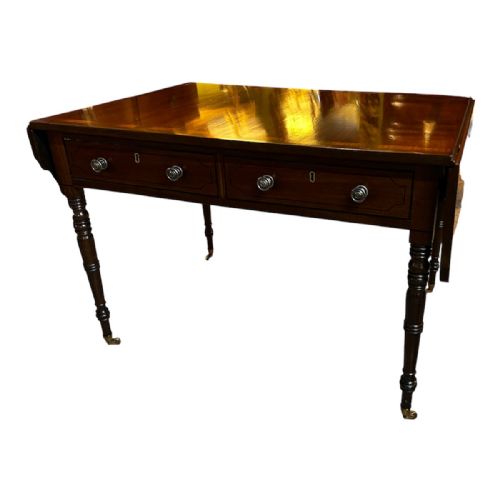
Crossbanded Side Table
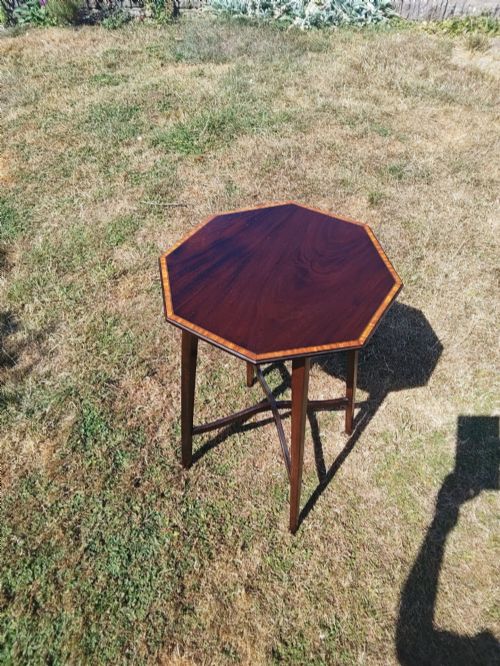
A crossbanded side table brings a polished border of contrasting timber to the perimeter of a room.
Crossbanded Side Table
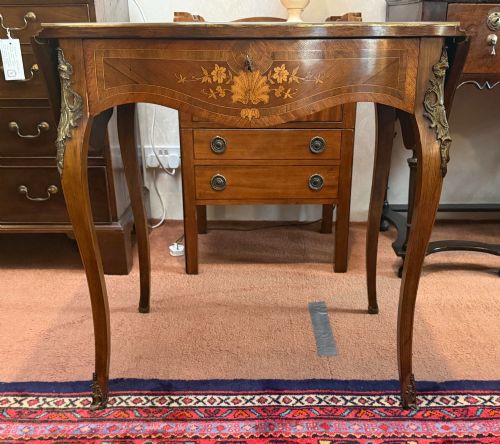
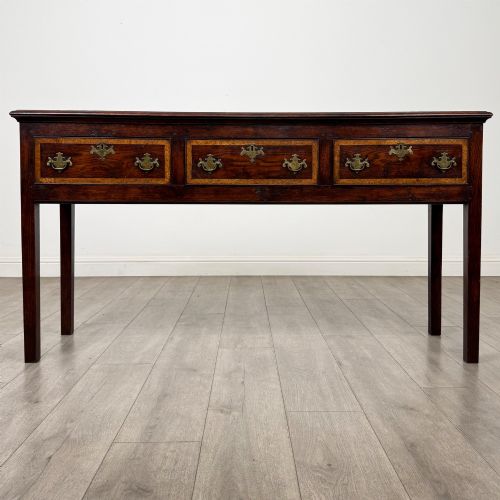
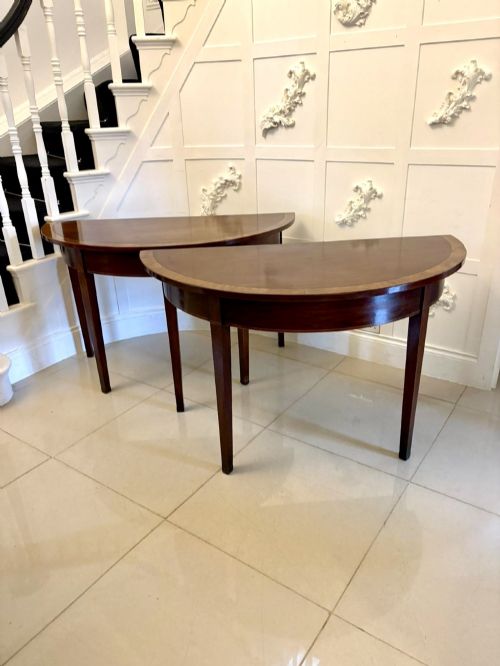
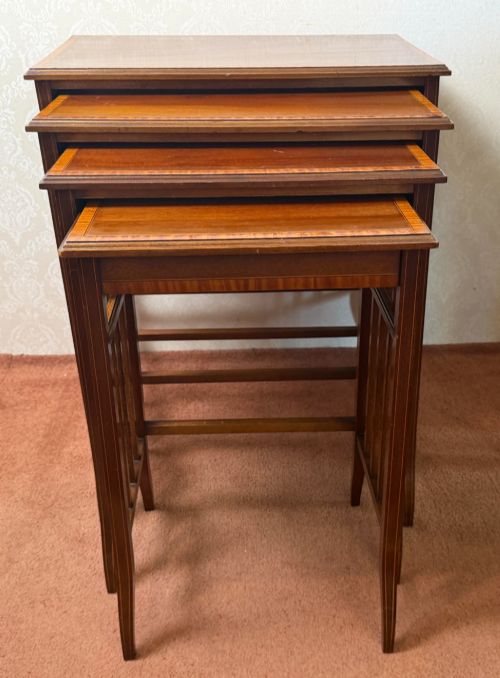
A crossbanded side table is a piece of furniture designed to sit against a wall or beside a chair, defined by a distinct band of veneer laid across the grain of the primary top timber. Buyers searching for a crossbanded side table will find examples ranging from 18th-century Georgian pieces to Edwardian and Regency adaptations.
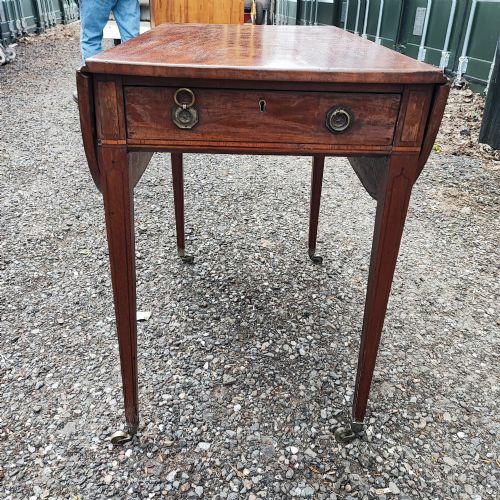
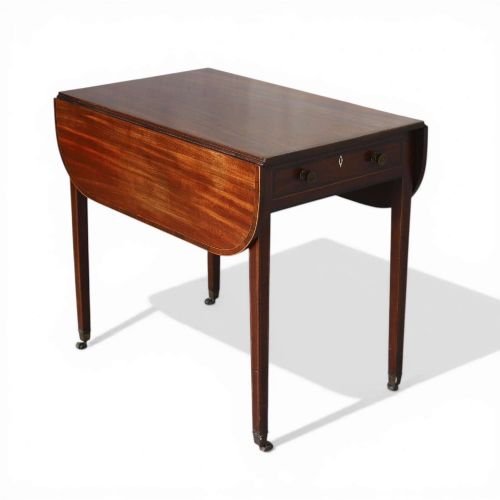
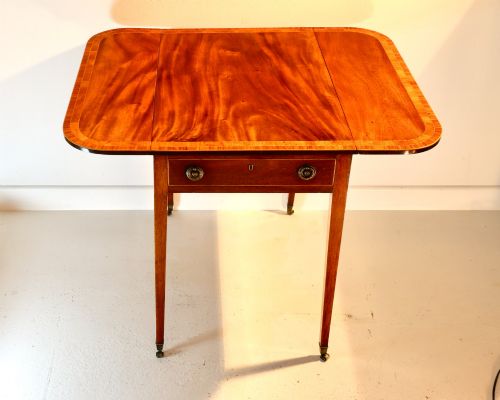
The form appears frequently as a Pembroke table with drop leaves, a console table, a lowboy, or a compact occasional table. Mahogany and satinwood predominate among the surviving pieces, often paired with rosewood, walnut, or boxwood banding.
Pieces span periods including George III, the Regency era, and the Edwardian period, alongside later Georgian revival items. These tables offer a practical surface while displaying the decorative framing characteristic of period cabinet work.
Materials and construction
Cabinet makers constructed these tables using a solid or veneered timber base such as mahogany, walnut, or oak, applied with contrasting decorative veneers. Crossbanding involves laying strips of wood veneer so the grain runs at right angles to the central panel, framed by fine stringing lines in boxwood or ebony.
Makers utilised brass handles, castors, and hinges on movable elements like Pembroke flaps and drawer mounts. The structural joinery relies on traditional methods suited to supporting weight while maintaining slender legs, such as square tapered legs or turned supports.
Listings feature mahogany, satinwood, rosewood, and walnut across 18th-century, Regency, and Edwardian periods.
Judging quality and execution
Quality rests upon the crispness of the inlay work and the harmonious selection of timber figures, such as figured mahogany or burr walnut. Finer examples maintain precision in the mitred corners of the crossbanding and the retention of original brass hardware.
Proportion and structural integrity separate robust workshop output from simpler production. The best pieces show careful grain matching across the top and drawers, whereas simpler items rely on plain timber without the same attention to decorative contrast.
The Crossbanded Side Table Glossary
- Crossbanding
- A border of veneer laid with the grain running perpendicular to the central panel. This technique frames the top surface of a table with a contrasting strip of timber.
- Pembroke table
- A small rectangular table featuring two hinged drop leaves on opposing sides. It often includes one or two drawers and slender legs.
- Lowboy
- A small low dressing or side table with drawers, originating in the early Georgian period. They typically stand on four legs and utilise solid walnut or oak.
- Satinwood
- A durable hardwood with a lustrous yellowish grain used extensively for inlay and banding. Cabinet makers favoured it for its bright contrast against darker woods like mahogany.
- Stringing
- A narrow strip of contrasting wood inlay used to outline drawers and table tops. It provides a delicate linear border inside the wider crossbanding.
Crossbanded Side Table: Frequently Asked Questions
What is a crossbanded side table?
A crossbanded side table is a small surface featuring a decorative border of veneer where the wood grain runs across the width of the framing strip rather than along the length.
These tables were produced across the Georgian, Regency, and Edwardian periods in various forms including Pembroke tables, lowboys, and console tables.
How do I identify a Georgian side table?
Georgian side tables often display solid mahogany or oak construction, square tapered legs, and subtle satinwood or boxwood inlay.
They date from the 18th and early 19th centuries and prioritise functional proportions alongside refined cabinet work.
What woods were used for crossbanding?
Cabinet makers commonly utilised satinwood, rosewood, kingwood, and partridge wood to create contrasting borders against mahogany or walnut bodies.
Fine stringing lines in boxwood frequently accompany these bands to separate the different timber tones.
Where should I place a side table?
These compact tables fit well in hallways, beside seating areas, or against empty wall spaces where a surface for lamps or small objects is needed.
Pembroke and drop-leaf versions also allow the footprint to adjust depending on the available room.