


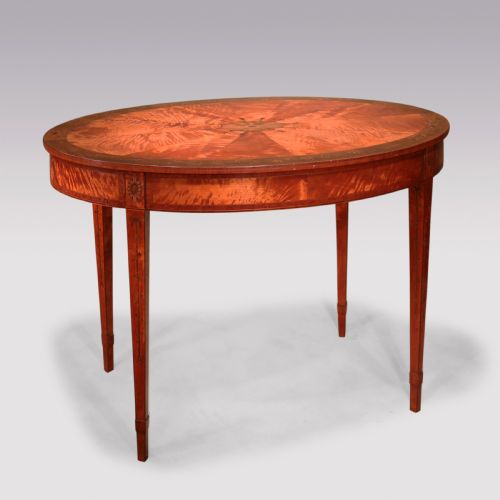


Crossbanded Coffee Table
A crossbanded coffee table brings figured timbers and formal stringing into daily use, offering low surfaces shaped in oval, rectangular, and nested forms.
Crossbanded Coffee Table
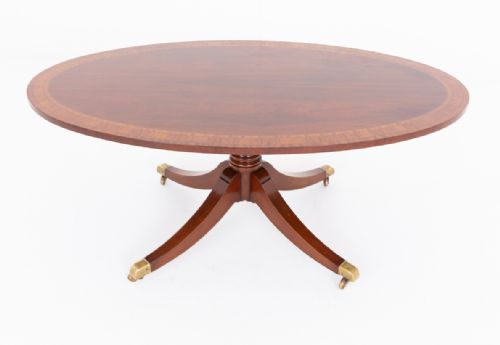
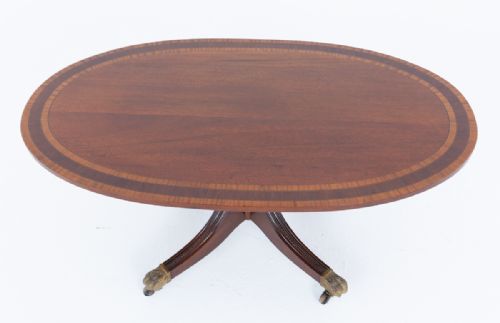
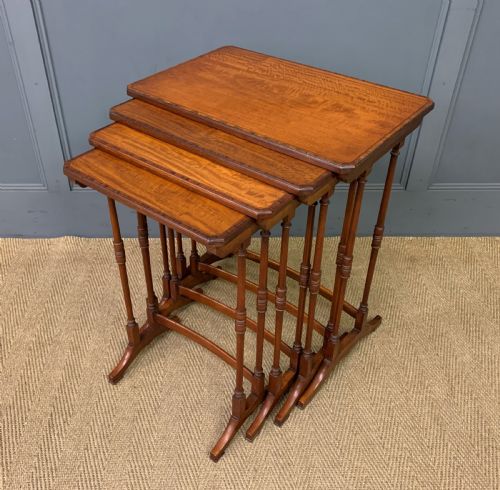
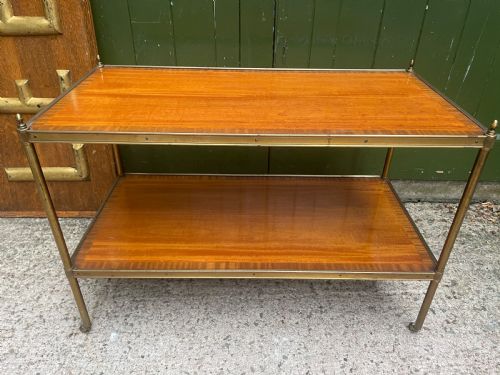
A crossbanded coffee table is typically encountered as an Edwardian or early twentieth-century piece drawing upon Regency and Sheraton Revival design. These low tables appear in forms ranging from oval flame mahogany coffee tables and dropleaf examples to nests of four tables and brass-framed two-tier satinwood etageres.
Makers adapted earlier occasional tables, centre tables, and quartetto nests to suit domestic seating arrangements. The surviving stock spans the nineteenth century up through the nineteen-twenties, incorporating English traditional craftsmanship and Art Deco walnut interpretations.
Materials and construction
Construction relies upon primary cabinet timbers such as mahogany, burr walnut, and timber frameworks, finished with contrasting borders of satinwood and boxwood inlay. Grain selection dictates the visual impact, particularly where flame mahogany or burr walnut provides a dramatic patterned surface.
Detailing often includes brass framing, drop leaves, and multi-tiered structures designed for stability. Inlaid stringing and crossbanding frame the central panels, requiring precise woodworking techniques to join grain directions at right angles.
Some tables double as game surfaces, proving that ancestors enjoyed a quiet wager with their afternoon tea.
Assessing quality and execution
The distinction between ordinary and superior pieces rests upon the choice of veneer and the precision of the inlay work. Finer examples display carefully matched flame veneers and crisp satinwood crossbanding that integrates seamlessly with the primary timber.
Structural integrity also separates the output, visible in the balanced proportions of nests, the smooth movement of dropleaf mechanisms, and the retention of original brass mounts or framing.
The Crossbanded Coffee Table Glossary
- Crossbanding
- A border strip of veneer laid perpendicular to the grain of the main surface. This technique frames the top panel and accentuates the geometry of the table.
- Inlay
- Contrasting woods or materials set flush into the surface to create decorative motifs. Satinwood and boxwood are frequently utilised for this purpose.
- Flame mahogany
- A cut of timber displaying a distinctive branching flame pattern. It is prized for its lively figure on large oval table tops.
- Quartetto tables
- A nested set of four small occasional tables designed to slide one beneath another. They typically date from the Edwardian period.
- Etagere
- A multi-tiered open display or serving table. Brass framing and satinwood shelves characterise these low tables.
Crossbanded Coffee Table: Frequently Asked Questions
What periods do these tables date from?
The available pieces span from the nineteenth century through the Edwardian era and into the nineteen-twenties. Many draw heavily upon earlier Regency and Sheraton Revival styles.
Craftsmen of the early twentieth century frequently reinterpreted classic eighteenth-century forms to serve contemporary domestic requirements for low surfaces.
How do nested tables function in a room?
A nest of tables provides multiple surfaces that occupy the floor space of a single small table when stacked. They are easily separated for serving drinks or holding books.
Edwardian quartetto sets stack four graduated tables compactly within one another, making them adaptable for compact sitting areas.
What is the difference between a centre table and a coffee table?
Centre tables were originally tall enough to stand freestanding in the middle of a Victorian or Regency room. Many low coffee tables on the market are later adaptations or low-slung designs created specifically for modern seating heights.
Proportions and underframe clearance distinguish low occasional tables from their taller historical precedents.
How should I care for inlaid wood surfaces?
Polished timber surfaces require protection from direct sunlight and excessive heat to prevent the veneer from drying or cracking. Regular dusting with a soft, dry cloth preserves the finish.
Avoid placing damp items directly onto antique wood to protect the delicate boxwood and satinwood stringing from moisture damage.