
Antique Wood Centre Table
An antique wood centre table stands free in a room, offering a functional surface with visibility from every angle.
Antique Wood Centre Table
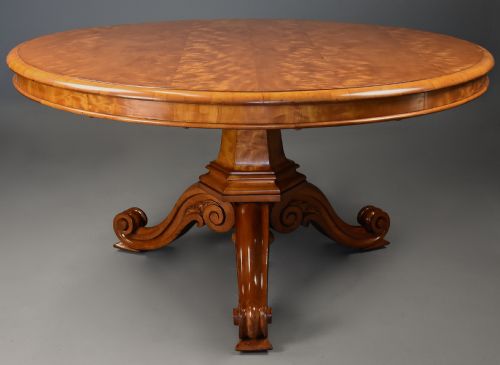
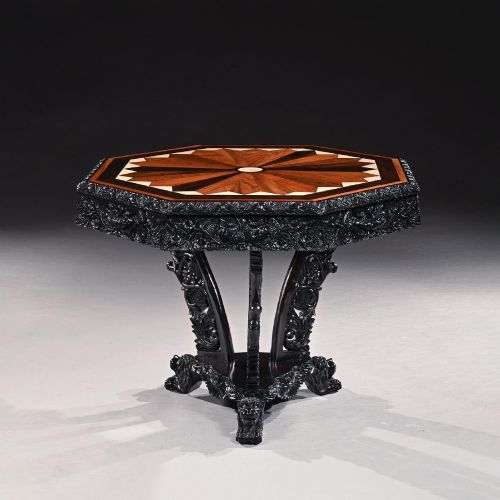
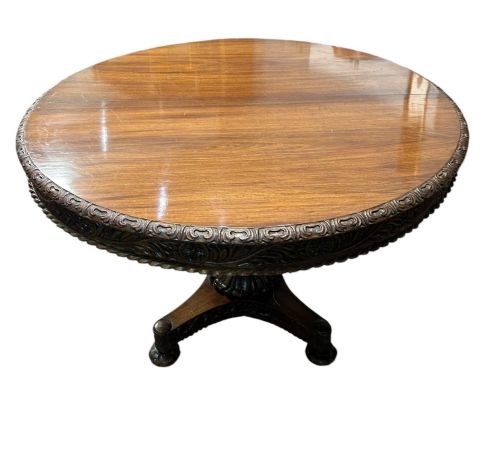
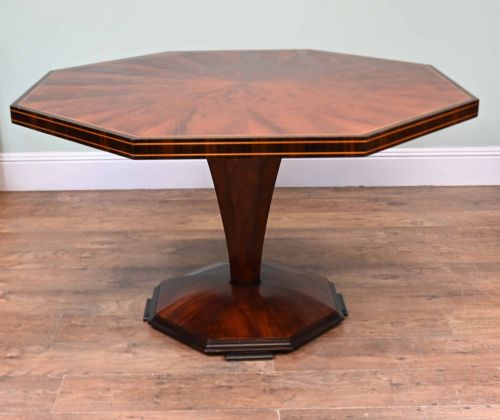
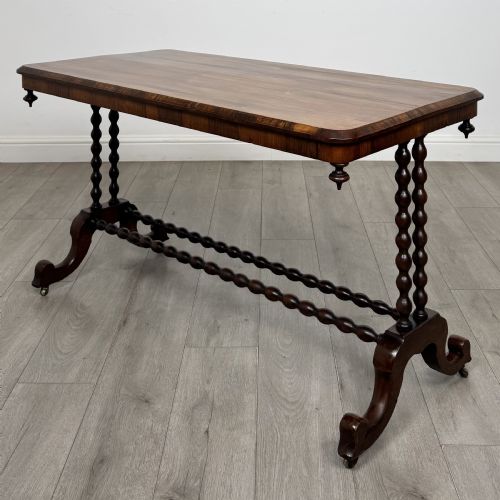
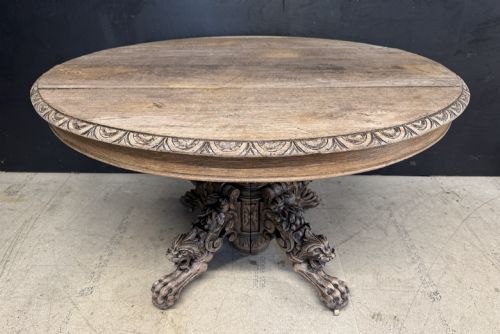
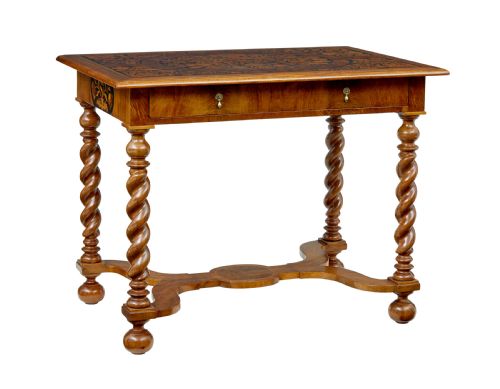
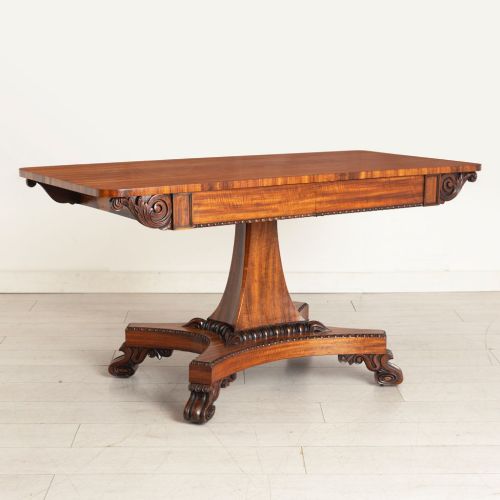
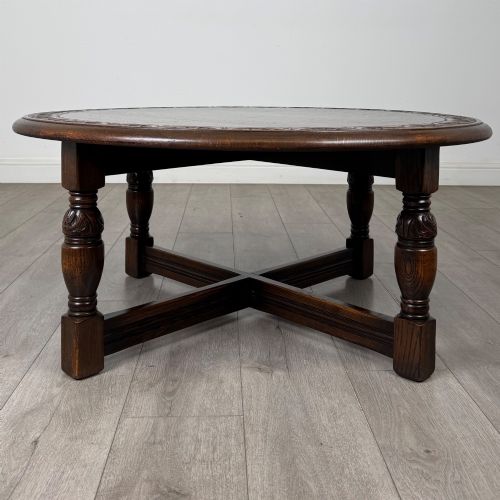
The antique wood centre table is a freestanding piece designed to sit in the middle of a room rather than against a wall. The selection spans the nineteenth and twentieth centuries, encompassing Victorian, Regency, and William IV eras.
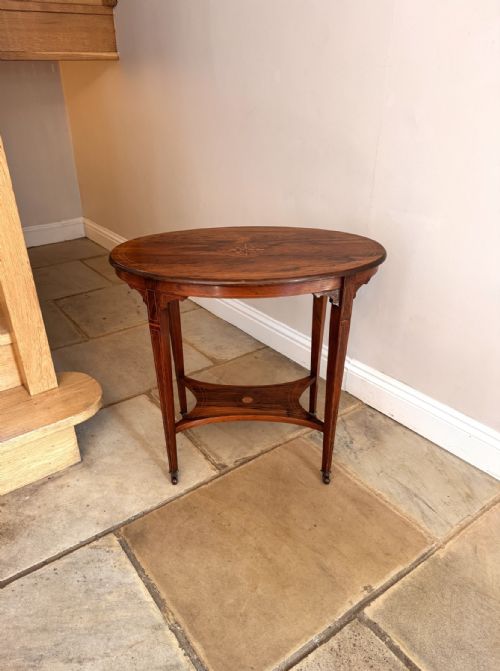
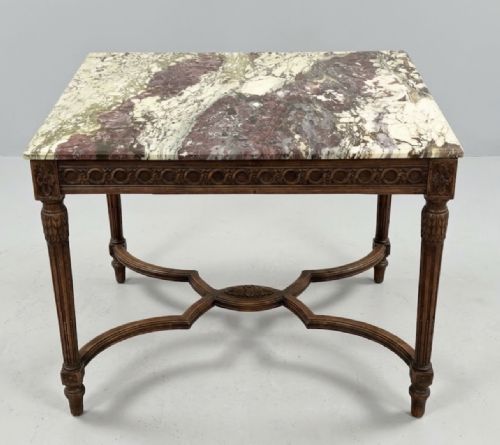
Most examples meet the eye in rich timbers such as rosewood and walnut, often taking circular, oval, or rectangular forms. Makers from English workshops to French ateliers produced these tables for libraries, drawing rooms, and grand reception spaces.
Materials and construction
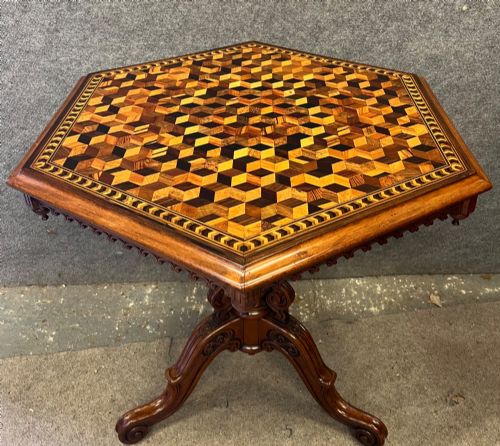
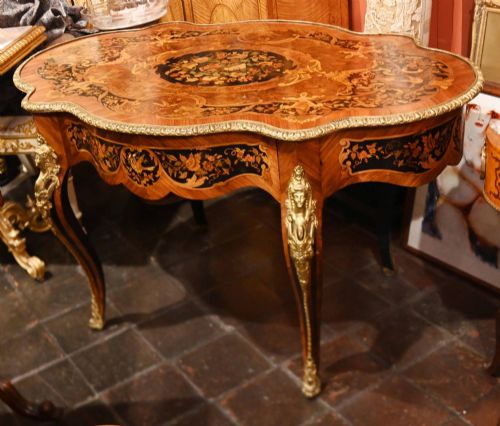
Cabinetmakers utilised dense hardwoods like mahogany, rosewood, burr walnut, and kingwood, frequently applying them as fine veneers over stable secondary timbers. Turning, carving, and parquetry define the structural and decorative execution.
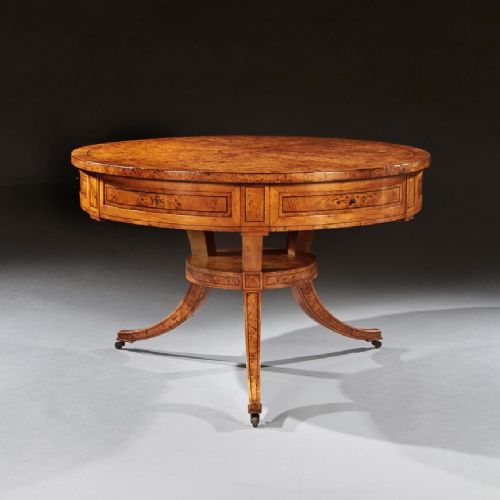
Metal mounts in brass and ormolu appear alongside marble tops, while pedestal bases rest on solid tripod or triform feet for stability.
The listings feature pieces spanning the Georgian, Regency, Victorian, and Edwardian periods, constructed in mahogany, rosewood, walnut, and satinwood.
Judging the execution
The grade of an antique wood centre table rests upon the selection of timber figure, where richly grained burr walnut or figured rosewood elevates the visual weight of the top. Cabinetmaking finesse shows in the crispness of carved details and the seamless alignment of inlaid parquetry.
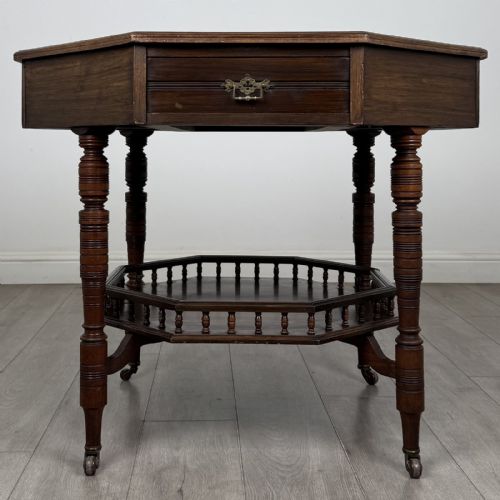
Stability and proportion dictate the architecture, ensuring a freestanding pedestal or set of turned legs supports the weight without structural compromise.
Gillows·Mein of Kelso
The Antique Wood Centre Table Glossary
- Freestanding
- Finished on all four sides or designed to be viewed from any direction in an open space.
- Tilt-top
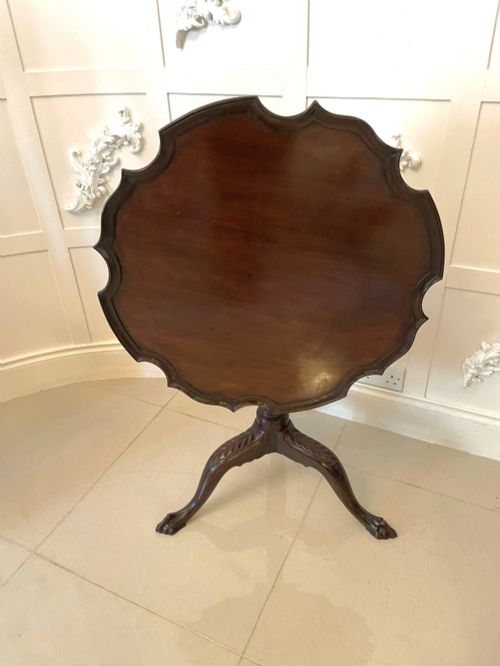
- A tabletop hinged to the pedestal, allowing it to pivot vertically for storage when not in use.
- Parquetry
- Geometric mosaic woodwork arranged in patterns resembling brickwork or parquet flooring.
- Ormolu
- Gilded bronze mounts applied for decorative accentuation on French and English tables.
- Triform
- A three-sided base structure commonly supporting the central pedestal of nineteenth-century tables.
Antique Wood Centre Table: Frequently Asked Questions
Where should a centre table go?
A centre table stands naturally in the middle of a room, allowing people to walk around it and view the piece from all sides. It serves as a focal point in a large hallway, library, or drawing room.
Because these tables are finished on every side, they do not need to anchor against a wall. Placing one beneath a central ceiling light or chandelier highlights the figured wood grain on the top.
How do I identify a Victorian centre table?
Victorian examples often feature dark, dense timbers such as rosewood or burr walnut, frequently resting on heavy carved pedestals or turned legs. Many include tilt mechanisms or intricate marquetry inlay.
Construction methods from this period typically involve solid wood bases combined with meticulously matched veneers. The presence of nineteenth-century hardware and traditional joinery further confirms the era.
What is the difference between a centre table and a dining table?
Centre tables are designed primarily for display and occasional use in open rooms, often featuring decorative pedestals or elaborate inlaid tops. Dining tables are built for seated meals and usually accommodate extension leaves.
While some larger Victorian examples served dual purposes as dining surfaces, traditional centre tables prioritise aesthetic presence and freestanding placement.
How do I care for antique wood furniture?
Maintain antique timber by keeping it away from direct sunlight and steady heat sources, which can dry out the wood and crack veneers. Dust the surface regularly with a soft, dry cloth.
Occasional application of appropriate wax preserves the sheen of the polish without building up a heavy residue. Avoid placing unprotected wet items directly on the antique wood surface.