
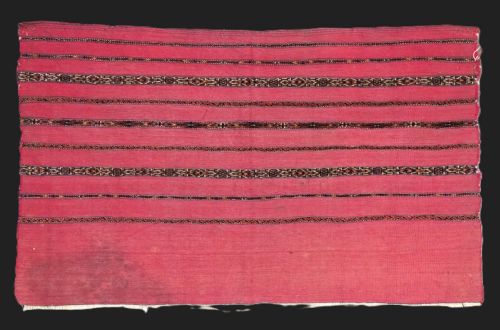


Crimson Wool Tapestry
These crimson wool tapestry pieces bring rich textile history and deep colour into a room, offering authentic tribal and traditional character for interiors.
Crimson Wool Tapestry
When you search for crimson wool tapestry, you encounter a specialised selection of antique tribal weavings, flatweaves, and embroidered textiles. The predominant items meeting this description on this page are Tekke Turkmen chuval faces, alongside Bessarabian kilims and country house bell pulls.
The selection spans periods from the eighteenth century through the nineteenth and early twentieth centuries. Pieces such as nineteenth-century Turkmen tribal weavings dominate the listings, showing strong reds and traditional gul motifs.
Buyers also find traditional Balkan kilims and French needlework items within the broader textile category. Each piece reflects the specific regional weaving traditions of its origin, whether nomadic tribal camps or European country houses.
Materials and Construction
These textiles rely primarily on wool and silk yarns, often worked upon sturdy linen foundations. Artisans employed hand embroidery and traditional flatweave techniques to build dense, durable surfaces.
Select domestic items incorporate supplementary details such as glass beads and brass hardware, particularly seen in hanging mechanisms like nineteenth-century bell pulls. Natural dyeing methods produced the deep crimson tones characteristic of these rugs and wall hangings.
Nomadic weavers occasionally embedded subtle irregularities in their repeating guls, trusting that absolute perfection belongs solely to the divine.
Assessing Quality and Execution
Quality in these textiles rests upon the fineness of the weave and the clarity of the primary motifs. Tighter knotting or finer needlework results in sharper pattern definition, particularly visible in tribal guls and floral designs.
The survival of original structural elements, such as hanging loops or complete backing fabrics, distinguishes exceptional examples. Well-preserved pile and intact selvedges elevate the standing of a textile within its period.
The Crimson Wool Tapestry Glossary
- Chuval
- A large storage bag face produced by Turkmen nomads, commonly utilised today as a wall hanging or small rug. These items often display repeating geometric guls.
- Gul
- A medallion motif used in Turkmen and other central Asian rug designs. Each tribal group traditionally utilised distinct gul variations.
- Kilim
- A flatwoven carpet or rug produced without a pile, common to Balkan and Anatolian traditions. These pieces rely on interlocking weft techniques.
- Bell pull
- A long, narrow hanging strip connected to a mechanical bell system in historic houses. Examples frequently combine embroidered needlework with brass and glass bead elements.
- Needlework
- Hand-stitched textile work using yarn or thread upon a foundation cloth. Historical examples include framed pictures and decorative panels.
Crimson Wool Tapestry: Frequently Asked Questions
How do I hang a textile safely?
Mounting textile pieces requires distributing the weight evenly across the top edge. Utilising a padded sleeve or discreet hanging loops prevents localized strain on fragile antique wool and silk fibres.
Keep pieces away from direct sunlight to protect the rich crimson dyes from fading over time. Ensure the wall surface behind the textile remains dry and well-ventilated.
What is a chuval face?
A chuval face represents the front panel of a traditional nomadic storage bag. These panels were separated from their original utility sacks to be preserved as decorative tribal weaving.
Collectors prize them for their concentrated geometry and dense wool construction. They function well as compact wall art or small table mats.
How are tribal rugs dated?
Dating relies on structural analysis, wool quality, and traditional dye palettes. Earlier pieces often display more saturated natural reds and organic variations in the weave.
Comparing knot density and motif styles against documented examples helps establish the approximate period of origin. Expert consensus looks at tribal structural markers rather than single definitive labels.
Can these rugs be used on floors?
Flatweave kilims and sturdier tribal pieces can handle light floor placement in low-traffic areas. Placing a breathable, non-slip underlay beneath the textile prevents sliding and reduces friction.
Fragile needlework pictures and delicate silk bell pulls remain strictly suited for wall display. Assessing the density of the wool pile guides appropriate placement decisions.
What defines Bessarabian kilims?
Bessarabian kilims originate from the historical region between the Prut and Dniester rivers. They typically feature dark grounds paired with naturalistic floral patterns influenced by European design.
These flatweaves bridge traditional nomadic weaving techniques with Western decorative tastes. Their botanical motifs set them apart from purely geometric tribal work.