




Flat Weave Wall Hanging
A flat weave wall hanging brings texture and history to an interior, offering nomadic tribal textiles repurposed for modern display.
Flat Weave Wall Hanging
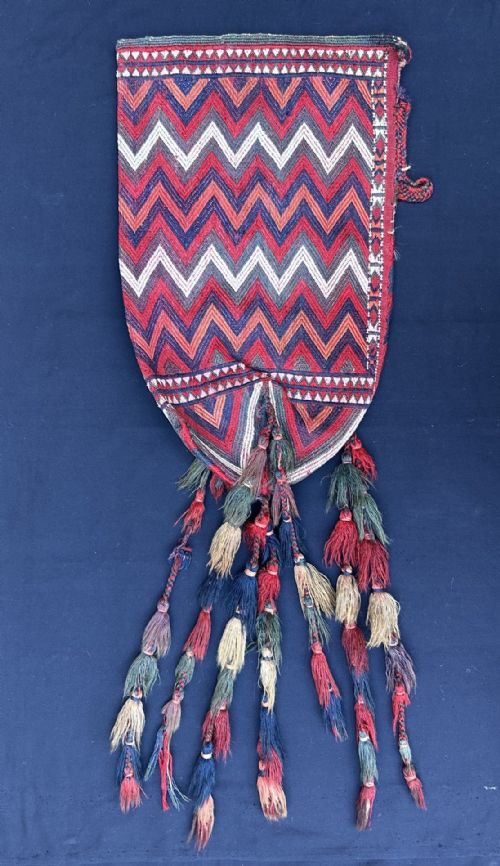
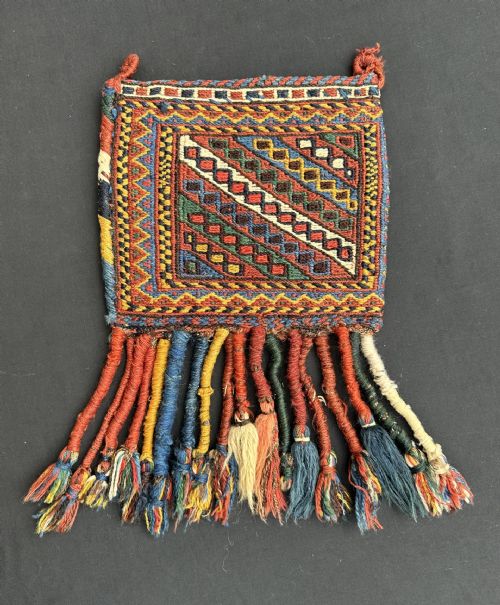
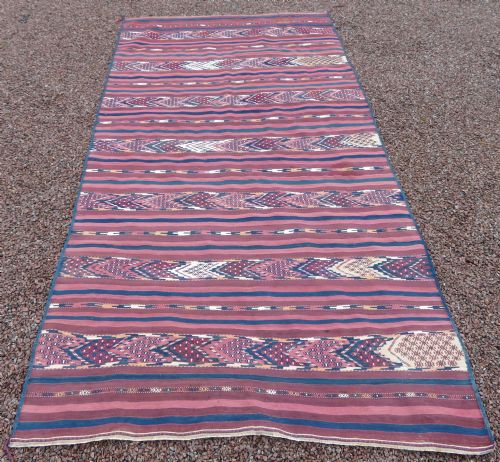
A flat weave wall hanging encompasses antique tribal textiles, storage pouches, bag faces, and rugs originating from Persia, the Caucasus, and Central Asia. These items span from the mid-nineteenth century to the early twentieth century, created by various nomadic groups including the Afshar, Shahsavan, Luri, and several Turkmen tribes.
Materials and construction
These textiles are constructed primarily from wool and cotton, utilising techniques such as soumak work, cicim, and flatweave structures. The combination of these materials creates durable, structurally flat surfaces without the pile found in traditional carpets.
Weavers employed natural dyes to colour the wool and cotton yarns, producing rich, muted tones across the tribal storage pouches and wall hangings. The integration of flat-woven details and plain weave backs demonstrates traditional nomadic construction methods.
Some storage bags arrive complete with their original plain weave backs and tassels, preserving the exact utility intended by the nomad weaver.
Judging quality and character
Quality in these textiles rests upon the precision of the flat weave technique and the condition of the natural dye palette. Pieces that retain original backs, tassels, and complete structural borders demonstrate higher integrity.
The complexity of the tribal designs and the fineness of the wool work distinguish standard items from exceptional examples. Age and regional provenance also influence the overall character of each textile.
Afshar Nomads·Shahsavan Tribe·Tekke Tribes·Luri Tribes·Bakhtiari Tribes
The Flat Weave Wall Hanging Glossary
- Soumak work
- A brocade-like flatweaving technique where coloured weft threads wrap around the warp threads. This method creates a textured surface with durability.
- Chuval
- A large tent bag used by Turkmen nomads for storage. These pieces frequently feature banded designs and repeated guls.
- Torba
- A smaller storage bag produced by Turkmen tribes, often displayed flat as a hanging. They typically feature horizontal formatting.
- Sofreh
- A spread or cloth used for dining or dough preparation in Persian nomadic households. They display geometric flat weave patterns.
- Khorjin
- A paired saddlebag woven for transport by nomadic tribes. Surviving examples often appear as single bag faces.
Flat Weave Wall Hanging: Frequently Asked Questions
How do I hang a flat weave textile safely?
Mounting requires weight distribution across the top edge to prevent fibre distortion over time. A professional framer or textile conservator can attach a fabric sleeve to the back for a rod.
Direct pinning damages the antique wool and cotton material. Using a Velcro system sewn along the reverse provides a secure and even hold against a wall.
How do I care for antique wool textiles?
Maintenance involves gentle vacuuming through a mesh screen on a low suction setting to remove dust. Keeping the textile away from direct sunlight preserves the natural dyes.
Professional textile cleaners should handle any deeper cleaning requirements. Avoid washing antique wool and cotton items with water at home.
How do I distinguish between different tribal patterns?
Distinguishing regions involves examining the specific geometric motifs, border arrangements, and colour combinations used by the weavers. Turkmen pieces often feature repeated octagonal guls, while Persian tribal items display varied field layouts.
Reference literature on Caucasian, Persian, and Central Asian nomadic weaving helps identify the distinct structural characteristics of each group.