
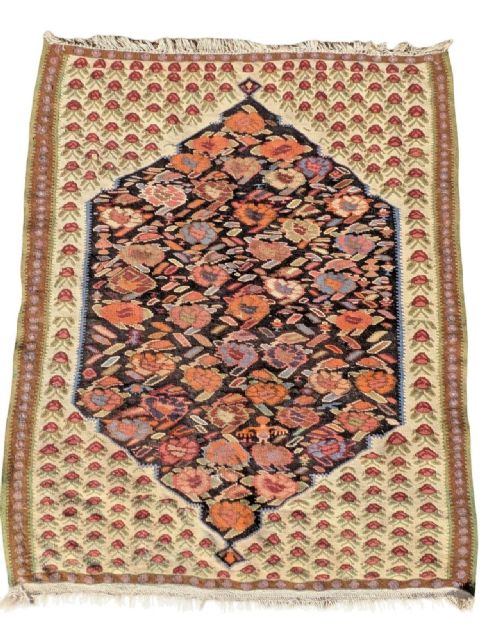
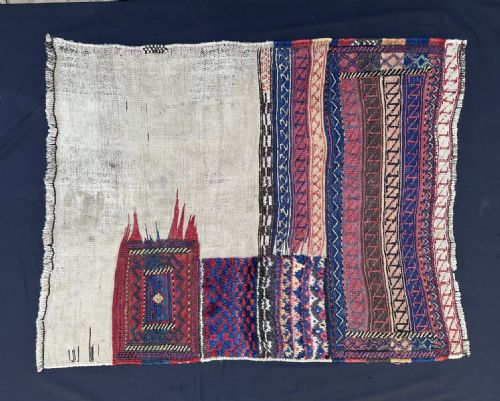


Cream Wool Kilim
These cream wool kilim textiles are flat-woven carpets and tribal floor coverings prized for their intricate geometric designs and rich regional character.
Cream Wool Kilim
A cream wool kilim brings together flat-woven textile traditions from Persian tribal weaving communities, Balkan folk art workshops, and Central Asian nomadic groups. When exploring cream wool kilim pieces, buyers encounter functional objects repurposed as decorative flat-weaves, including bread sofrehs, wheat-sack tachehs, and area rugs.
The selections span periods from the late nineteenth century through the early twentieth century, specifically representing styles such as Persian Tribal, Bessarabian, and Balkan Folk Art. Production origins reach across Western Persia, the Chahar Mahal valley, and Central Asian regions.
Materials and construction
These textiles utilise wool, hand-spun wool, cotton, and occasional goat hair elements to build flat-woven surfaces without pile. Natural dyes provide the underlying palette, creating the characteristic cream background tones and contrasting motifs found across the woven structures.
Weavers construct these flat-weaves using traditional interlacing techniques, forming sturdy structures intended for daily nomadic or domestic use. The combination of hand-spun wool and natural colourants ensures the structural integrity visible in surviving examples.
Several wheat-sacks and bread cloths originally destined for rough nomadic chores now lead a pampered retirement as prized floor art.
What separates the finest examples
Quality rests upon the fineness of the weave and the precision of the tribal design work, distinguishing everyday utility items from masterworks. The handling of natural dyes and the consistency of the hand-spun wool determine the visual depth of the cream fields.
Structural preservation and the clarity of regional patterns, such as banded layouts or lattice designs, set superior examples apart. The harmony between the base material and the secondary colours dictates the overall success of the textile.
The Cream Wool Kilim Glossary
- Kilim
- A flat-woven carpet or rug produced without a pile. These textiles are made by tightly interweaving warp and weft strands.
- Sofreh
- A traditional woven cloth used for spreading meals or handling bread. In nomadic contexts, these pieces often feature distinctive geometric compositions.
- Tacheh
- A woven wheat-sack or storage bag produced by tribal groups. These functional objects double as decorative flat-weaves with expressive designs.
- Warp
- The vertical threads held stationary on a loom before weaving begins. The weft threads pass horizontally through these structural elements.
- Natural Dyes
- Colourants derived from plant, animal, or mineral sources rather than synthetic chemical processes. They yield subtle, enduring tones in antique wool.
Cream Wool Kilim: Frequently Asked Questions
How do I clean a kilim?
Surface dust is best removed through gentle vacuuming without a beater bar, keeping the suction low to protect the flat-woven structure.
Professional specialist cleaning is recommended for deeper maintenance to prevent dye bleeding or fibre distortion.
Can I use these on floors?
These flat-weaves function well as area rugs in moderate traffic zones when paired with a quality non-slip underlay.
The lack of pile makes them suitable for placement beneath furniture or in high-traffic hallways.
What is a bread sofreh?
A bread sofreh is a utilitarian textile traditionally used by nomadic tribes for kneading and serving bread.
These pieces showcase regional weaving traditions and distinctive tribal motifs adapted from daily domestic life.
How do I date a kilim?
Dating relies on examining the characteristics of the natural dyes, the consistency of the hand-spun wool, and specific regional design motifs.
Comparison with documented examples from periods such as the late nineteenth or early twentieth centuries helps establish age.