





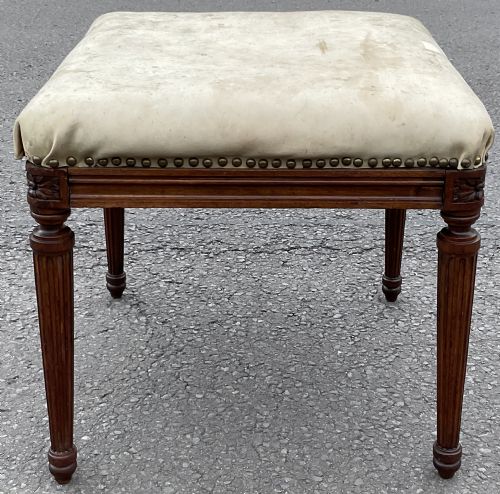


Cream Piano Bench
A cream piano bench combines sturdy period timber frames with pale upholstered seats designed for daily use at the keyboard.
Cream Piano Bench
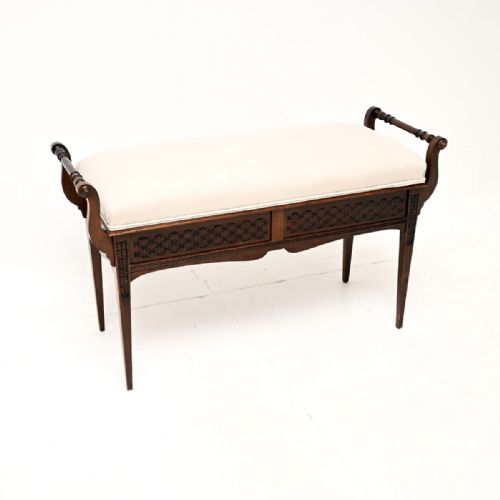
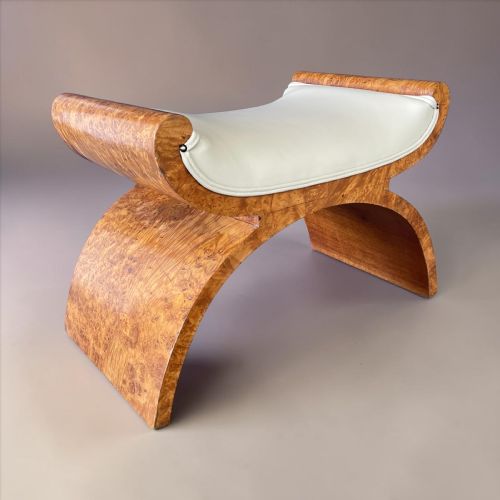
A cream piano bench typically appears as a Victorian or Edwardian wooden stool with fabric or leather seating in lighter tones. These seating forms span the Victorian, Edwardian, and Art Deco periods, encompassing various revival designs including Queen Anne Style, Chippendale Revival, and George II influences.
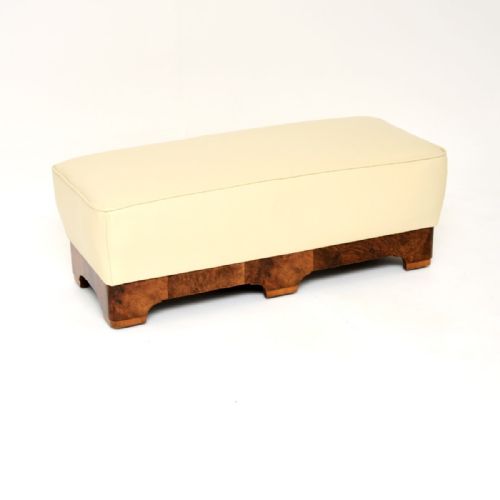
The objects listed here include piano stools, duet piano benches, dressing table stools, and long stools. Buyers encounter timber frames fashioned from mahogany, walnut, burr walnut, and ebonised wood alongside upholstered tops in fabric and leather.
Materials and construction methods
Frames rely on hardwoods such as mahogany and walnut, occasionally featuring decorative burr walnut veneers or ebonised finishes. Joinery secures the structural integrity of these seated forms, accommodating the weight placed upon them during musical performance or vanity use.
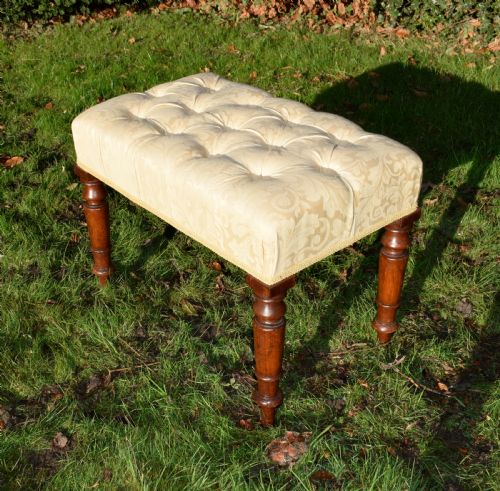
Seating portions incorporate fabric, leather, and deep buttoned upholstery methods. Metal and brass elements appear in hardware such as castors on specific Victorian examples, while ball and claw details enrich the wooden legs of twentieth-century pieces.
Cream Piano Bench Retail Price Guide 2026
Typical asking prices for cream piano bench among the pieces listed under this phrase on Sellingantiques today, from the lower quarter to the upper quarter. They describe what is for sale here now, not the wider market.
Some Victorian piano stools swivel on concealed wooden threads, letting restless musicians spin in place between movements.
Distinctions in quality and execution
Superior examples demonstrate refined timber selection, evident in figured burr walnut veneers or rich mahogany grain. Finer pieces exhibit crisp carving on legs, such as detailed ball and claw motifs, rather than plain structural turns.
Upholstery execution separates standard variants from higher grades. Deep buttoning and quality leather or heavy fabric specify workshop output that outlasts basic commercial production.
James Shoolbred·Harry and Lou Epstein
The Cream Piano Bench Glossary
- Duet piano stool
- A wider bench designed to accommodate two players side by side at the keyboard. These pieces often feature hinged seats concealing sheet music storage beneath.
- Burr walnut
- A prized timber veneer showing swirling, irregular growth patterns taken from walnut tree excrescences. Cabinet makers applied these decorative sections to prominent surfaces.
- Ebonised
- Wood treated with chemical stains or black finishes to imitate expensive ebony. This technique gained popularity during the Victorian era for formal seating frames.
- Deep buttoned
- An upholstery method where tufting pulls the fabric tight with sunken buttons in a geometric grid. This technique secures the internal padding while creating a textured surface.
- Castors
- Small wheel attachments fixed to the base of legs to allow easy movement across floor surfaces. Brass versions are common on nineteenth-century seating.
Cream Piano Bench: Frequently Asked Questions
What is a cream piano bench?
A cream piano bench is a wooden seating form from the Victorian, Edwardian, or Art Deco eras featuring a pale fabric or leather top. These pieces served musicians at upright and grand pianos.
They combine robust timber frames in mahogany or walnut with comfortable upholstered surfaces intended for prolonged sitting during practice sessions.
How do I date a piano stool?
Dating relies on identifying the prevailing style, timber choices, and hardware mechanics of the piece. Victorian examples often utilise heavy mahogany or ebonised finishes with brass castors.
Later Edwardian and Art Deco pieces introduce lighter walnut veneers, geometric lines, or specific revival motifs like Queen Anne or George II styles.
Were these benches used for other purposes?
Many piano stools double as dressing table stools or general seating due to their compact dimensions. Long stools and ottomans provided versatile seating around the home.
Their height suited vanity tables just as well as keyboard instruments, leading to varied placement in period interiors.
How do I care for leather upholstery?
Leather seats require regular dusting with a soft, dry cloth to prevent grit accumulation. Conditioning balms help maintain the suppleness of nineteenth and twentieth-century hides.
Keep these benches away from direct sunlight and heat sources to prevent the leather and timber from drying out.