

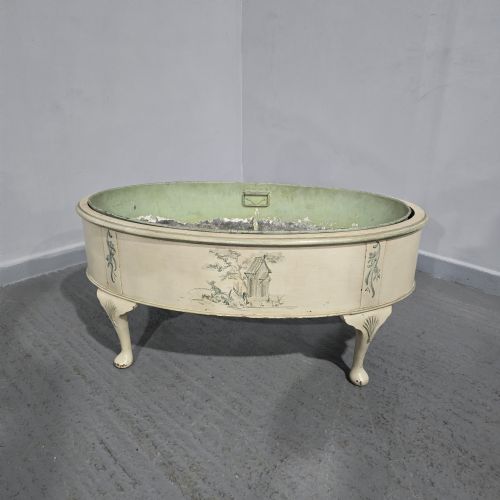
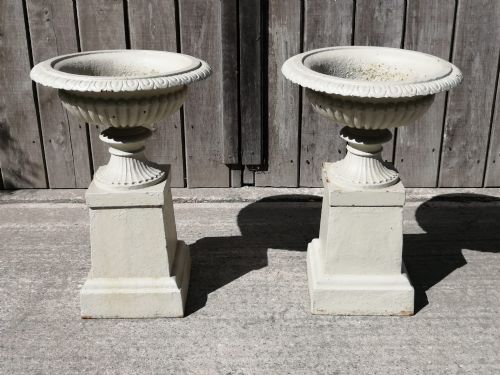
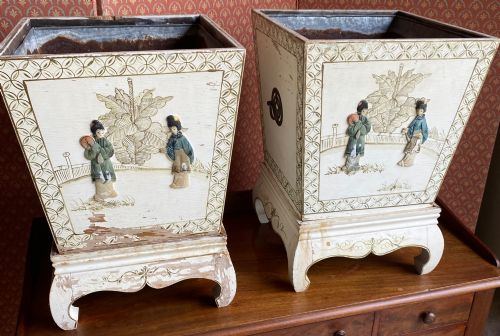
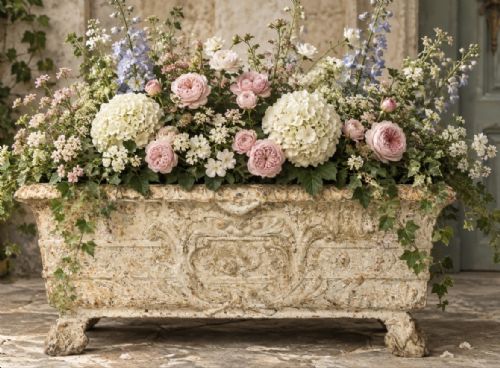





Cream Painted Planter
A cream painted planter brings a soft, weathered patina to a garden or room, and these pieces offer authentic period character.
Cream Painted Planter
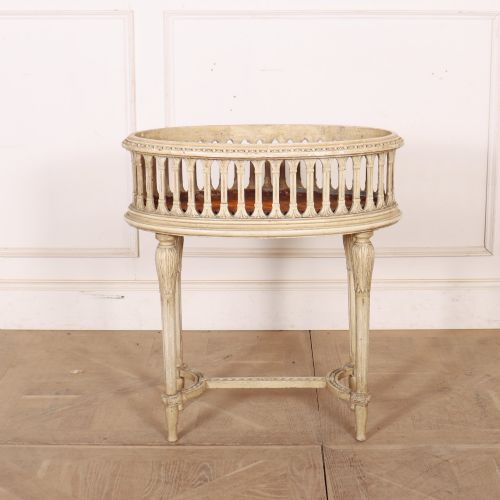
A cream painted planter is a vessel designed for displaying greenery, uniting practical horticulture with decorative display. When you search for a cream painted planter, you encounter garden urns, jardinieres, and plant stands spanning several distinct eras.
The selections on this page draw predominantly from the nineteenth century up through the nineteen-thirties, taking various forms from cast iron urns to earthenware vessels and French provincial designs. These items frequently originate from European and Japanese traditions.
You will find distinct categories such as cast iron garden pieces, glazed ceramic jardinieres, and hand painted wooden or metal receptacles. Each object serves to elevate foliage within a domestic interior or a garden setting.
How they were made
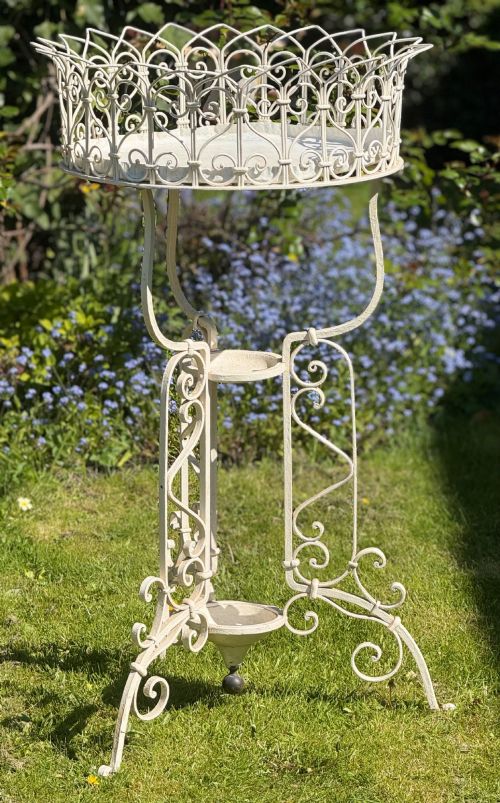
Makers utilised durable metals such as cast iron and wrought iron for heavy garden pieces, often forming them with strapwork or classic urn profiles. Paint and enamel were subsequently applied to protect the metal and provide the characteristic surface colour.
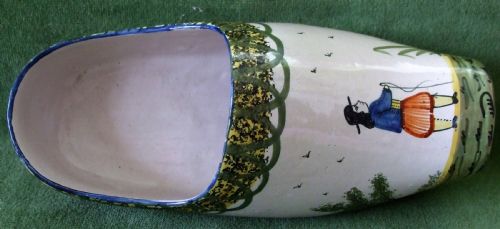
Ceramic items rely on earthenware, pottery, and porcelain, finished with glaze and hand painted detailing. Techniques range from Japanese satsuma methods to French faience production, integrating applied pigments with fired clay bodies.
Cream Painted Planter Retail Price Guide 2026
Typical asking prices for cream painted planter among the pieces listed under this phrase on Sellingantiques today, from the lower quarter to the upper quarter. They describe what is for sale here now, not the wider market.
The inventory includes nineteenth-century French designs alongside Japanese satsuma porcelain vessels and Victorian cast ironwork.
What varies in quality
The distinction between standard items and finer examples rests on the crispness of the casting in ironwork and the precision of the brushwork on painted ceramics. Hand painted details executed with botanical accuracy elevate a piece above simpler production methods.
Materials dictate longevity and weight, with heavy cast iron and dense earthenware representing substantial manufacture. The integrity of the original paint layer and the depth of the glaze also define the character of the object.
The Cream Painted Planter Glossary
- Jardiniere
- A large ornamental pot or stand for holding plants or flowers. It typically sits on the floor or a dedicated base rather than hanging.
- Cast iron
- A strong, heavy alloy of iron and carbon poured into moulds to create intricate garden ornaments. It forms sturdy urns and structural planters.
- Faience
- Tinned-glazed earthenware associated with European pottery traditions. This technique produces a smooth, opaque white or cream surface suitable for painting.
- Satsuma
- A type of Japanese pottery characterised by an ivory-coloured, crackle-glaze earthenware body. It is typically decorated with detailed polychrome designs.
- Strapwork
- Ornamental work consisting of flat, interlaced bands resembling leather straps. It appears frequently in nineteenth-century ironwork designs.
Cream Painted Planter: Frequently Asked Questions
Where should I place a heavy cast iron planter?
Heavy cast iron pieces suit stable outdoor surfaces like stone patios, gravel paths, or formal garden lawns where their weight anchors them securely.
They also function well in sheltered courtyards or grand entranceways, provided the supporting ground remains entirely level.
Can ceramic planters stay outside in winter?
Earthenware and ceramic vessels are vulnerable to frost damage when moisture absorbed by the clay freezes and expands.
Moving glazed ceramics indoors or into a greenhouse during freezing weather protects the integrity of the body and glaze.
How do I clean a painted metal planter?
Gentle dusting with a soft cloth removes everyday debris without disturbing fragile historical paint layers.
Avoid harsh chemical cleaners or abrasive scouring pads, which strip away aged surfaces and expose the bare metal underneath.
What is the difference between a jardiniere and a plant stand?
A jardiniere is the decorative bowl or pot itself, designed to hold soil and plants directly or conceal a nursery pot.
A plant stand provides an elevated platform or pedestal to lift the greenery off the ground, though the terms sometimes overlap in listings.