


Cream Mounted Watercolour Picture
A cream mounted watercolour picture offers delicate hand-painted artistry preserved beneath glass, bringing historic scenes and character studies directly to your wall.
Cream Mounted Watercolour Picture
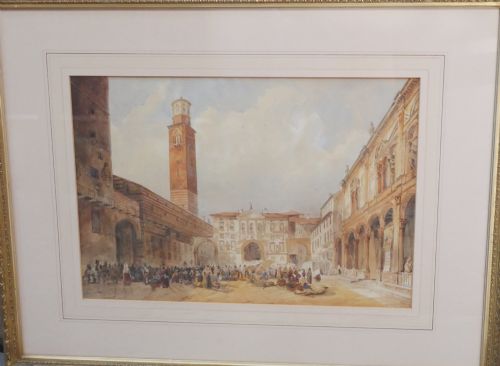
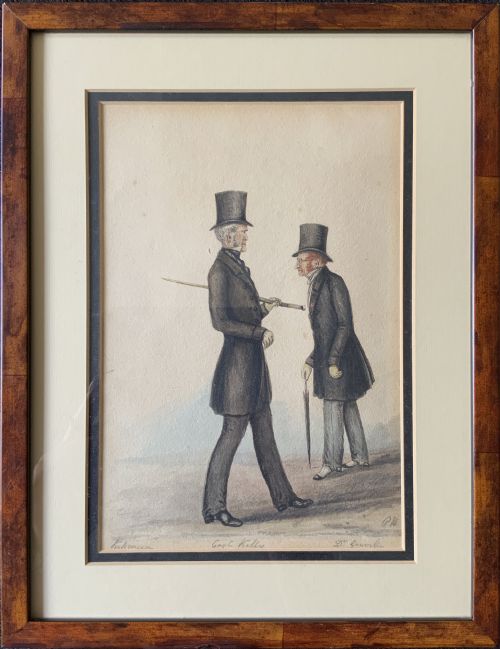
A cream mounted watercolour picture encompasses original paintings, wall art, and framed artworks executed on paper. These pieces capture diverse subjects ranging from nineteenth-century caricatures and grand tour classical views to mid-century bird studies and genre scenes.
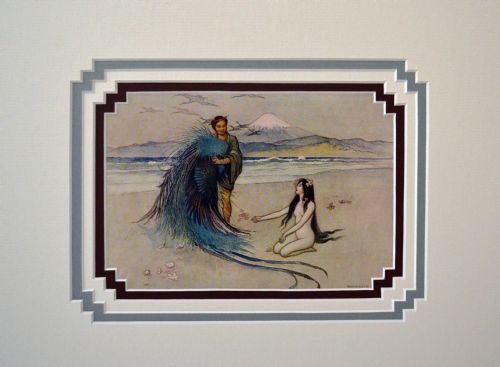
The aesthetic spans distinct periods including Victorian genre painting, Edwardian Japonisme, and mid-century British naturalism. Each artwork reflects the specific handling of watercolour pigment characteristic of its era, from precise topographical recording to loose landscape impressions.
Materials and methods
Watercolour pigment and ink are applied to absorbent paper surfaces, often augmented with pencil underdrawing. Artists utilise the natural transparency of the pigment against the white or cream paper ground to create luminosity.
Finished works receive protection behind glass and are held within wooden frames. A cream mount board provides a neutral border that separates the paper artwork from the frame moulding and prevents direct contact with the glass.
Ducks receive artistic tribute alongside Scottish lochs, Italian forums, and children at play.
Evaluating quality and execution
Quality rests upon the sureness of the brushwork and the precision of the draughtsmanship visible across the paper. Finer pieces demonstrate confident handling of watercolour pigment and ink that captures light and movement effectively.
The preservation of the paper and pigment integrity distinguishes superior examples. Material stability, minimal fading of the watercolour pigments, and the original harmony of the mount board and wood frame contribute to the overall merit of the piece.
Warwick Goble·James Hardy Junior·Charles F Tunnicliffe·Stanley Orchart·James H Hulse·John McDougal·William Russell Flint·Karl Feiertag·Belisario Gioja
The Cream Mounted Watercolour Picture Glossary
- Watercolour
- A paint consisting of pigment suspended in a water-soluble binder. It is applied in translucent washes to paper surfaces.
- Mount Board
- A stiff paperboard used to frame and support artwork. The cream variety provides a traditional neutral window around the picture.
- Gilt
- A thin layer of gold leaf or gold-coloured pigment applied to wood frames. This finish adds reflective brilliance to the perimeter of the artwork.
- Genre
- A style of painting depicting scenes from ordinary life. These works often show figures engaged in everyday activities or domestic settings.
Cream Mounted Watercolour Picture: Frequently Asked Questions
How should I hang a cream mounted watercolour picture?
Position the framed artwork away from direct sunlight to protect the watercolour pigments from fading over time. Ensure the wall surface is stable and use appropriate fixings suited to the weight of the wood and glass frame.
Maintain a stable indoor environment with moderate humidity levels to preserve both the paper support and the wooden frame. Regular dusting of the glass keeps the surface clear without risking the delicate interior.
What periods do these pictures cover?
The selection spans from the nineteenth century through the Edwardian era to mid-century twentieth-century works. These include Victorian school paintings and later naturalistic studies.
Each period brings distinct stylistic traits, ranging from classical topographical views to vibrant landscape impressions and character portraits.
Are these works original paintings?
Many examples are original watercolour paintings executed directly on paper by named artists and historic schools. The selection also includes period prints associated with specific editions.
Examining the surface reveals the texture of the paper and the distinct brushwork or ink lines characteristic of hand-produced art.
What is the purpose of the cream mount?
The cream mount board provides a visual border that draws the eye inward toward the watercolour picture. It creates physical space between the delicate paper surface and the protective glass.
This separation prevents the paper from sticking to the glass over time and complements the warm tones found in many historic watercolours.