
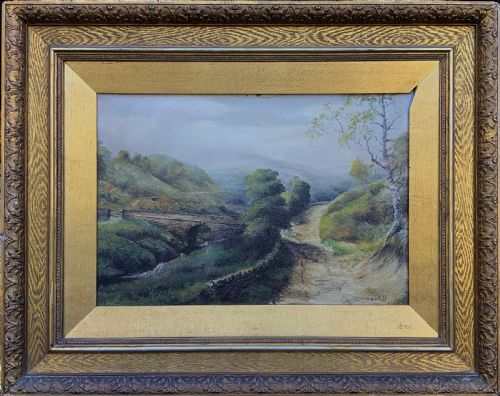
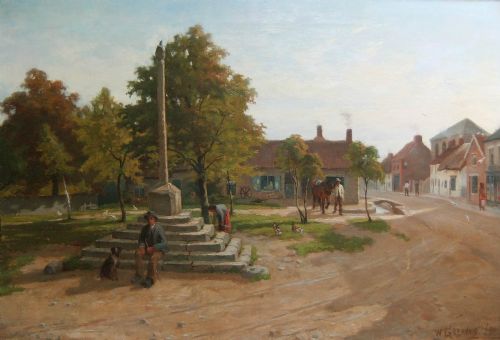


Victorian Rural Scene Artwork
Victorian rural scene artwork captures the pastoral idyll of nineteenth-century countryside life through oils and watercolours depicting farmyards, cottages, and agricultural labour.
Victorian Rural Scene Artwork
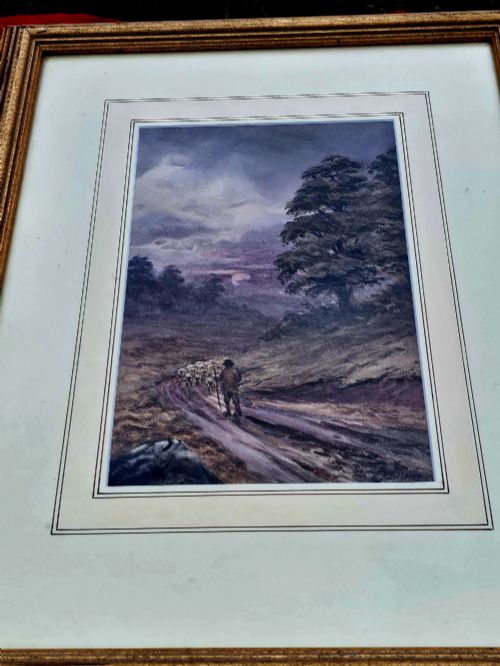
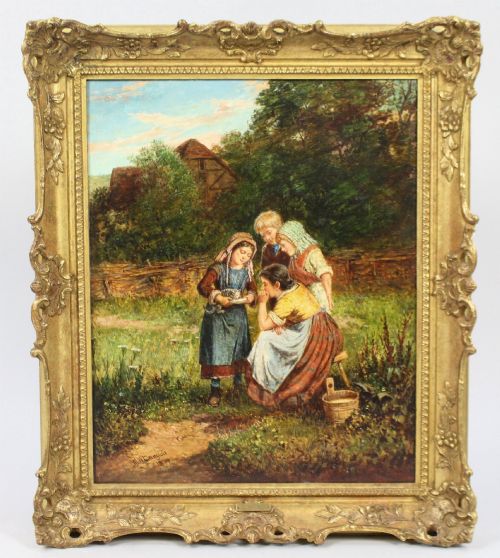
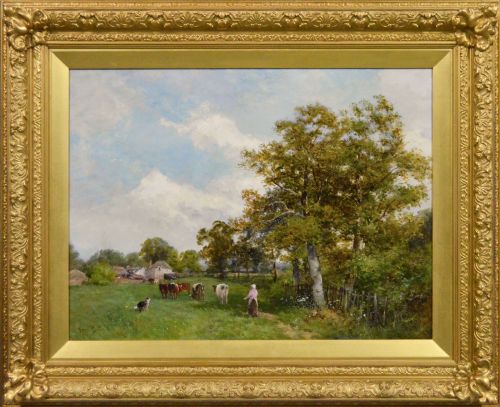
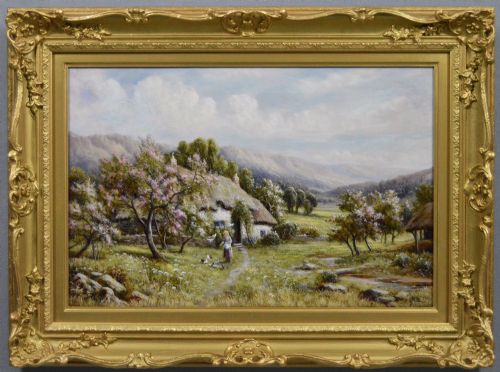
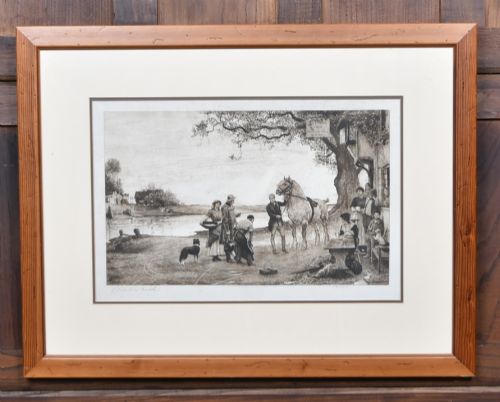
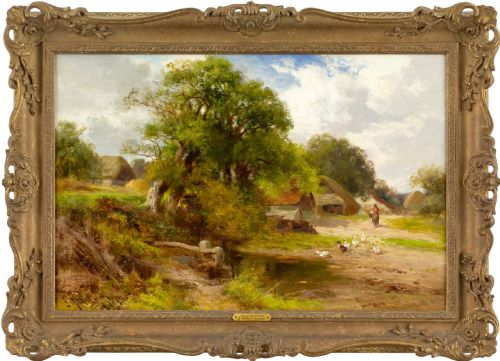
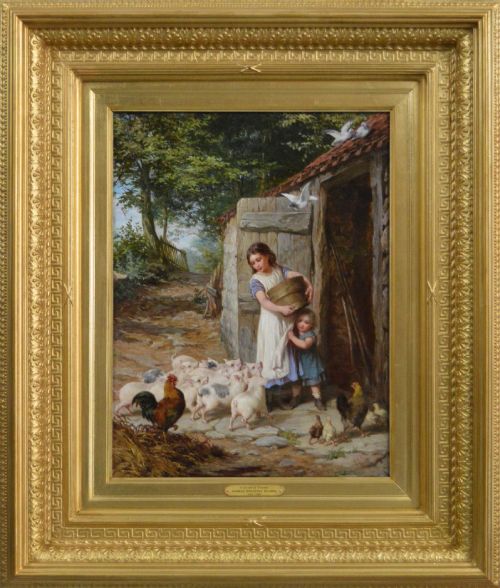
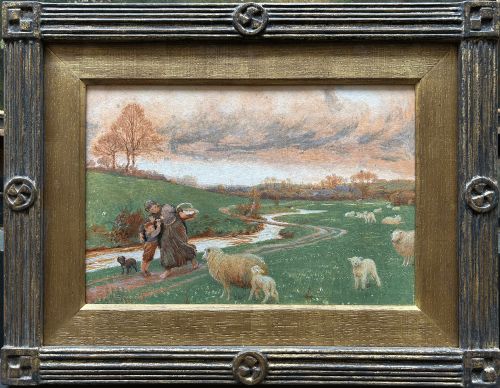
Victorian rural scene artwork encompasses framed paintings, watercolours, and etchings centred on nineteenth-century agricultural life, cottage exteriors, and pastoral landscapes. These pieces record herds of cattle, sheep herding, haymaking, and everyday farmyard tasks across the British countryside.
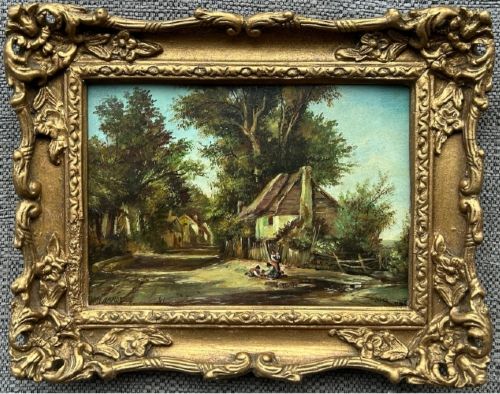
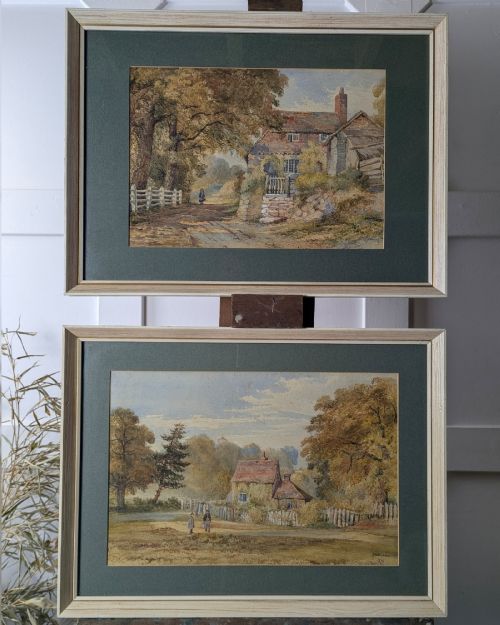
The selections available here span the nineteenth century and extend into the early twentieth century, reflecting the enduring popularity of pastoral realism. Works range from intimate watercolours on paper to substantial oil paintings on canvas framed in gesso and gold leaf.
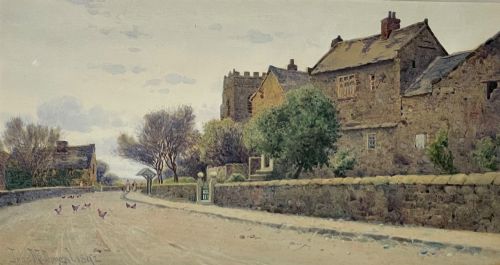
Subjects typically feature figures engaged in manual labour, such as timber logging, blacksmithing, and tending livestock near rivers and rural settlements. Buyers encounter named artists alongside works originating from the wider British School of the period.
Materials and techniques
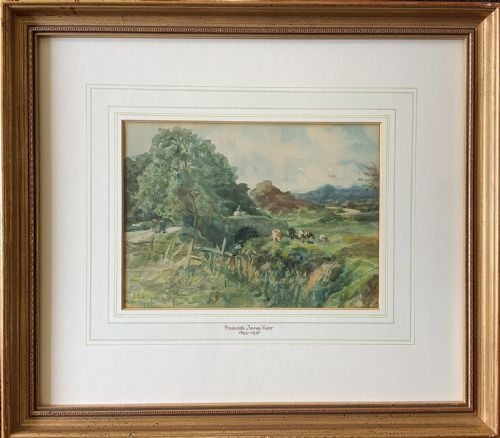
Painters of this period utilised oil on canvas, panel, or board, applying pigment to build up textured representations of foliage, livestock, and fabrics. Watercolours on paper offer a more translucent finish, frequently heightened with gum arabic to lend depth to skies and water.
Support materials include traditional woven canvas stretched over wooden frames, heavy watercolour paper, and occasionally wood panels. Many works retain their original gilt gesso frames, which complement the tonal palettes of the paintings.
Listings feature works created across eight distinct decades, spanning from the 1850s through to the 1920s.
Judging quality in pastoral works
Quality rests upon the artist's command of natural light, anatomical accuracy in animal and human figures, and compositional balance. Superior examples display subtle handling of atmospheric effects, such as morning mist or evening sunlight over farmland.
The precision of brushwork and the preservation of the original medium distinguish accomplished hands from more formulaic studio output. Frame preservation and the integrity of the paper or canvas surface also contribute significantly to the standing of an individual piece.
William Howard Hardy·John McDougal·Mark William Langlois·David Bates·Robert John Hammond·George Augustus Holmes·Frederick James Kerr·William Greaves·Herman S Melville·Frederick Hines·Thomas Sidney Cooper·James Kyd·James William Booth·Samuel Joseph Clark·Robert Winchester Fraser·Edward Brice Stanley Montefiore·Robert Finley McIntyre·Arthur Longley Vernon
The Victorian Rural Scene Artwork Glossary
- Etching
- A printmaking technique where lines are bitten into a metal plate with acid before ink is applied. This process allows for fine, linear detail in monochromatic rural subjects.
- Gesso
- A plaster-like mixture applied to wood frames and smoothed to receive gilding. It provides the base for ornate decorative moulding.
- Genre painting
- Artwork depicting scenes from everyday life, involving ordinary people engaged in familiar activities. In this context, it describes farm workers and cottage dwellers.
- Watercolour
- A paint consisting of pigment suspended in a water-soluble vehicle, typically applied to paper. It yields transparent washes well suited to atmospheric landscapes.
Victorian Rural Scene Artwork: Frequently Asked Questions
What subjects appear in these paintings?
These works depict agricultural life, including haymaking, herding cattle, sheep farming, and figures outside rural cottages.
Scenes frequently focus on river landscapes, farmyards, and daily labour across the British countryside during the nineteenth and early twentieth centuries.
How do I care for antique watercolours?
Watercolours require protection from direct sunlight to prevent fading of the pigments and yellowing of the paper support.
Displaying works away from moisture and using UV-filtering glass during framing helps preserve the integrity of the paper.
What framing is typical for these artworks?
Many pieces are housed in period gilt frames featuring moulded gesso ornamentation characteristic of the nineteenth century.
Original frames often show minor wear that corresponds to the age of the painting within.
How do oils and watercolours differ?
Oils utilise pigmented paste on canvas or panel, yielding opaque surfaces and rich colour saturation that develop a distinct craquelure over time.
Watercolours employ transparent washes on paper, offering a lighter, more delicate rendering of atmospheric conditions.