




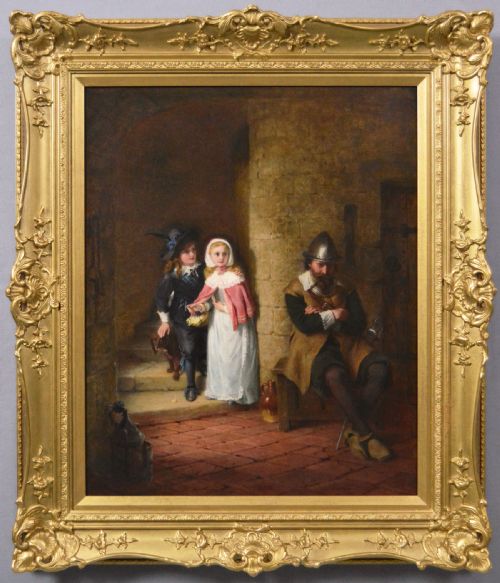
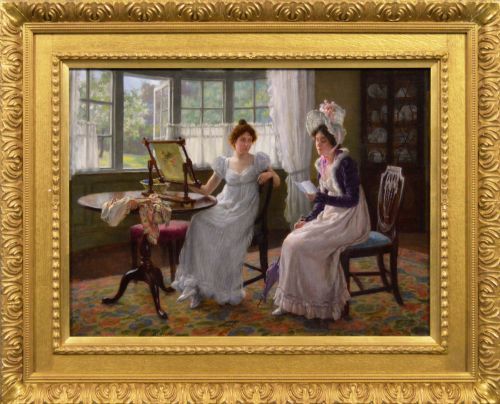


Antique English Genre Painting
These works capture the daily lives and domestic moments that define an antique english genre painting, offering a charming window into past social scenes.
Antique English Genre Painting
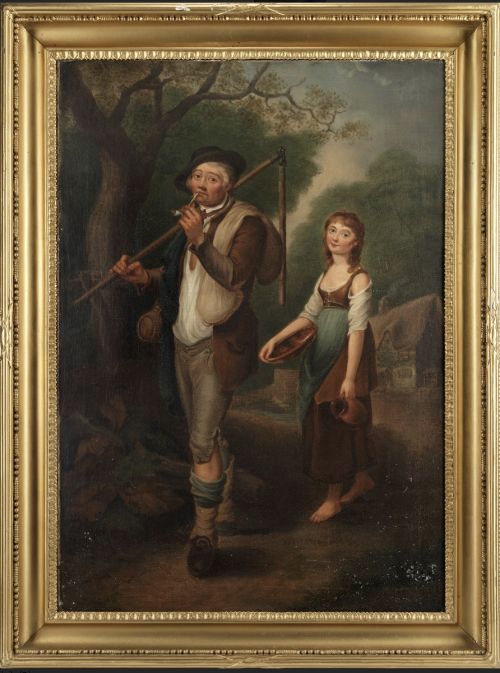
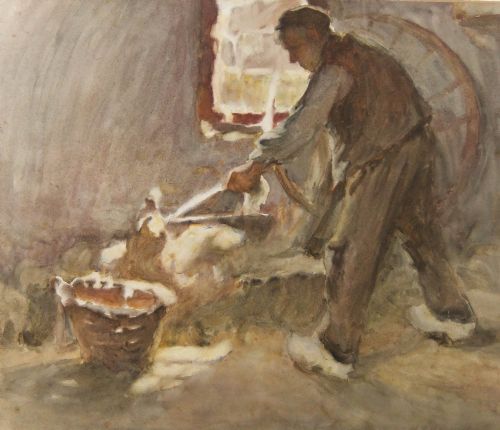
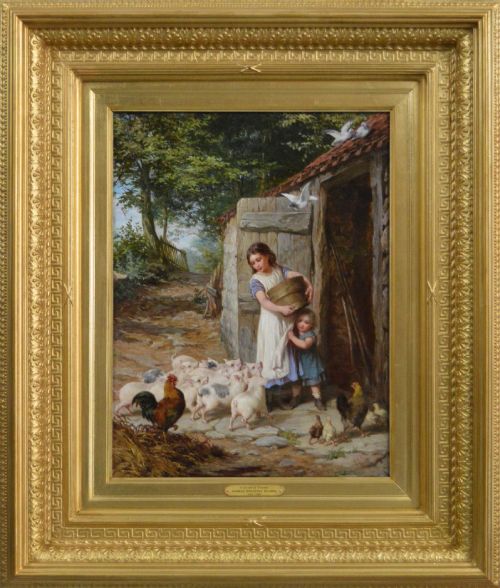
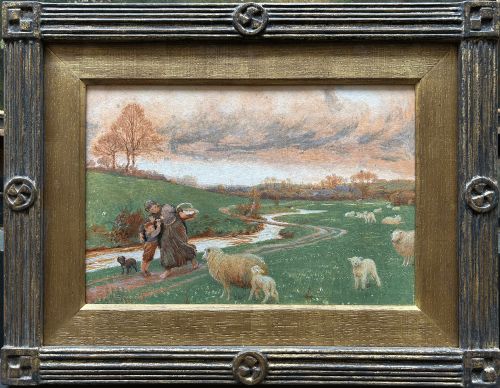
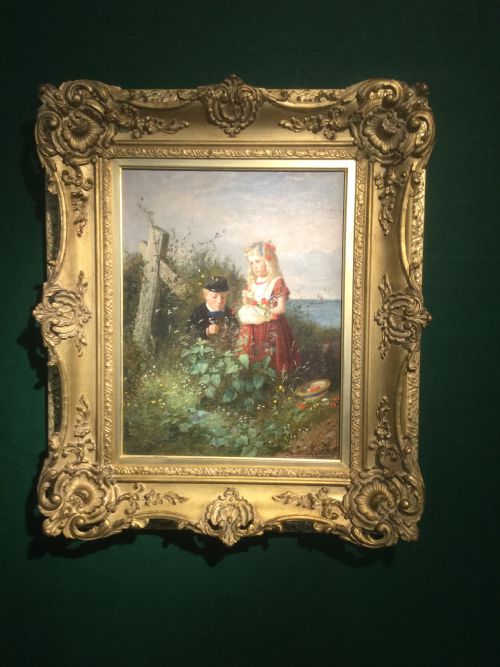
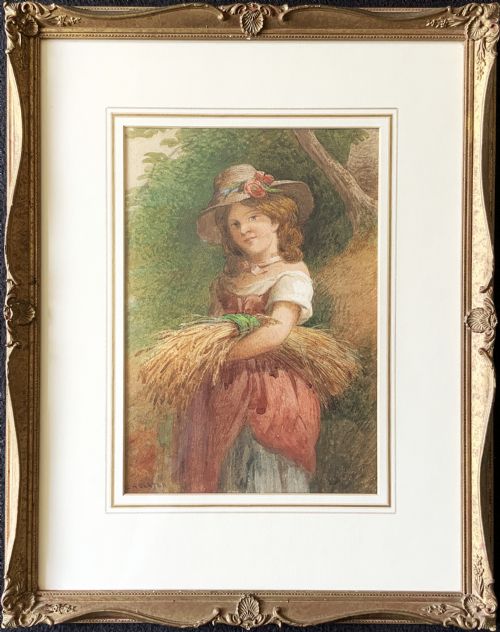
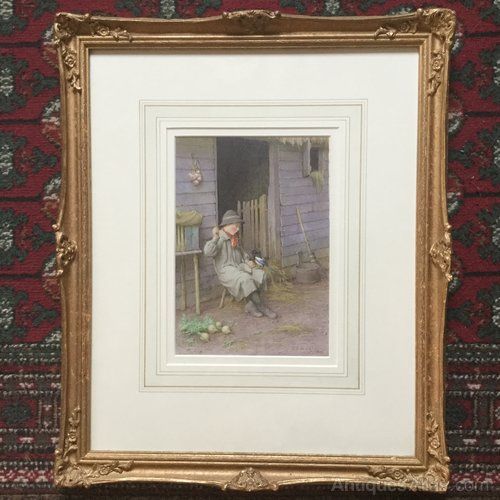
An antique english genre painting depicts scenes of everyday life, ordinary people, and domestic narratives rather than grand historical or mythological events. These works frequently show figures engaged in rural labour, children playing, or quiet interior moments inside country houses and village cottages.
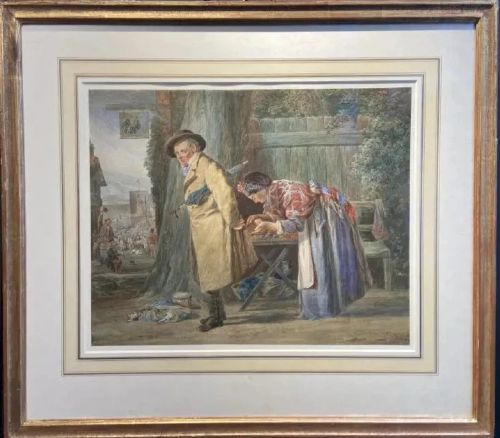
The pieces represented on this page span the Victorian and Edwardian eras, extending from the nineteenth century into the early twentieth century. Common subjects include blacksmiths at work, children with pets, tavern gatherings, and picturesque country pursuits captured by domestic artists.
Buyers encounter both original hand-painted works and period prints housed in traditional frames. Oil on canvas and watercolour on paper dominate the selection, often preserved in ornate giltwood frames that reflect the aesthetic tastes of their original period.
How They Were Made
Artists of this period primarily utilised oil on canvas, oil on board, and watercolour on paper to construct their narratives. Pigments were layered carefully to capture natural light, fabric textures, and the intimate details of domestic interiors and rural landscapes.
The finished works were typically housed in wood frames embellished with gold leaf and giltwood moulding. These frames were designed to complement the warm tones of the painted scenes and protect the delicate surfaces of paper and canvas.
Several canvases capture domestic tranquility interrupted, showing gentlemen caught mid-shave or children feeding stubborn farmyard animals.
What Varies in Quality
Materials and framing also contribute to the overall standard of a piece. Original giltwood frames and well-preserved paper or canvas surfaces without excessive overpainting retain greater authenticity and visual presence on the wall.
Thomas Barker of Bath·George Augustus Holmes·Miles Birkett Foster·Charles Edward Wilson·John Arthur Lomax·Frank Moss Bennett
The Antique English Genre Painting Glossary
- Genre painting
- A branch of fine art depicting scenes from everyday life, ordinary people, and domestic interiors. These works offer historians valuable insights into past social customs and material culture.
- Watercolour
- A painting method in which the paints are made of pigments suspended in a water-based solution. Paper serves as the primary support medium for these translucent compositions.
- Giltwood
- Wood that has been treated with a thin layer of gold leaf or gilt paint. This finish was widely applied to nineteenth-century picture frames to create a rich, reflective border.
- Oil on canvas
- A traditional painting technique utilising pigments bound with a drying oil applied to stretched fabric. Canvas provides a durable and textured surface capable of holding rich layers of colour.
- Lithograph
- A printmaking process based on the incompatibility of oil and water. Artists used this method to reproduce popular original paintings for a wider domestic audience.
Antique English Genre Painting: Frequently Asked Questions
What subjects appear in these paintings?
These works focus on human activities rather than pure landscapes, showing farmworkers, children, tavern visitors, and domestic scenes.
Artists drew inspiration from rural villages, country houses, and everyday interactions to build engaging visual stories.
Where should I hang these artworks?
Traditional living rooms, dining spaces, and studies suit these intimate domestic scenes very well.
Matching the warm tones of the canvas or watercolour with traditional room decor helps the piece settle naturally into the space.
How do I identify a Victorian piece?
Victorian works often display characteristic clothing styles, sentimental domestic narratives, and rich colour palettes.
Frame styles and artist signatures recorded from the nineteenth century further assist in dating the work accurately.
Are watercolours different from oil paintings?
Watercolours use paper supports and translucent washes to create lighter, more delicate compositions.
Oil paintings utilise canvas or board, allowing for deeper textures, richer colour blending, and heavier impasto applications.