




Rural Country Scene Artwork
Rural country scene artwork captures agricultural life and pastoral views through oil paintings and watercolours spanning the nineteenth and twentieth centuries.
Rural Country Scene Artwork
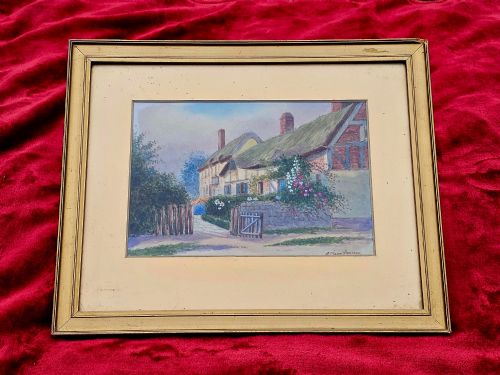
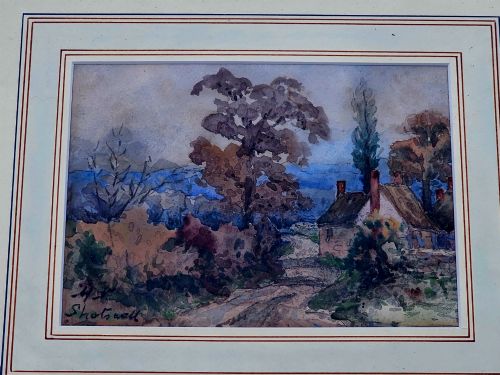
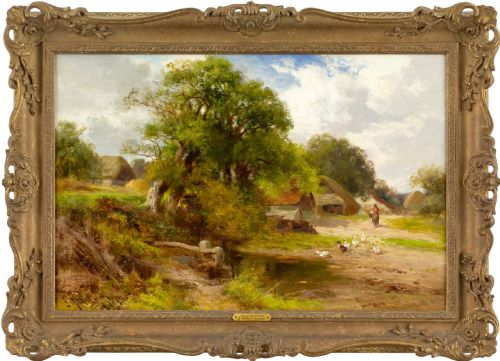
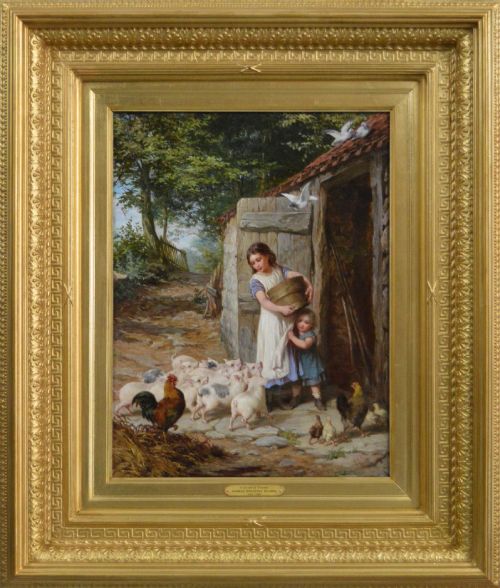
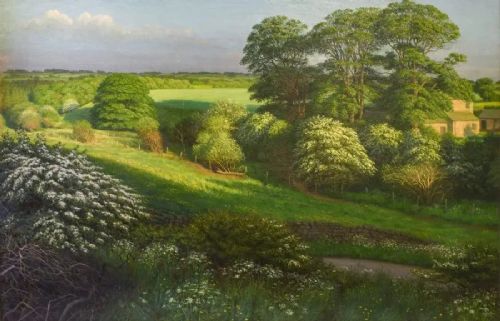
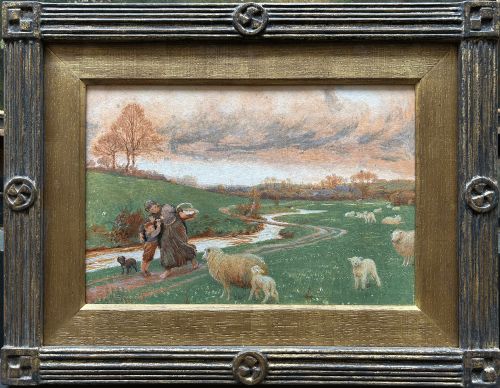
Rural country scene artwork focuses on agricultural landscapes, farming communities, and domestic animals rendered by British and European artists. Buyers searching this phrase encounter depictions of cottages, farmyards, livestock, and haymaking scenes set across rural landscapes.
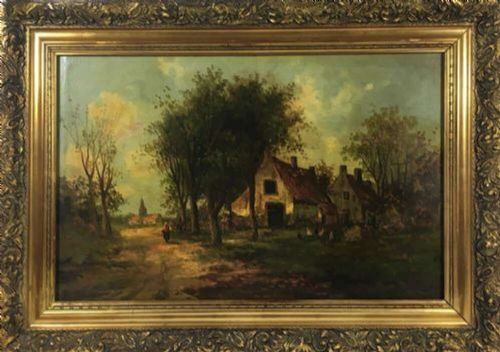
Most examples originate from the Victorian and Edwardian periods, stretching into the mid-twentieth century through traditional British and Impressionist movements. Watercolours and oil paintings dominate the selection, often housed in giltwood frames suited to domestic display.
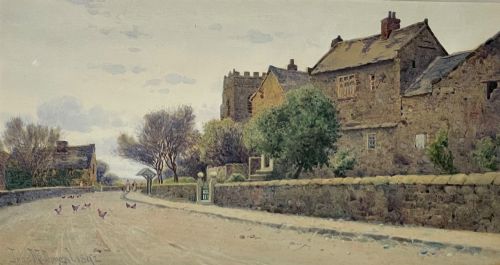
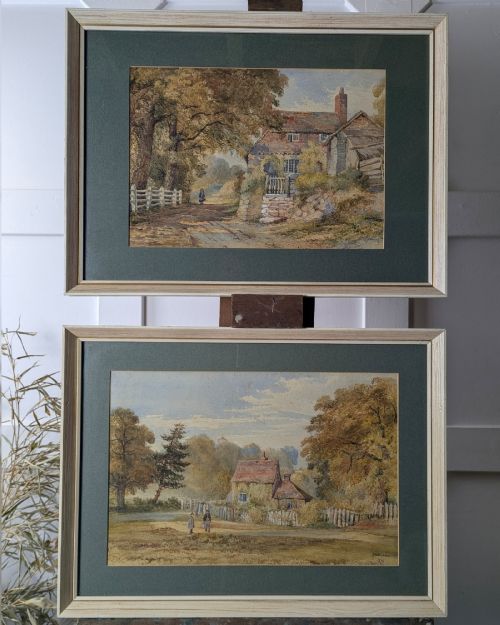
The subjects range from detailed topographical watercolours of village life to broader oil paintings of cattle and horses in open fields. Works frequently attribute themselves to recognised regional painters associated with the English School and provincial art circles.
Materials and Techniques
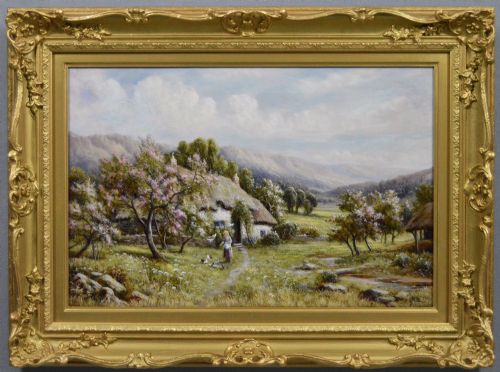
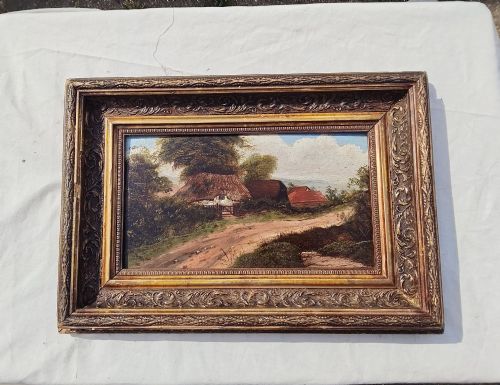
Artists painted these rural scenes using oil on canvas, wooden panel, card, or board, applying heavy pigments to capture the texture of farmland and foliage. Watercolours on paper offer a lighter alternative, utilising transparent washes to render village streets and open skies.
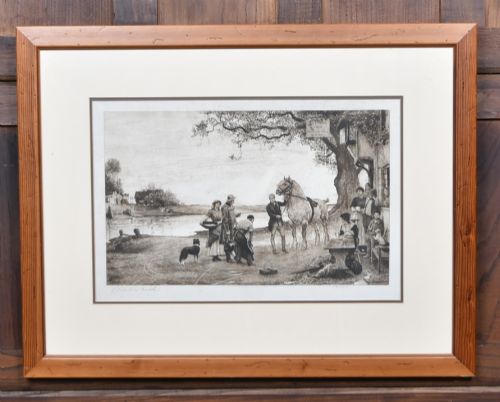
Makers framed these pieces in timber and giltwood mouldings, protecting the painted surfaces while matching the aesthetic of period interiors. Etchings and lithographs also appear, translating original compositions into printed works on paper.
The material selection includes oil on canvas, wooden boards, watercolours on paper, and giltwood frames.
Evaluating Quality in Pastoral Art
Quality rests in the precision of the brushwork and the artist's ability to render light and movement within a landscape. Stronger pieces display confident handling of livestock anatomy and atmospheric weather, whereas weaker examples rely on formulaic compositions.
The inclusion of specific regional details and named figures elevates a piece above standard decorative output. Original signatures and historical attribution to documented painters further distinguish finer works from anonymous school pieces.
Percy Lancaster·William Howard Hardy·John McDougal·Robert John Hammond·George Augustus Holmes·Miles Birkett Foster·Thomas Sidney Cooper·Owen Bowen
The Rural Country Scene Artwork Glossary
- Oil on Canvas
- A painting medium where pigments suspended in drying oil are applied to stretched fabric. This technique allows for rich colour depth and textured brushstrokes.
- Watercolour
- A paint method using water-soluble pigments on paper to create translucent washes. It was widely utilised for topographical and rural studies.
- Giltwood
- Timber carved and coated with a thin layer of gold leaf. Frames made in this style frequently accompany nineteenth-century oil paintings.
- English School
- A classification for artists working primarily in Britain who shared stylistic approaches. Many rural landscapes trace their origins to this broad grouping.
- Impressionism
- An art movement focusing on light and spontaneous brushwork rather than rigid detail. Painters applied these tenets to farming and pastoral subjects.
Rural Country Scene Artwork: Frequently Asked Questions
What subjects appear in rural country scene artwork?
These pieces depict agricultural labour, farmyard animals, cottages, and village landscapes. Common motifs include haymaking, cattle grazing, and horses ploughing fields.
Artists drew inspiration from specific British locales, recording rural life and topography across different counties.
How do I care for antique oil paintings?
Keep oil paintings away from direct sunlight and dramatic temperature fluctuations to prevent cracking in the canvas and pigment. Dust the surface gently with a soft, dry brush without applying pressure.
Avoid using water or chemical cleaners on the paint or the giltwood frame.
What is the difference between oil and watercolour?
Oil paintings utilise thick pigments on canvas, panel, or board, offering rich textures and deep colour layering. Watercolours employ water-based pigments on paper, producing lighter, translucent effects.
Watercolours require glass protection against moisture, whereas oil paintings remain exposed.
Where were these paintings displayed originally?
Victorian and Edwardian households hung these rural scenes in parlours, dining rooms, and studies. They brought depictions of natural landscapes into urban and rural homes alike.
Original giltwood frames helped integrate the artworks into period interior schemes.