



Cream Dresser Base
These cream dresser base pieces are sturdy timber storage units offering generous surface and cupboard space for everyday living.
Cream Dresser Base
A cream dresser base provides a solid wooden surface and lower storage, appearing across the seventeenth, eighteenth, and nineteenth centuries. These pieces emerge in English country, French provincial, Georgian, and Jacobean styles.
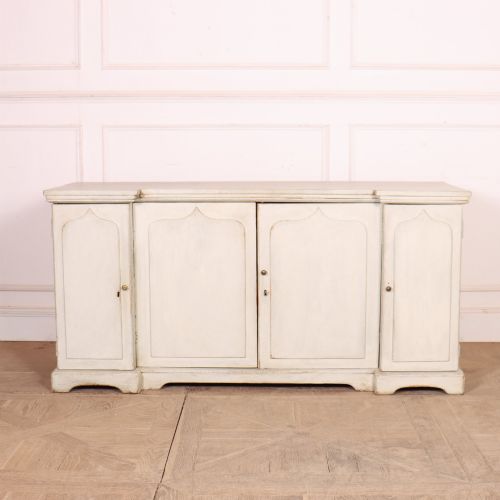
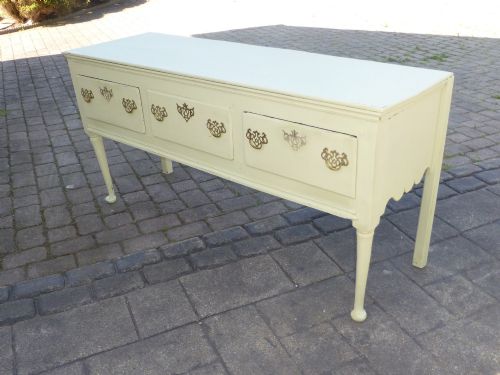
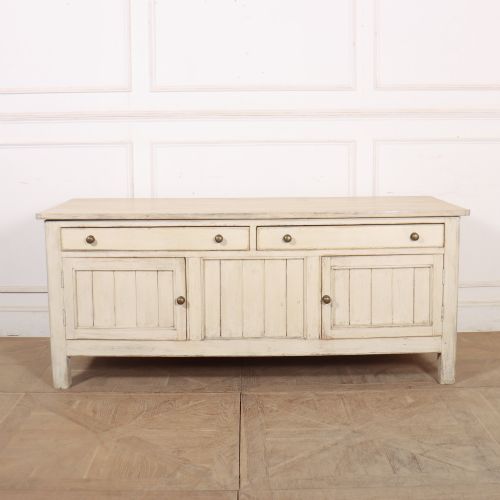
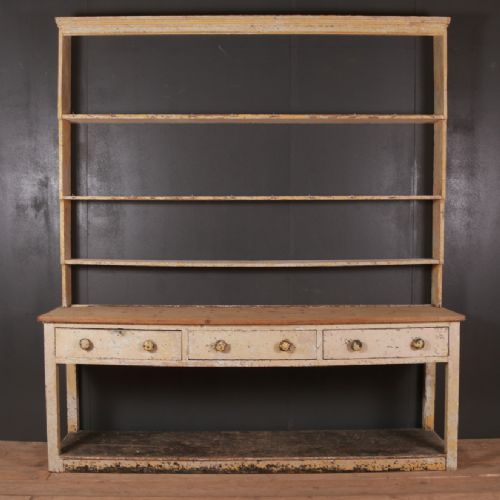
Buyers will most frequently encounter painted pine, oak, and painted wood examples on this page. Forms range from traditional potboard designs and breakfront units to housekeepers cupboards and sideboards.
These items originate primarily from English country houses and broader rural traditions. Their proportions vary from monumental proportions to more modest country house formats.
How they were made
Craftsmen built these pieces using solid timbers such as oak and pine, applying layers of paint to the wooden surfaces. Iron and brass hardware added structural support and functional detail to doors and drawers.
Carpenters constructed robust frames designed for heavy domestic labour, utilising traditional joinery methods suited to rural workshops. Painted finishes were repeatedly applied over timber substrates, developing deep patinas through decades of household use.
Generations of kitchen maids spilled flour, tea, and gravy over these boards, baking centuries of domestic history right into the wood.
What varies in quality
Quality rests upon the integrity of the original timber frame and the depth of the historical painted surface. Pieces retaining their early or original paint layers command greater interest than later repainted versions.
Proportions and the balance between decorative style and utilitarian function dictate the finer examples. Substantial construction in oak or pine, coupled with harmonious proportions, separates standard country furniture from superior specimens.
The Cream Dresser Base Glossary
- Potboard dresser base
- A form featuring a low open shelf beneath the main cupboards or drawers, historically used for storing heavy earthenware pots. This lower tier provides stability to the entire timber frame.
- Breakfront
- A cabinet design where the central section projects forward from the flanking outer sections. This architectural arrangement creates visual depth and varied storage volumes.
- Housekeepers cupboard
- A large storage piece fitted with multiple doors and internal compartments for domestic linens and dry goods. These units served as the administrative centre of a large household.
- Painted wood
- Timber surfaces coated with decorative or protective pigments rather than left in a polished state. This finish protects the underlying pine or oak while offering aesthetic charm.
Cream Dresser Base: Frequently Asked Questions
What is a cream dresser base?
A cream dresser base is a heavy wooden storage unit featuring a flat top surface and lower cupboards or open potboards. These items were designed for practical domestic work in large country houses and kitchens.
They combine robust timber construction with painted finishes, spanning the seventeenth through the nineteenth centuries in English and French provincial styles.
How were these pieces used?
Historically, these units served as workspace for food preparation and storage for heavy kitchen ceramics and linens. The flat top handled daily domestic tasks while the lower shelves and cupboards kept provisions organised.
Over time, many transitioned from working kitchens into principal living spaces as decorative storage furniture.
What woods were used?
Carpenters primarily selected oak and pine for the main structural carcases and surfaces of these units. These domestic timbers provided the necessary strength for heavy household labour.
Iron and brass fittings were added to doors and drawers to reinforce the heavy wooden construction.
How do I date a piece?
Dating relies upon examining the construction methods, timber species, and the characteristics of the painted finish. Seventeenth and eighteenth-century examples display different joinery traditions compared to nineteenth-century interpretations.
Stylistic cues from Georgian, Jacobean, and country house traditions further help place a piece within its historical period.