
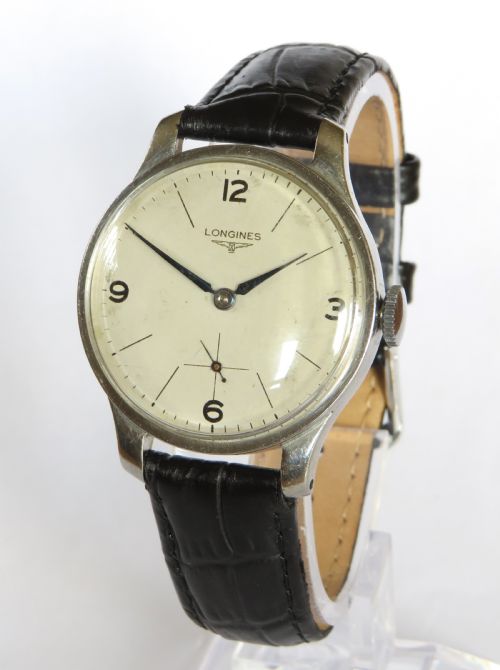
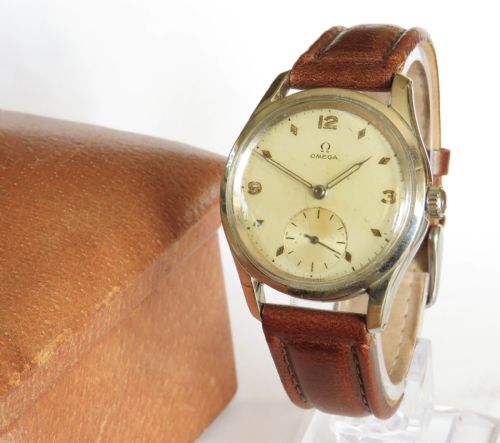
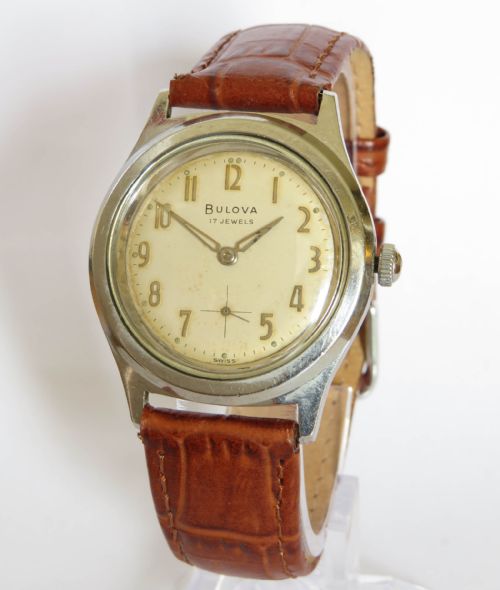


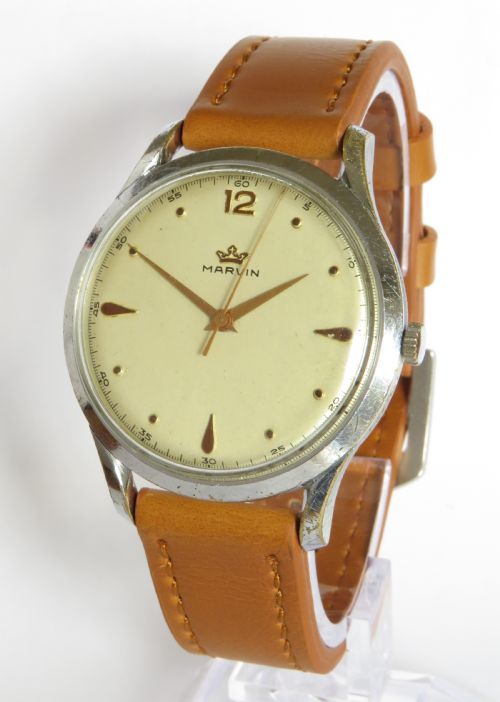
Cream Dial Wristwatch
A cream dial wristwatch brings together mid-century horology and subtle vintage charm, offering an understated face that ages with distinct character.
Cream Dial Wristwatch
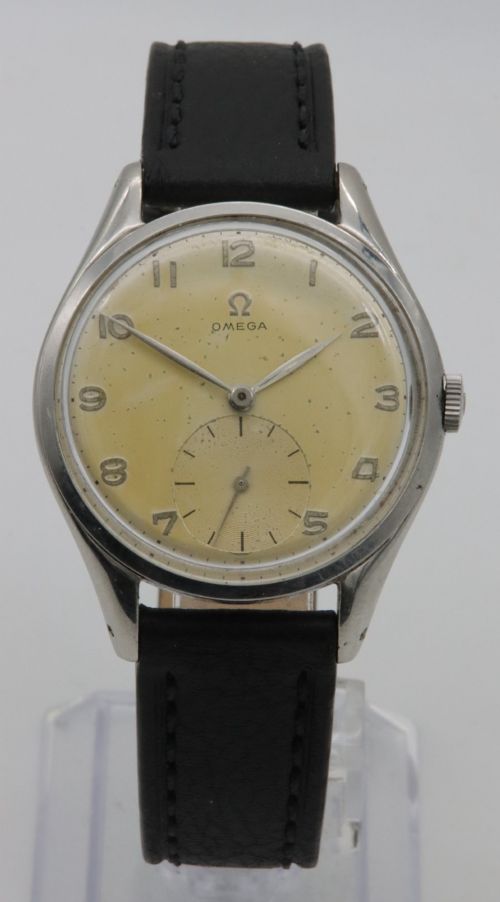
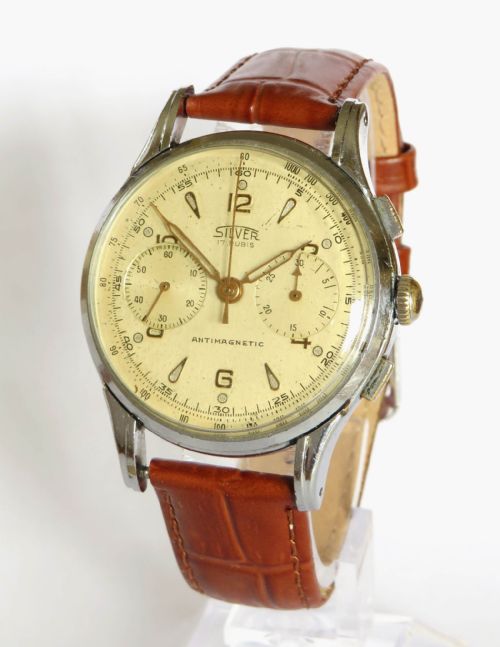
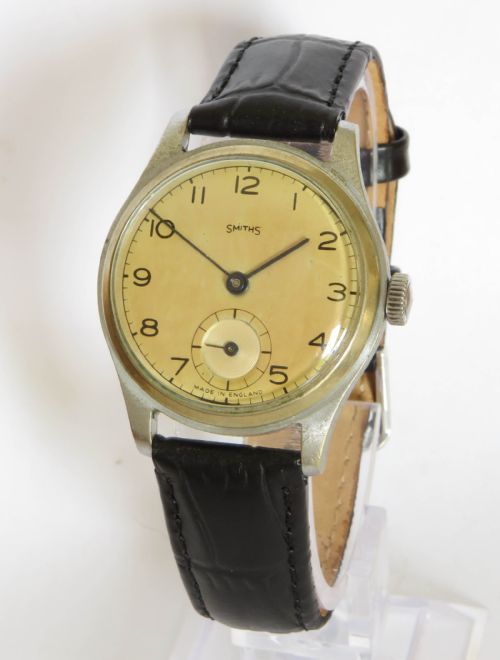
A cream dial wristwatch is a timepiece defined by its softened, pale face, spanning periods from the nineteen-thirties to the nineteen-sixties. These watches encompass dress pieces, military issues, and chronographs, all sharing the warm tones of an aged or originally tinted dial.
The versions most frequently met on this page originate from the nineteen-forties and nineteen-fifties, bearing the hallmarks of mid-century design. Makers such as Omega, Smiths, and Longines dominate the selections, alongside military-pattern pieces from the nineteen-forties.
Forms range from standard gents wristwatches to robust jumbo cases and specialised chronograph layouts. They capture the stylistic shifts from art deco symmetry through to mid-century modern utility.
How they were made
Cases utilise stainless steel, gold plate, chrome, and base metals, paired with glass or acrylic crystals to protect the dial. These materials reflect the industrial capabilities and resource constraints of the nineteen-thirties up to the nineteen-sixties.
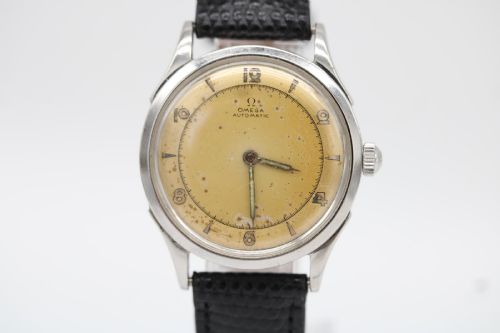
Dials display painted or applied numerals, often accompanied by subsidiary seconds or chronograph sub-dials. Manual wind and automatic movements, including bumper mechanisms, drive the internal mechanics beneath the metal case backs.
Straps typically consist of leather, complementing the metallic construction of the watch head. Each piece relies on traditional horological assembly, joining stamped or milled metal components with finely calibrated gear trains.
Materials utilised across these timepieces include stainless steel, gold plate, chrome, glass, and acrylic, paired predominantly with leather straps.
What varies in quality
Quality separates along the precision and reputation of the movement housed inside the case. Well-regarded calibres from established watchmakers distinguish standard commercial pieces from high-grade horological examples.
The preservation of the dial and case geometry determines the distinction between well-maintained survivors and heavily worn items. Original finishing on stainless steel or gold-plated surfaces maintains the integrity of the design.
Provenance and documentation, such as original sale papers or military issue markings, elevate specific pieces above standard watches of the same period.
Antoremi·Omega·Smiths·Longines·Bulova·Rotary·Marvin·Enicar·Prisma·Dogma Prima·Tissot·Felca·Rolex·Tudor·Timor·Breitling
The Cream Dial Wristwatch Glossary
- Chronograph
- A watch with a stopwatch function alongside its standard timekeeping display. These pieces feature additional pushers on the case to start, stop, and reset the secondary hands.
- Manual wind
- A timepiece requiring the wearer to turn the crown by hand to tension the mainspring. This mechanism represents the standard method of powering watches before automatic movements became widespread.
- Automatic bumper
- An early self-winding movement that uses a weighted rotor swinging back and forth through a limited arc. The wearer feels a gentle tap against the internal springs as the movement winds itself.
- New Old Stock
- An item manufactured in the past that remains unused and unworn in its original packaging or condition. These pieces bypass decades of wrist wear while retaining their original factory state.
- Army Trade Pattern
- A standardised specification used to procure watches for military personnel during the nineteen-forties. These utilitarian pieces feature robust steel cases and highly legible dials.
Cream Dial Wristwatch: Frequently Asked Questions
What is a cream dial wristwatch?
A cream dial wristwatch is a vintage timepiece featuring a pale, warm-toned face rather than stark white or black. These dials frequently appear on pieces dating from the nineteen-thirties to the nineteen-sixties.
The neutral tone often deepens naturally over decades, giving each watch a distinct personality. They appear across dress styles, chronographs, and military-issued gear.
How do I wind a manual watch?
To wind a manual watch, turn the crown clockwise between your thumb and forefinger until you feel gentle resistance. Stop immediately once the tension increases to avoid damaging the mainspring.
Most vintage mechanical watches require daily winding to keep accurate time. Establishing a consistent morning routine helps maintain a steady power reserve.
What is a bumper movement?
A bumper movement is an early type of automatic winding mechanism used in mid-century watches. Instead of spinning in a full circle, an internal weight swings back and forth between springs.
This oscillating motion winds the mainspring as the wearer moves their arm. You can often feel a slight tap on the wrist when the internal weight hits the bumper springs.
How do military watches differ?
Military watches follow strict government specifications for legibility, durability, and reliability under harsh conditions. They often feature stainless steel cases, luminous markers, and clear markings on the case back.
Unlike civilian dress pieces, these watches prioritize function over ornamentation. Standardised designs were produced by various firms to equip armed forces during the nineteen-forties.