
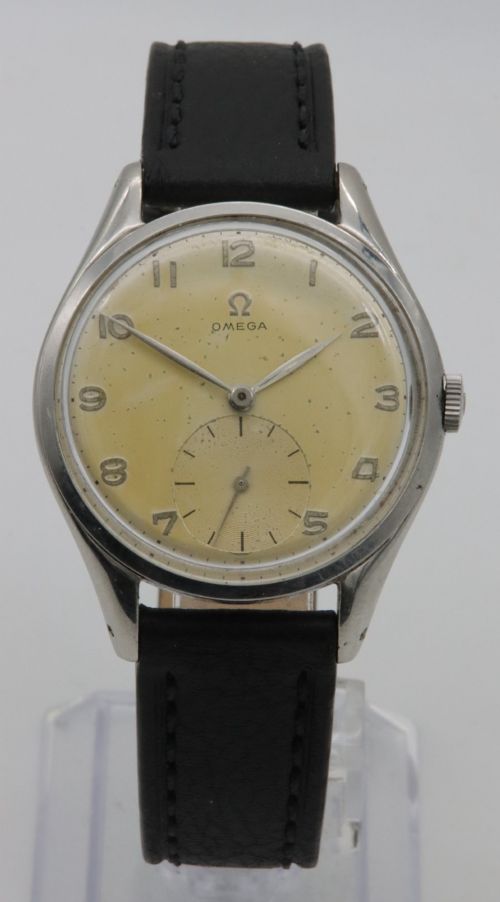
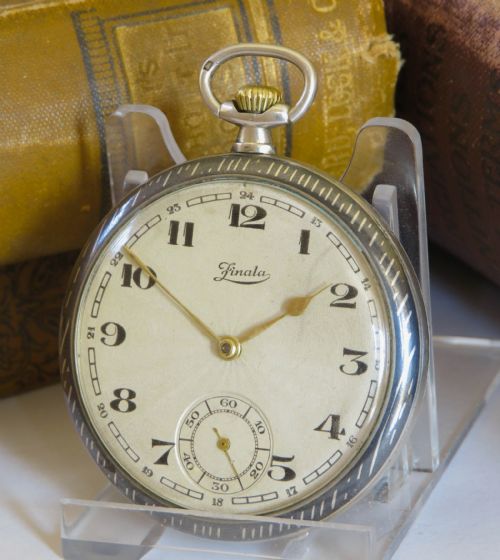
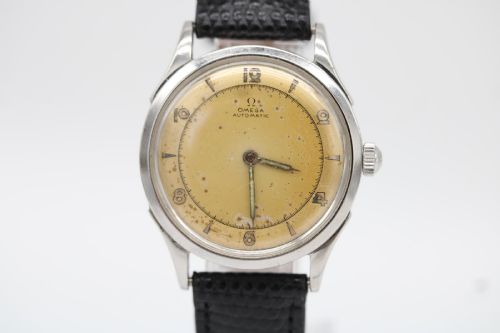
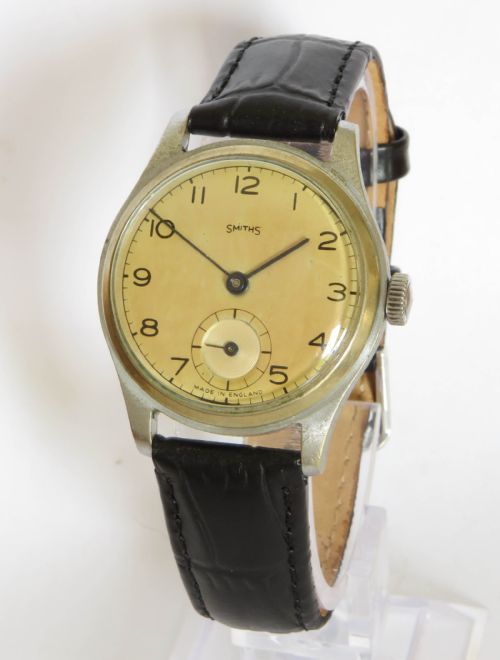
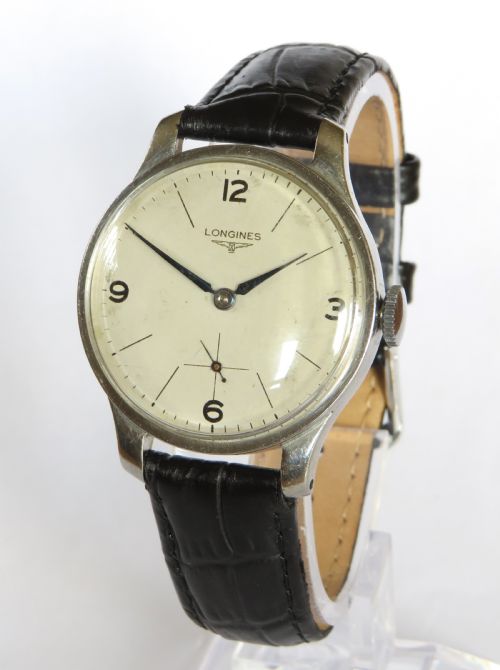
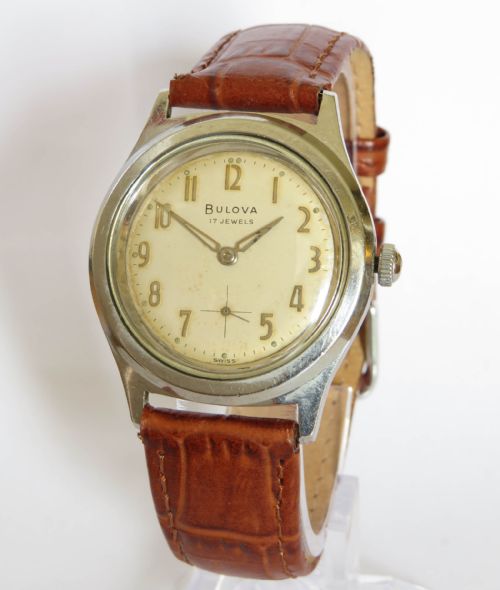


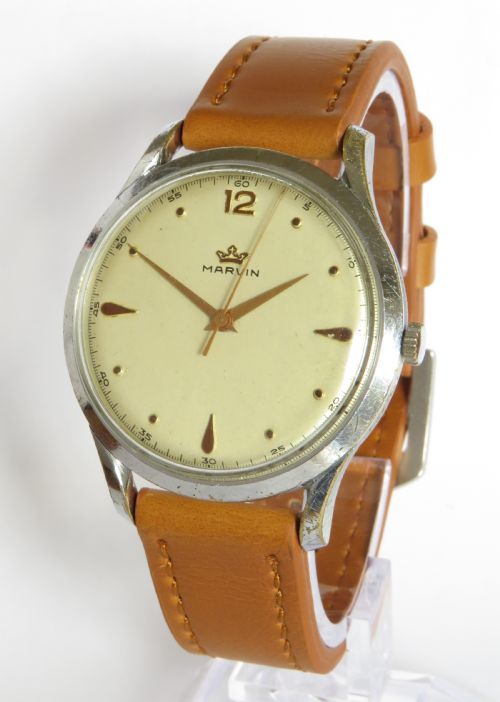


Cream Dial Dress Watch
These cream dial dress watch pieces span decades of horological design, offering a refined wrist presence for daily wear.
Cream Dial Dress Watch
A cream dial dress watch brings together mid-century styles and earlier decades, presenting classic timepieces designed primarily for men.
The selection here encompasses wristwatches and pocket watches, drawing from periods such as the nineteen-thirties, nineteen-forties, nineteen-fifties, and nineteen-sixties.
Makers represented include Omega, Smiths, Longines, Bulova, Rotary, Lanco, Marvin, Enicar, Prisma, Felca, Larex, Silvana, and Zenith.
Materials and Construction
Cases utilise metals including stainless steel, chrome, steel, and silver, paired with protective glass or acrylic crystals over the dial.
Strap components rely on leather to secure the wristwatches, while movements incorporate mechanical manual wind and automatic calibres like the Omega bumper mechanism.
Materials in this selection include stainless steel, chrome, leather, glass, and acrylic across several decades.
Judging Quality in Horology
The refinement of a cream dial dress watch rests upon the precision of its movement, such as an Omega calibre, and the integrity of the dial printing.
Case finishing and the preservation of original materials, including stainless steel or niello work on pocket watch covers, distinguish standard examples from finer specimens.
Omega·Silvana·Smiths·Longines·Bulova·Rotary·Lanco·Zenith
The Cream Dial Dress Watch Glossary
- Calibre
- The specific internal mechanical movement manufactured for a watch. This term helps identify the exact engine driving the timepiece.
- Manual Wind
- A movement requiring the wearer to turn the crown by hand to tension the mainspring. Most vintage wristwatches rely on this traditional method.
- Automatic Bumper
- An early self-winding mechanical movement where a weighted rotor swings back and forth within a limited arc rather than spinning fully. It gives a distinct physical knock to the wrist.
- New Old Stock
- Unsold vintage items discovered in pristine, unworn condition after decades in storage. These pieces retain their original factory state.
- Niello
- A black metallic alloy used as a decorative inlay engraved into metal surfaces. It frequently appears on pocket watch cases from the early twentieth century.
Cream Dial Dress Watch: Frequently Asked Questions
How do I wind a manual watch?
Gently rotate the crown clockwise between your thumb and forefinger until you feel firm resistance. Stop immediately to avoid damaging the mainspring.
Perform this action at a consistent time each day if you wear the piece regularly.
Can I wear a vintage watch daily?
Many of these pieces served as daily timekeepers for decades and continue to function reliably with proper care. Keep them away from moisture and heavy impacts to preserve the vintage mechanism.
Routine servicing by a watchmaker ensures the internal gears remain lubricated and accurate.
What is a bumper automatic movement?
A bumper automatic uses an oscillating weight that bounces against internal springs to wind the mainspring as you move your arm. You can often feel the gentle knock against your wrist.
This design represents an early step in the evolution of self-winding wristwatches during the mid-twentieth century.
How do I date these watches?
Makers recorded production periods through style cues, movement serial numbers, and case hallmarks. Art Deco pieces typically point to the nineteen-thirties, while clean minimalist layouts often indicate the nineteen-fifties or sixties.
Comparing the dial typography and case geometry helps narrow down the manufacturing decade.