





Cream Crackle Glaze Urns
Cream crackle glaze urns bring distinctive craquelure surfaces to Victorian and Edwardian interiors through ceramic vessels.
Cream Crackle Glaze Urns
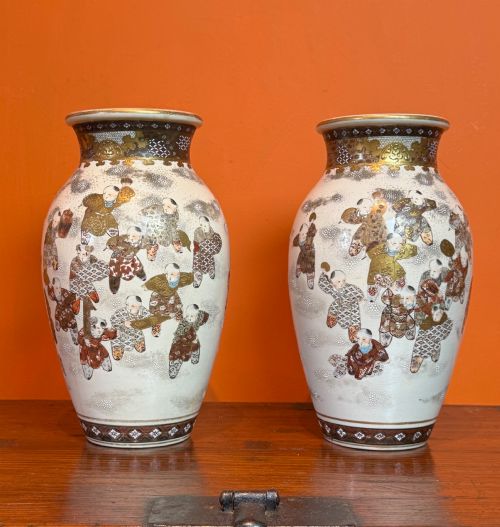
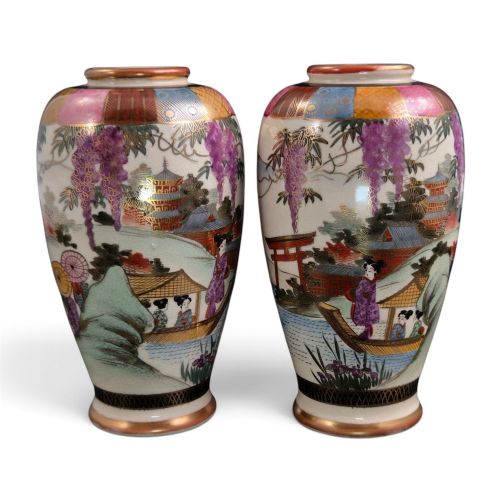
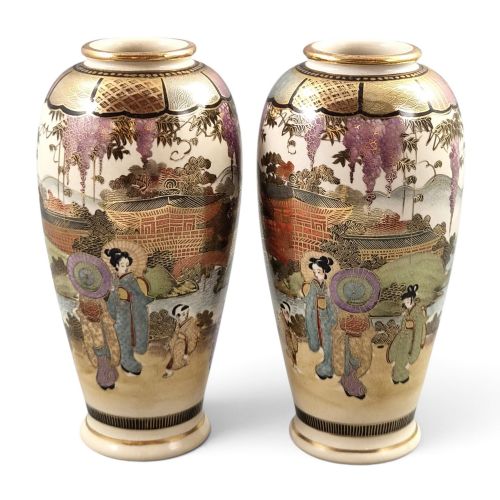
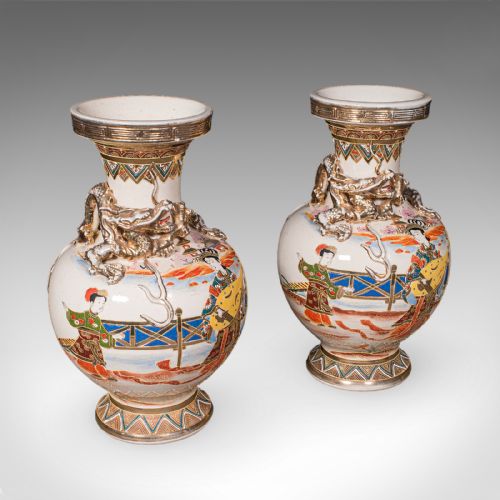
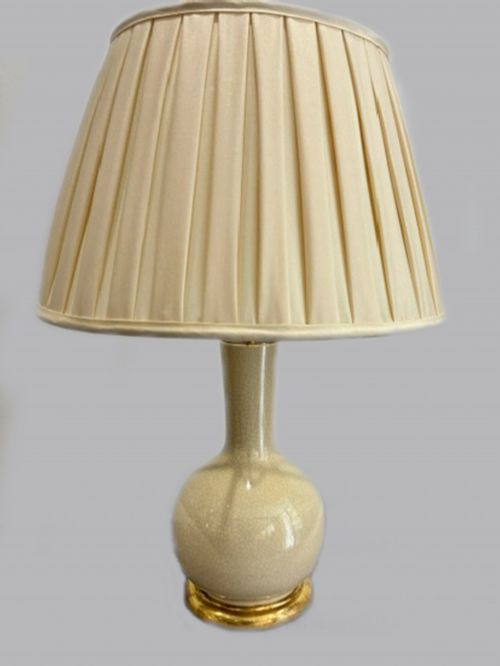
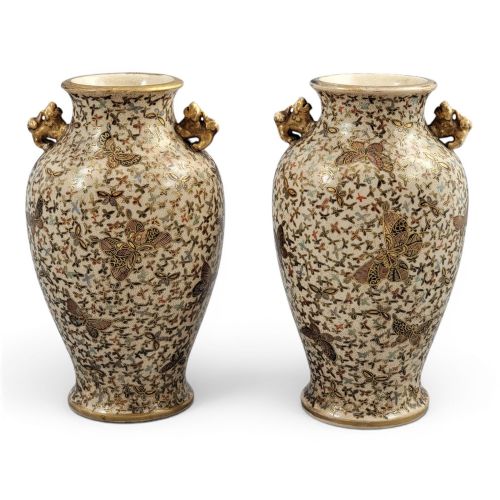
Cream crackle glaze urns comprise ceramic vases, table lamps and decorative pots spanning the nineteenth century through the early twentieth century. Buyers seeking cream crackle glaze urns encounter Japanese Satsuma wares alongside French and Chinese pieces from periods such as the Meiji, Taisho, Victorian and Edwardian eras.
The selections on this page centre on ceramic vases and decorative vessels displaying distinctive crazed finishes. These pieces originate from Japanese workshops and European makers, bringing historic ceramic traditions into domestic spaces.
How they were made
Makers shaped earthenware and ceramic bodies into baluster vases, pots and lamp bases before applying specialised glazes that fractured during cooling. Artisans then painted intricate scenes by hand, often incorporating gold leaf, gilt and enamel details across the surface.
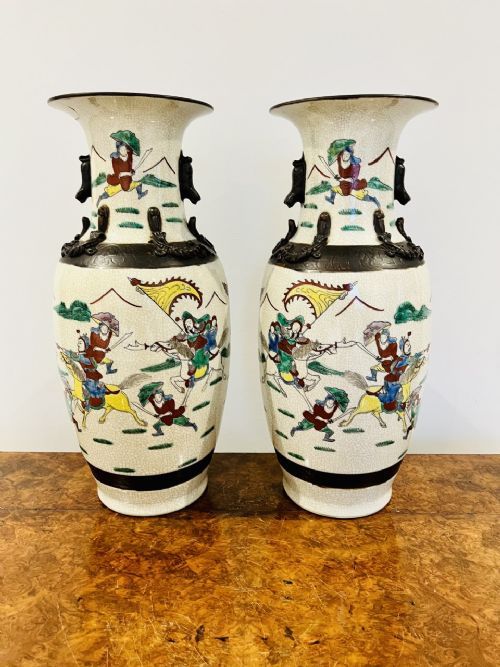
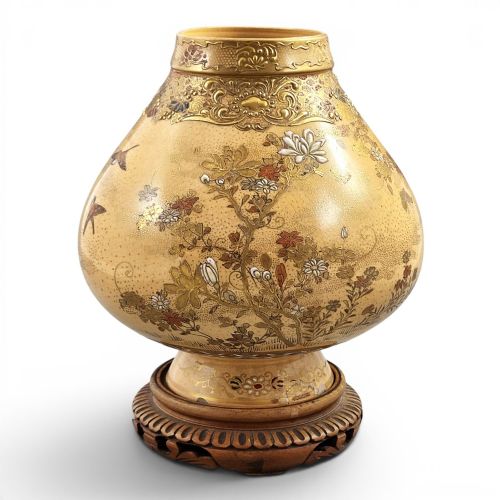
Workshops utilised controlled firing techniques to achieve the signature network of fine cracks within the glaze. Skilled painters subsequently added figural processions, landscapes, and floral motifs such as butterflies and wisteria over the crackled ground.
Cream Crackle Glaze Urns Retail Price Guide 2026
Typical asking prices for cream crackle glaze urns among the pieces listed under this phrase on Sellingantiques today, from the lower quarter to the upper quarter. They describe what is for sale here now, not the wider market.
Some miniature vases pack entire imperial processions onto ceramic surfaces measuring barely the height of a teacup.
What varies in quality
Quality rests in the finesse of the hand-painted decoration and the precision of the underlying crackle pattern across the ceramic body. Pieces from distinguished workshops display superior brushwork in gold gilt and enamel, maintaining crisp detail in complex figural scenes and landscapes.
The refinement of the ceramic form and the consistency of the glaze application distinguish exceptional pieces from standard production. Finer examples balance elaborate ornamentation with harmonious proportions, particularly in pieces originating from notable Meiji period makers.
Kinkōzan Workshop·Shozan·Manpei·Kinzan·Chosei·Seiko-en Chokei·Hattori·Hayakawa
The Cream Crackle Glaze Urns Glossary
- Crackle glaze
- A ceramic finish intentionally induced to form a network of fine microscopic cracks across the surface. This technique appears in various historical Asian and European pottery traditions.
- Satsuma
- A type of Japanese earthenware featuring a pale, ivory-coloured crackled glaze decorated with polychrome enamels and gilt. These wares were produced extensively during the Meiji period for both domestic and export markets.
- Meiji Period
- The era of Japanese history lasting from 1868 to 1912, associated with rapid modernisation and the creation of highly detailed decorative arts for international trade.
- Baluster
- An architectural form describing a vase or pillar with a rounded swelling body that tapers towards a narrow neck. This silhouette frequently appears among historic ceramic vessels.
- Gilt
- A thin layer of gold or gold leaf applied to the surface of ceramics, wood or metal to provide decorative highlights. In fine pieces, gilding enhances painted figural processions and floral motifs.
Cream Crackle Glaze Urns: Frequently Asked Questions
How do I care for a ceramic vase?
Dust ceramic vessels gently with a soft, dry cloth to protect delicate enamel and gilt decorations from abrasion. Avoid exposing antique pieces to direct moisture or harsh cleaning agents.
Keep pieces positioned away from rapid temperature fluctuations to safeguard the historic crackle glaze from stress. Stable indoor environments help preserve the integrity of both the ceramic body and the surface artistry.
What is Satsuma ware?
Satsuma ware is a distinct category of Japanese pottery characterised by an ivory earthenware body covered in a fine crackle glaze. Artisans hand-painted these surfaces using rich enamels and raised gold leaf.
Production flourished during the Meiji period, yielding decorative vases, miniature vessels and table lamps for global collectors. The style remains celebrated for its intricate depictions of historic figures, landscapes and flora.
How are different periods identified?
Period attribution relies on stylistic conventions, workshop signatures, and the specific characteristics of the ceramic body and glaze. Nineteenth-century Meiji pieces often display dense, meticulous hand-painted details alongside maker seals.
Later Taisho and Edwardian items exhibit evolving aesthetic influences while maintaining traditional craft techniques. Examining the base and finishing methods helps distinguish nineteenth-century production from subsequent decades.
Where were these vessels displayed?
Historic decorative vases and urns served as prominent interior display pieces in Victorian and Edwardian drawing rooms. They were placed on mantelpieces, pedestals and tables to showcase refined taste and global trade connections.
Many pieces transitioned into practical furnishings over time, with certain vases converted into table lamps during the twentieth century. This dual purpose allows these historic ceramics to integrate naturally into contemporary lighting schemes.