
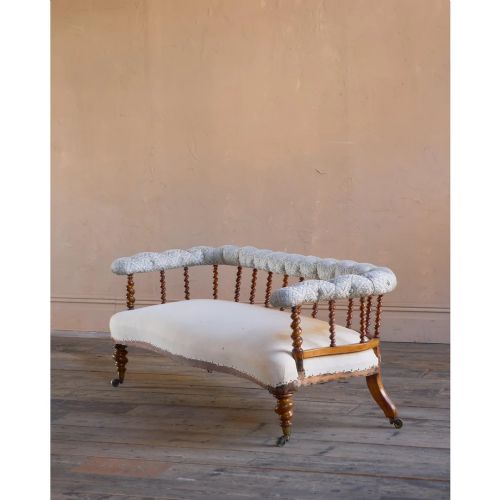
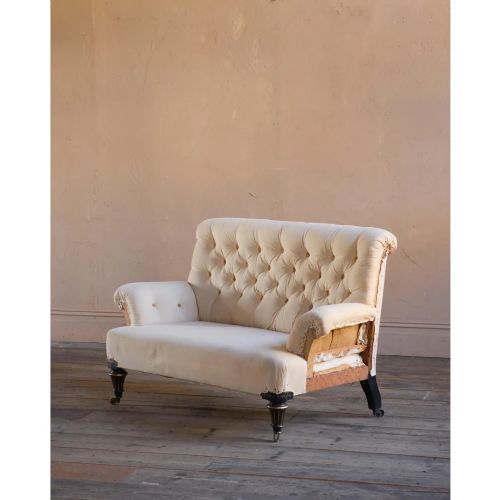
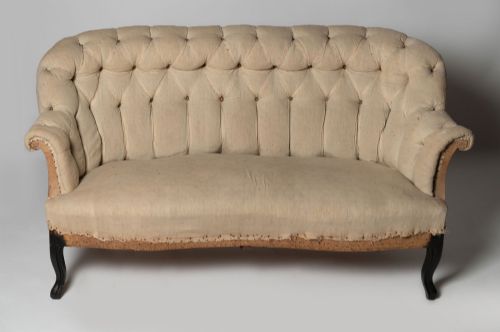
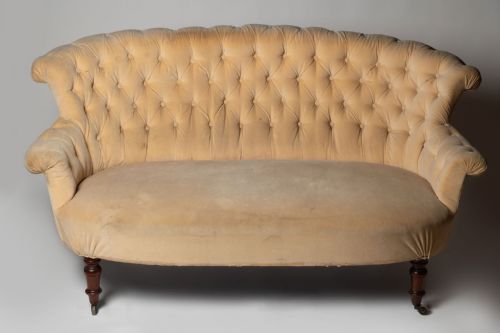


Cream Buttoned Sofa
A cream buttoned sofa offers deep seating and classical upholstery that anchors a room with understated texture and period presence.
Cream Buttoned Sofa
A cream buttoned sofa represents a tradition of comfortable seating spanning the nineteenth and early twentieth centuries, encompassing Victorian, Edwardian, and French styles. These pieces range from substantial Chesterfields and salon sofas to smaller chaise longues and settee forms.
The versions most likely to appear on this page are nineteenth-century Victorian and French seating, often featuring deep tufted upholstery paired with exposed timber frameworks in mahogany, walnut, or rosewood. They frequently arrive in various states of finish, from antique fabric and raw leather awaiting custom dyeing to calico ready for final covering.
How they were made
Makers built these frames from sturdy hardwoods such as mahogany, walnut, and rosewood, often shaping them with carved details or retaining painted and gilt surfaces. Brass hardware and castors frequently supported the feet of larger settees and daybeds.
Upholsterers secured the deep tufting by pulling thread through the padding to anchor the fabric against the frame, using materials like velvet, leather, and calico. Frames often utilised traditional joinery, supporting complex forms from large open arm sofas down to miniature furniture.
Materials documented in current stock include mahogany, walnut, rosewood, brass, leather, velvet, and calico.
What varies in quality
The integrity of the underlying hardwood frame and the precision of the carved woodwork separate fine workshop production from simpler output. Better pieces retain balanced proportions across complex shapes like corner sofas and high-backed salon seating.
The execution of the upholstery work, from the regularity of the buttoning to the selection of premium materials like quality leather and heavy velvet, dictates the finish. Original maker attribution, such as work by recognised firms, elevates the standing of a piece.
C. Hindley & Sons·Jackson and Graham·Jas Shoolbred·Howard & Sons
The Cream Buttoned Sofa Glossary
- Buttoned
- Upholstery secured with deep tufts tied down to form a quilted pattern. This technique creates distinct pockets of padding across the backrest.
- Chesterfield
- A large upholstered sofa with arms and back of the same height. Traditional examples feature deep buttoning and leather construction.
- Chaise Longue
- An elongated chair for reclining, combining a sofa seat with a headrest. Nineteenth-century models often feature single raised ends and carved wooden frames.
- Salon Suite
- A matched set of seating furniture, typically including a sofa and matching chairs. These groupings were designed for formal entertaining in nineteenth-century drawing rooms.
- Calico
- A plain-woven cotton fabric often used as an initial upholstery layer. Antique pieces are frequently upholstered in calico to await a final top fabric chosen by the buyer.
Cream Buttoned Sofa: Frequently Asked Questions
What is a cream buttoned sofa?
A cream buttoned sofa is a period seating piece featuring tufted upholstery in light neutral tones, originating primarily from the nineteenth and early twentieth centuries. These pieces encompass various forms including Chesterbacks, salon settees, and French-inspired designs.
They combine structural woodwork in mahogany, walnut, or rosewood with soft fabric or leather coverings. The buttoning technique provides both distinct visual texture and firm support across the backrest.
How do I choose the right period style?
Consider the architectural context of your space and the specific proportions of the seating options available. Victorian models often present robust carved walnut frames, while French designs showcase painted and gilt finishes or lighter cabriole lines.
Examine whether the piece retains its original framing details or has undergone alterations. Selecting between a formal salon suite and a relaxed daybed depends on the intended room and daily usage.
Are these sofas comfortable for daily use?
Many nineteenth-century and Edwardian sofas offer deep, sprung seating designed for extended lounging. The internal webbing and coil springs provide substantial support when properly maintained.
Some pieces listed require reupholstery or custom finishing, which allows you to adjust the cushioning to personal preference. Leather Chesterfields and upholstered daybeds adapt particularly well to modern living spaces.
How do I care for antique leather and fabric?
Maintain fabric upholstery through regular gentle vacuuming with a soft brush attachment to prevent dust accumulation. Raw leather and finished hides require specific conditioning balms to keep the material supple.
Protect pieces from direct sunlight to avoid fading the cream upholstery and drying out the underlying hardwood frames. Professional cleaning is recommended for delicate nineteenth-century textiles.
What does raw leather or unfinished mean?
Listings sometimes describe sofas as raw leather or requiring dyeing, indicating that the hide is prepared for custom finishing. This allows buyers to specify a bespoke colour rather than accepting a factory-standard shade.
Similarly, pieces offered in calico provide a blank canvas for final textile application. This approach ensures the upholstery matches existing interior colour schemes.