
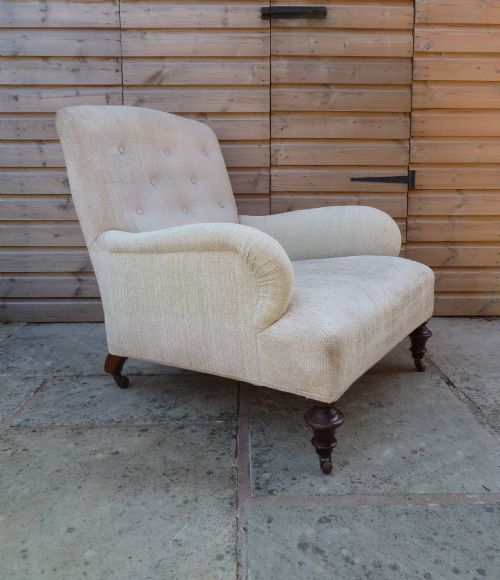
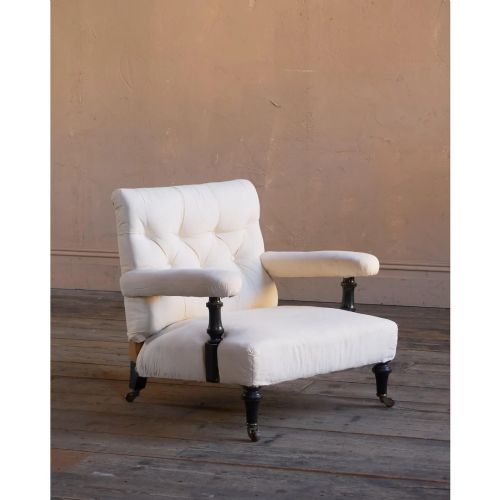
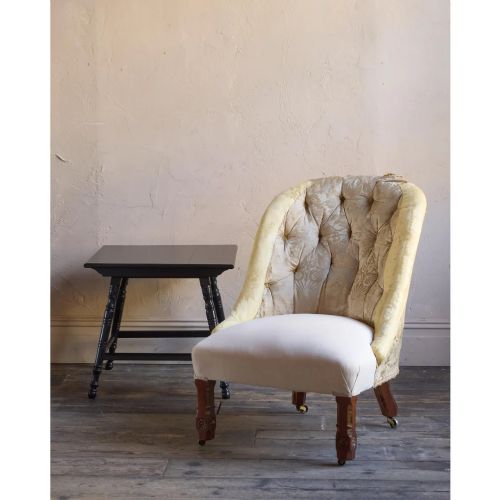
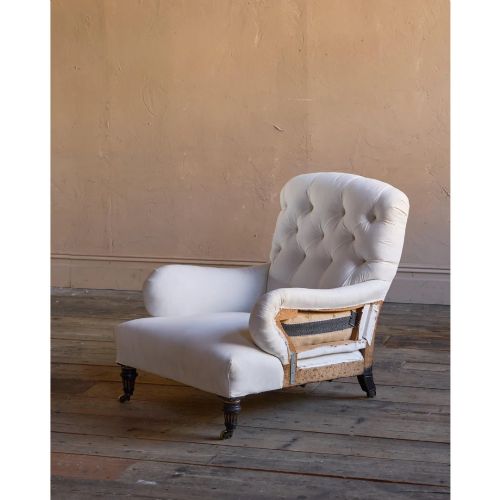
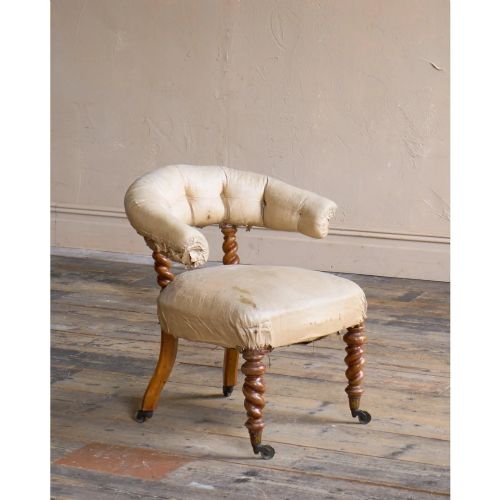
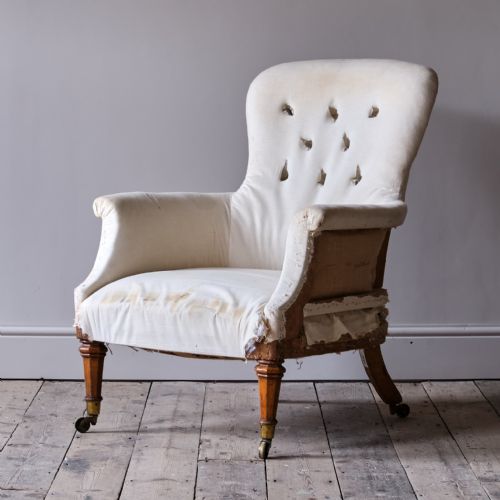
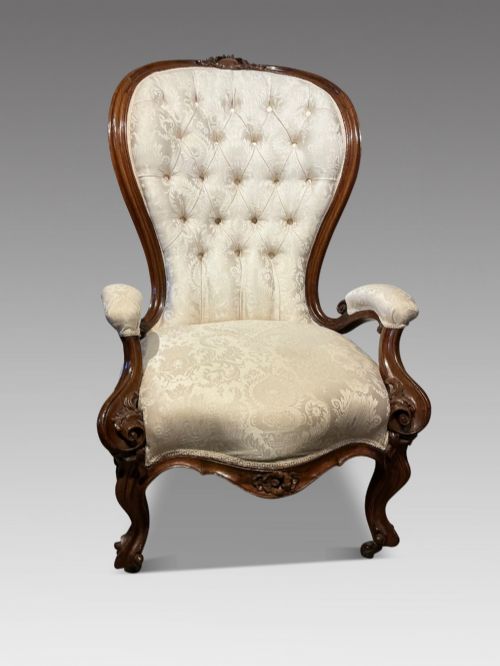
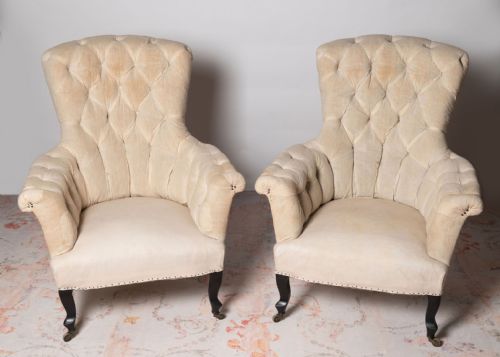
Cream Button Back Armchair
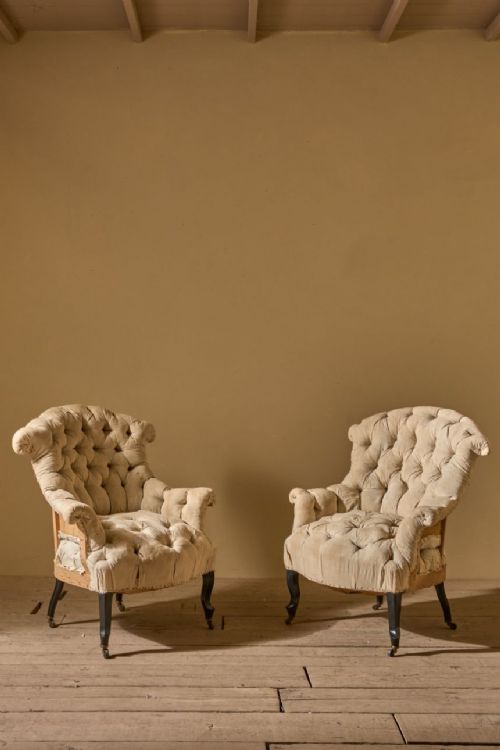
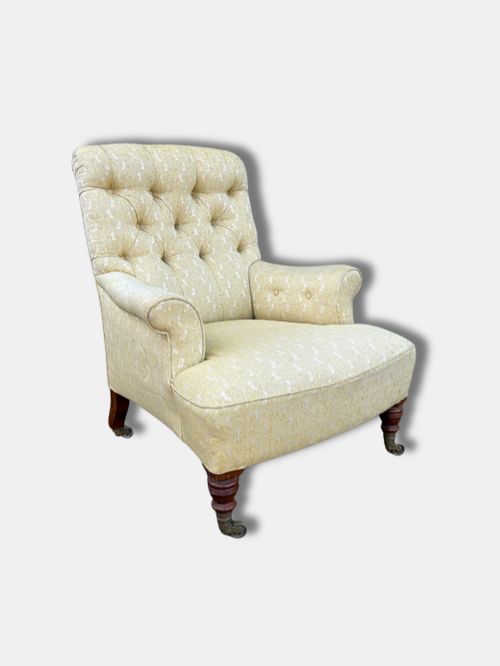
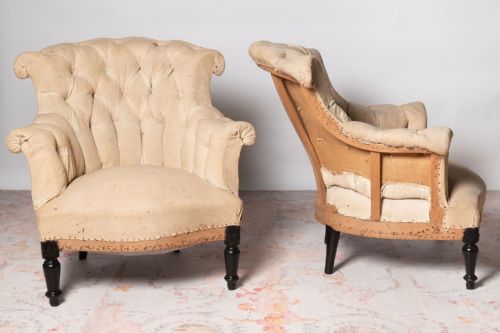
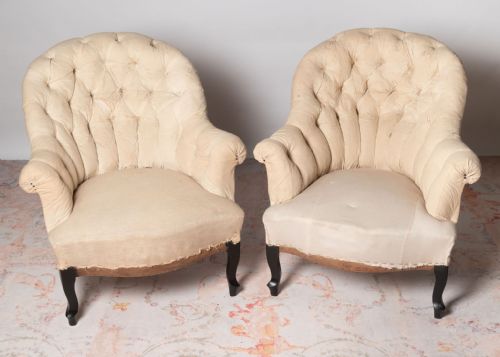
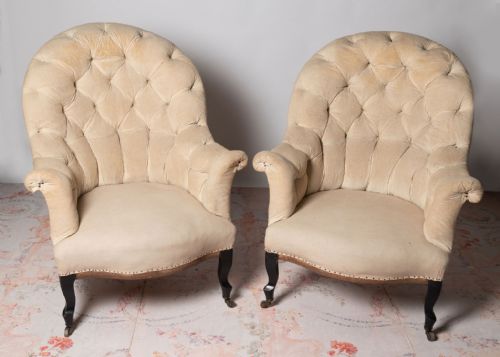
A cream button back armchair offers deep upholstery and tailored tufting, bringing period comfort and sculptural form to a room.
Cream Button Back Armchair
When searching for a cream button back armchair, buyers encounter nineteenth-century English and French seating, spanning Victorian, Regency, and Edwardian periods.
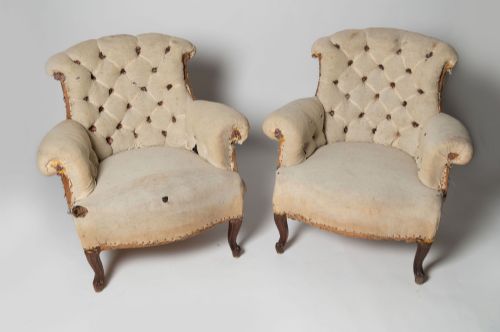
The selections on this page lean heavily towards nineteenth-century examples, featuring French Napoleon III designs, William IV country house seating, and aesthetic movement pieces.
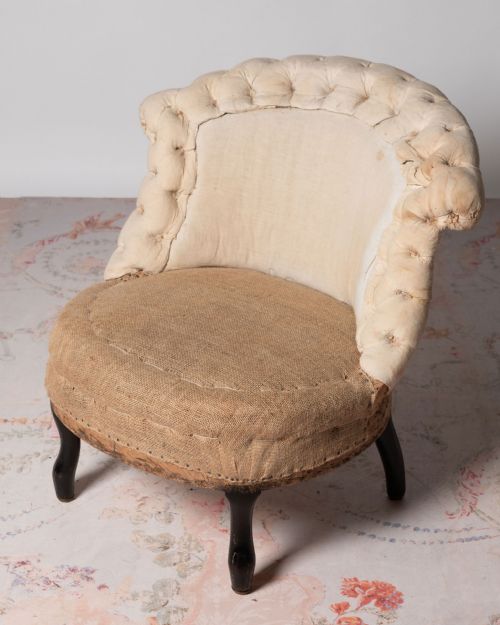
Forms vary from reading chairs and salon chairs to bedroom chairs and large proportions associated with prominent London makers.
Materials and construction
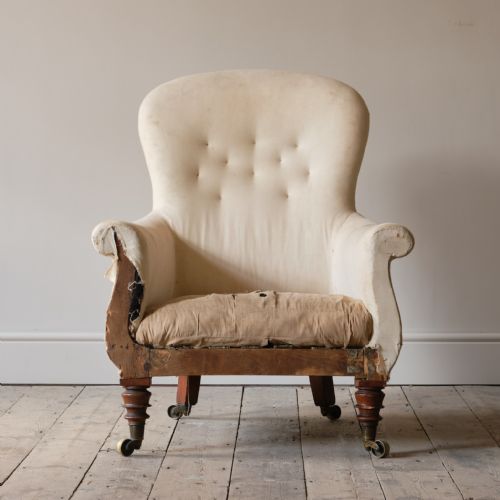
Frames are built from solid hardwoods such as mahogany, walnut, and timber, sometimes supported by ebonised or cabriole legs with brass castors.
Internal stuffing relies on traditional materials like hessian and calico beneath the outer fabric cover, secured with deep buttoning techniques.
Listings feature nineteenth-century and Victorian periods, utilising mahogany, walnut, brass, fabric, calico, hessian, and timber.
Judging quality
The distinction between ordinary and exceptional pieces lies in the integrity of the frame timber, the precision of the button tufting, and the retention of original maker stamps or castors.
Proportions and carving define the upper tier, where seating designed by notable workshops displays balanced lines and robust internal webbing rather than purely decorative execution.
Howard and Sons·Mellier and Co·C Hindley and Sons·Hamptons and Sons
The Cream Button Back Armchair Glossary
- Button back
- Upholstery technique where depressions are formed in the padding by stitches or buttons pulled tight into the frame. This secures the filling and creates a patterned grid of tufts.
- Cabriole leg
- Furniture leg that curves out and then narrows inward, resembling an animal limb. It appears frequently on Victorian mahogany frames.
- Hessian
- Coarse woven fabric utilised as a foundational scrim inside upholstered seating. It holds the stuffing in position beneath the outer textile.
- Castor
- Small wheel attached to the foot of a chair leg to ease movement. Brass examples frequently accompany nineteenth-century English armchairs.
Cream Button Back Armchair: Frequently Asked Questions
How do I identify a nineteenth-century piece?
Nineteenth-century examples are distinguished by timber choices like solid mahogany and walnut, alongside specific stylistic revivals such as French Napoleon III or William IV.
Examination of the internal webbing, hessian, and framing methods often reveals the traditional hand construction typical of this era.
Where were these armchairs used historically?
These armchairs served in diverse domestic spaces, from formal drawing rooms and salons to private bedrooms and reading studies.
Smaller salon and bedroom chairs provided mobile seating, while large proportioned armchairs offered heavier comfort for country house libraries.
What is a Howard style armchair?
A Howard style armchair references the low-slung, deeply cushioned upholstery forms popularised by the nineteenth-century London firm Howard and Sons. These pieces prioritise sink-in comfort supported by sturdy timber frames and original castors.
Copies and pieces in the manner of the firm frequently share these characteristic generous proportions and tailored upholstery.