

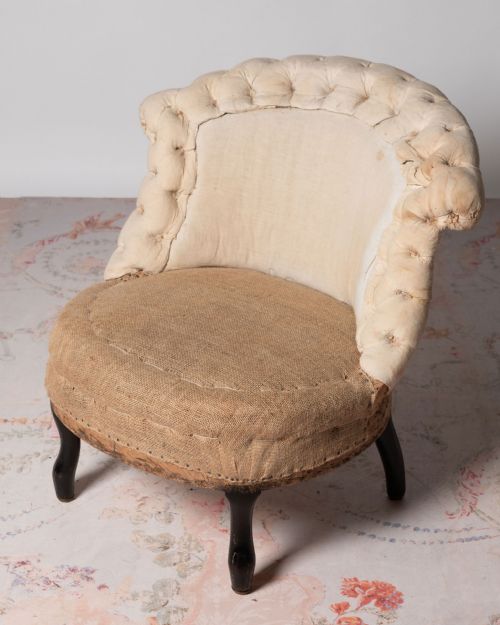


Tufted Linen Armchair
These tufted linen armchair examples combine buttoned upholstery with timber frames, offering deep seating and period character for a traditional interior.
Tufted Linen Armchair
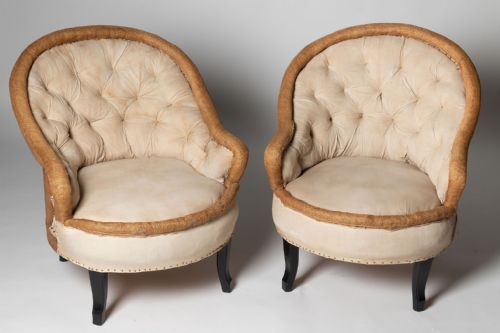
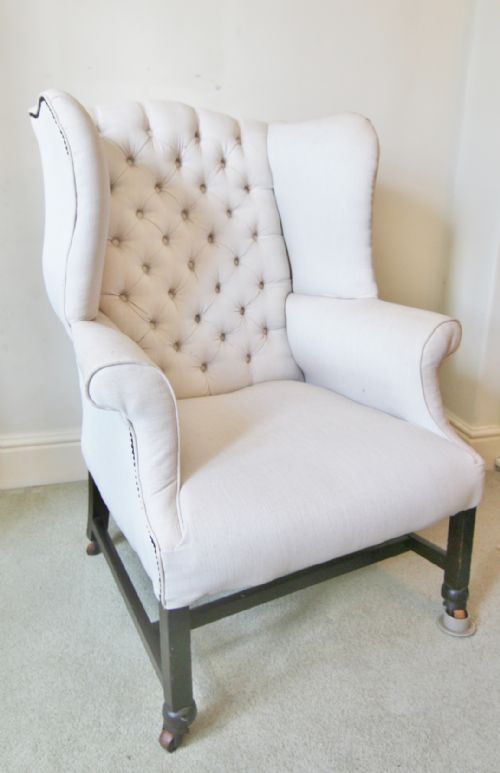
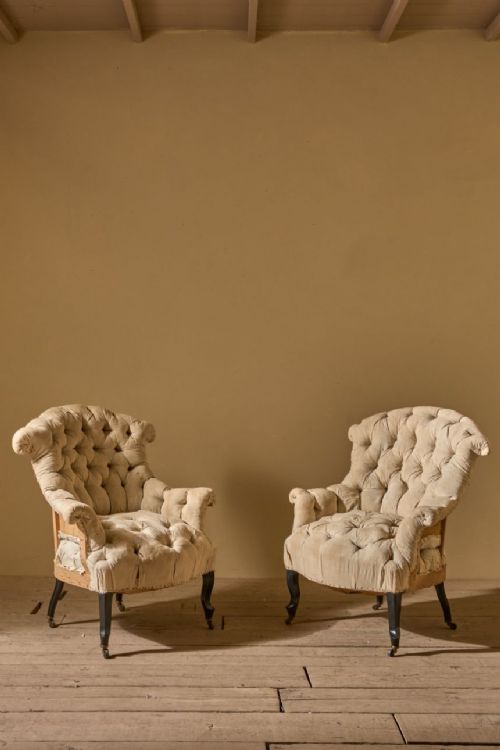
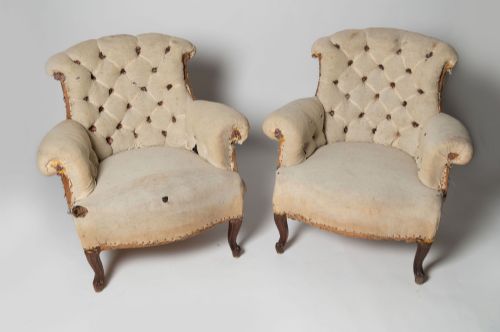
A tufted linen armchair brings nineteenth century seating forms into a modern room, offering low slipper chairs, wing armchairs, and barrel back designs. These seating pieces span the Victorian and Edwardian periods alongside French Napoleon III designs, uniting upholstered comfort with structural timber frames.
Buyers meet open armchairs, pair configurations, and deep buttoned back variants across the listings. The materials combine linen and calico fabric upholstery with underlying wooden frames of walnut, beech, and timber.
How they were made
Makers built these frames using walnut, beech, and other timber, shaping open armchairs, barrel backs, and slipper chairs by hand. Structural integrity relies on traditional joinery within the wooden skeletons before upholstery begins.
Upholsterers applied deep buttoning through linen and calico fabric layers, securing the padding to create the characteristic tufted surface. Brass elements sometimes finish the assembly, anchoring the fabric tightly to the wooden structure.
Tufted Linen Armchair Retail Price Guide 2026
Typical asking prices for tufted linen armchair among the pieces listed under this phrase on Sellingantiques today, from the lower quarter to the upper quarter. They describe what is for sale here now, not the wider market.
Listings feature nineteenth century and Edwardian pieces, including French Napoleon III styles constructed from walnut, beech, and timber.
What varies in quality
Quality rests in the precision of the frame construction and the execution of the deep buttoned upholstery. A well-built walnut or beech frame holds the lines of a barrel back or wing armchair with stable symmetry.
The choice of covering fabric, whether vintage mulberry linen, standard linen, or calico fabric, dictates the tactile finish of the piece. Superior examples maintain firm buttoning and clean proportions across nineteenth century and Edwardian forms.
Howard and Son
The Tufted Linen Armchair Glossary
- Tufted
- A method of upholstery where string or twine is passed through the padding and pulled tight to create a pattern of recessed points held by buttons. This technique secures the internal stuffing and gives the surface its characteristic quilted appearance.
- Slipper chair
- A low-seated upholstered chair without arms, traditionally designed for bedrooms to assist with putting on shoes. Nineteenth century versions often feature linen coverings and compact proportions.
- Wing armchair
- A comfortable seat featuring side panels attached to the back of the arms to shield the occupant from drafts. Edwardian iterations often incorporate deep buttoned backs.
- Napoleon III
- A French design style spanning the mid to late nineteenth century, known for eclectic revivals and buttoned seating forms. Pieces from this period frequently display carved wooden frames beneath plush upholstery.
- Calico fabric
- A plain-woven textile often used as a base layer for upholstery or as a finished cover on antique seating. It provides a sturdy, neutral foundation for traditional chairs.
Tufted Linen Armchair: Frequently Asked Questions
What is a tufted linen armchair?
A tufted linen armchair is a nineteenth century or Edwardian seating piece featuring buttoned upholstery over a timber frame. These chairs combine linen or calico coverings with structural woods such as walnut and beech.
They appear in various forms including wing armchairs, barrel backs, and low slipper chairs. Each style uses deep buttoning to secure the interior padding while offering formal period design.
How do I identify a Victorian armchair?
Victorian armchairs from the nineteenth century often display heavy timber frames in walnut or beech, paired with deep buttoned upholstery. French Napoleon III variants within this era frequently showcase elaborate buttoned backs and seats.
Look for structural indicators such as open wooden arms, barrel back enclosures, or low slipper chair proportions. The use of traditional linen and calico fabric further confirms the period origin.
Where were slipper chairs used?
Slipper chairs served primarily in nineteenth century bedrooms as low seating for dressing and putting on shoes. Their compact, armless design allowed people to sit comfortably close to the floor.
These pieces typically feature upholstered linen surfaces and light wooden frames. Their small scale makes them adaptable for placement in modern dressing rooms and compact living spaces.
How do I care for antique linen upholstery?
Antique linen upholstery requires gentle maintenance to preserve the fabric and the underlying buttoned tufting. Regular light vacuuming with a soft brush attachment removes surface dust without stressing the textile.
Avoid harsh chemical cleaners on vintage linen and calico fabric covers. Professional textile cleaning is recommended for deeper maintenance to protect the nineteenth century fibres.