

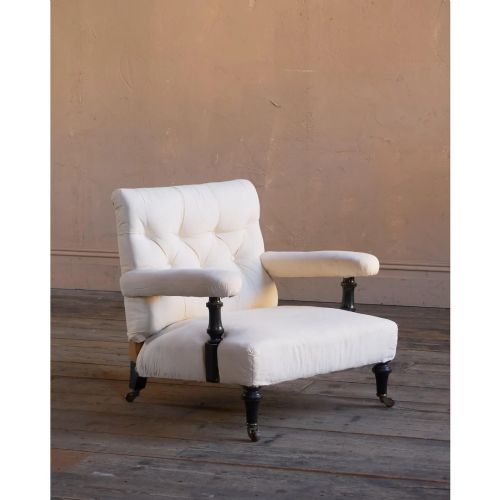
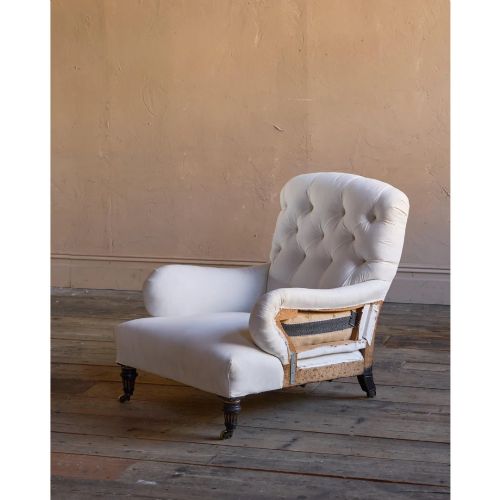
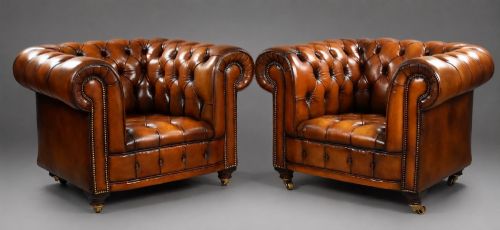
Vintage Deep Buttoned Armchairs
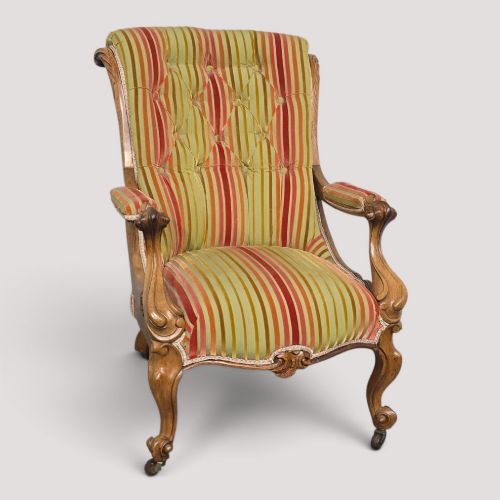
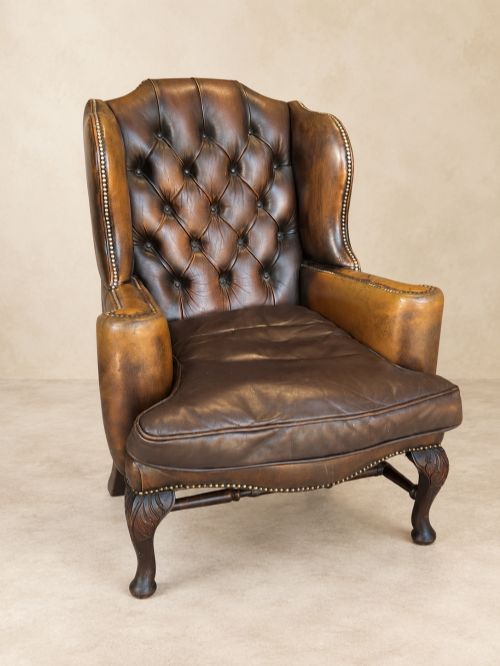
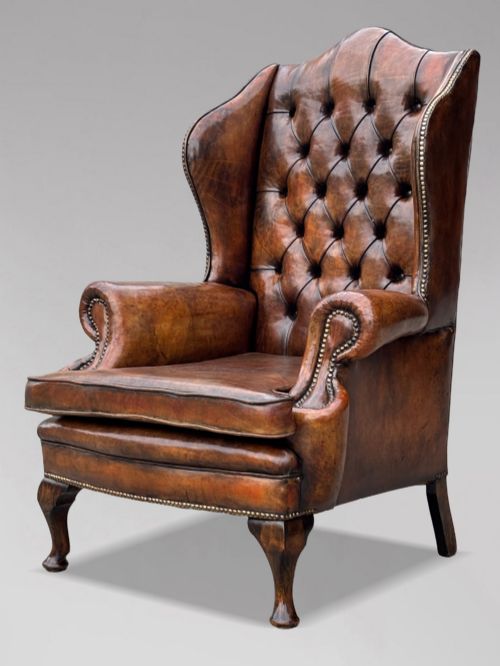
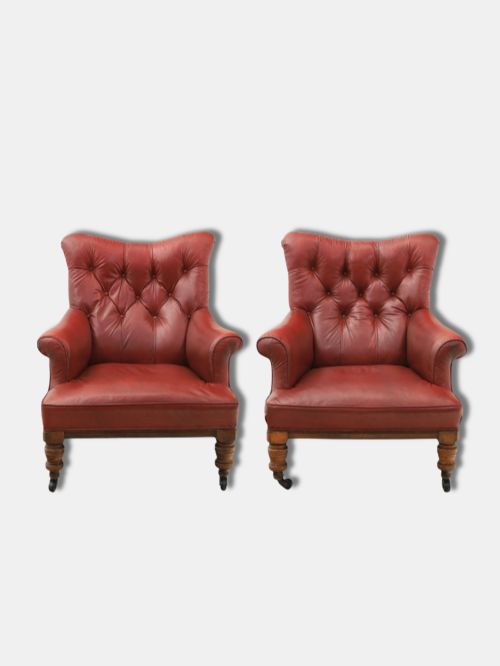
These vintage deep buttoned armchairs bring tactile warmth and solid proportions to a room, offering deep seating paired with traditional upholstery.
Vintage Deep Buttoned Armchairs
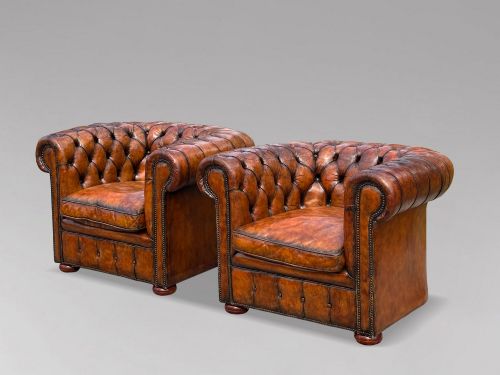
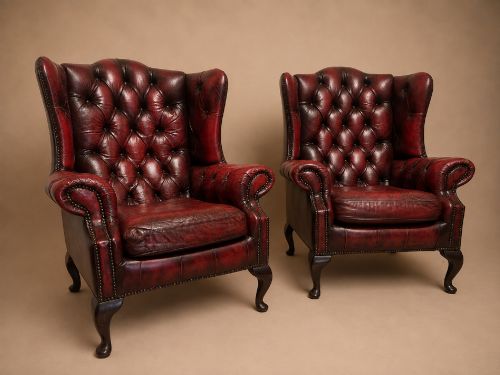
Buyers seeking vintage deep buttoned armchairs encounter sturdy seating built for libraries, studies, and drawing rooms across multiple eras. The selection spans substantial wing chairs, low club chairs, and partner deskside seats designed for heavy daily use.
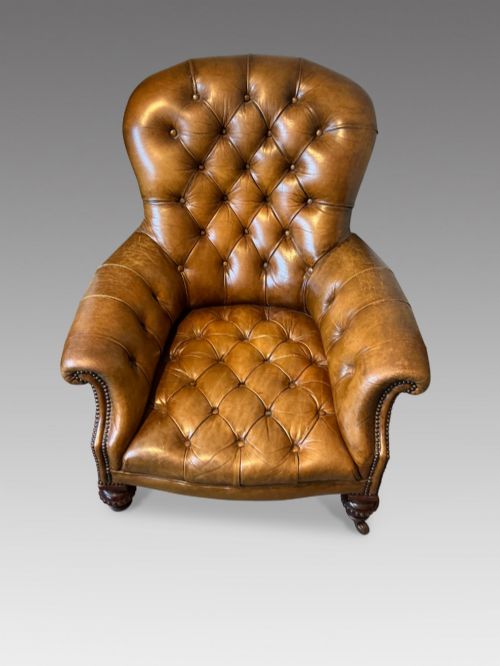
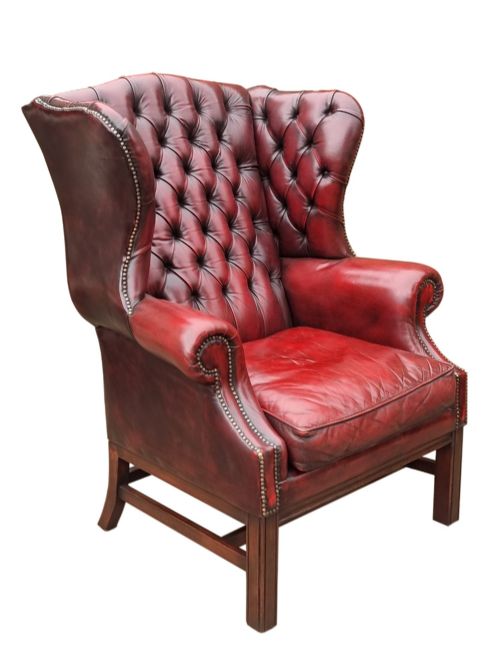
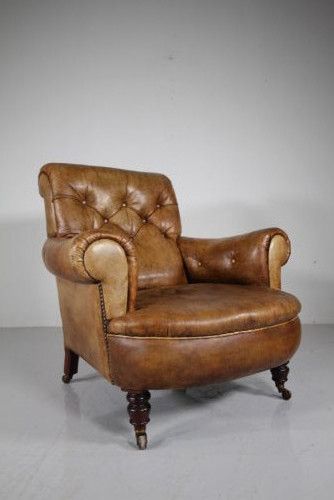
The version most commonly met on this page is the Victorian or Edwardian leather library chair, alongside later twentieth century club chairs. These pieces combine generous padded arms with buttoned upholstery that creates distinct geometric indents across the backrest.
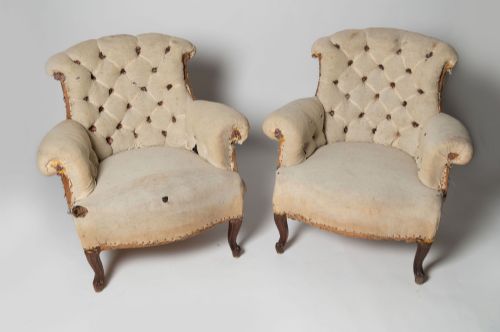
Origins stretch from English workshops to French Napoleon III salons and Swedish interiors. Forms range from high backed wing chairs to compact occasional seats and reclining library chairs.
How they were made
Construction relies on robust internal frames shaped from hardwoods such as mahogany, walnut, and oak. Joinery techniques from the nineteenth and early twentieth centuries ensure rigidity under heavy upholstery loads.
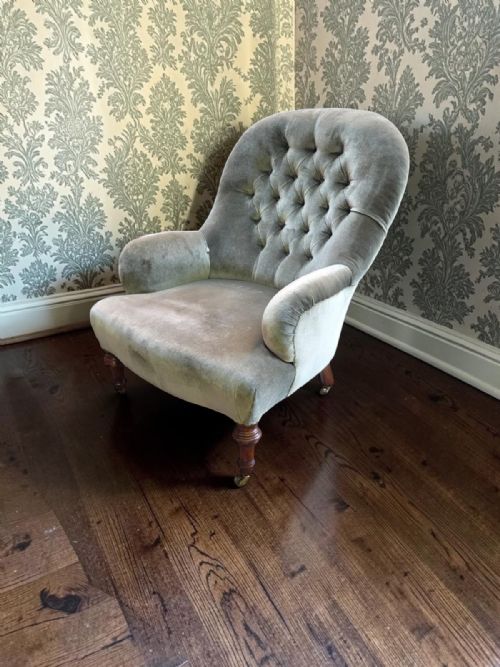
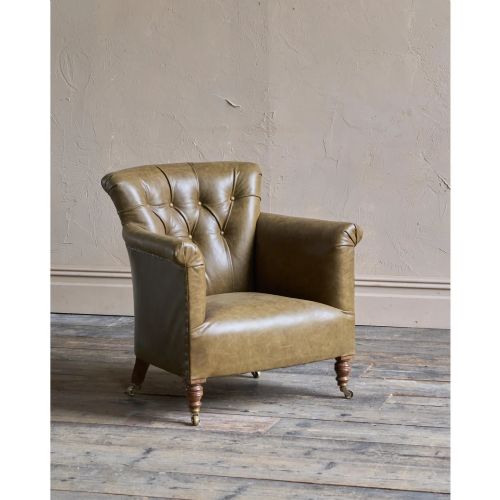
Upholstery combines traditional stuffing materials with leather, velvet, calico, or rexine pulled tight over deep springs and secured with brass detailing. Leather covers are frequently hand dyed to achieve rich brown, tan, red oxblood, and green tones.
Specialised frames incorporate turned woodwork, barley twist supports, or aesthetic movement legs, while backs receive characteristic deep tufting pulled tight by cord or twine.
Listings feature frames in mahogany, walnut, oak, and general hardwood, upholstered in leather, calico, velvet, and rexine.
What varies in quality
The distinction between ordinary and exceptional pieces lies in the integrity of the frame construction and the depth of the timber work. Superior examples exhibit carefully carved woodwork, substantial mahogany or walnut framing, and balanced proportions that support upright or reclining seating positions comfortably.
Upholstery materials also drive quality distinctions, particularly the grade of the leather and the execution of the tufting. Finer chairs use thick, pliable hides that develop an even patina, paired with precise button placement that maintains tension across the entire backrest rather than relying on uniform machine stamping.
Howard and Sons·Mellier and Co
The Vintage Deep Buttoned Armchairs Glossary
- Bergere
- An upholstered armchair with enclosed wooden sides and a cane or padded back panel. These frames often utilise mahogany or walnut structures.
- Chesterfield
- A heavily padded seating form characterised by rolled arms and uniform deep buttoning across the back and arms. The style is traditionally finished in leather or velvet.
- Rexine
- A leathercloth material utilised as a hardwearing upholstery alternative during the early twentieth century. It offers a smooth, wipeable surface resembling split leather.
- Wing back
- An armchair featuring protective side panels attached to the backrest to block draughts from open fires. This form dates back centuries and remains common in library settings.
- Barley twist
- A carved wooden furniture leg or stretcher shaped in a spiral twist resembling coiled rope. This decorative turning appears frequently on nineteenth century frames.
Vintage Deep Buttoned Armchairs: Frequently Asked Questions
How do I identify a Victorian library armchair?
Victorian library armchairs typically feature heavy mahogany or oak frames combined with dark leather upholstery and deep buttoning. They prioritise heavy construction and functional comfort for long hours of reading.
Look for turned wooden legs, sprung seats, and substantial armrests designed to anchor a traditional study or library interior.
What is the difference between a club chair and a wing chair?
Club chairs offer low, deep seating with rounded arms designed for relaxed lounging in studies and smoking rooms. Wing chairs incorporate high backrests with protective side panels intended to retain heat.
Both styles frequently utilise deep buttoned leather upholstery, but their silhouettes serve different spatial and functional roles in a room.
Are these chairs suitable for daily use?
Most vintage deep buttoned armchairs were originally built for heavy daily use in offices, libraries, and sitting rooms. Their robust hardwood frames and resilient upholstery make them well suited to contemporary living.
Proper maintenance of the leather and periodic checking of the internal webbing ensures these seats remain comfortable and sturdy for everyday seating.
How do I care for antique leather upholstery?
Antique leather requires regular dusting with a soft, dry cloth and occasional treatment with appropriate leather balms to prevent the hide from drying out. Avoid placing leather furniture in direct sunlight or close to heat sources.
Gentle conditioning preserves the natural suppleness of hand dyed hides and maintains the rich patina built up over decades of use.