




Cream Arched Mirror
A cream arched mirror brings warmth and light to a room, offering nineteenth-century French and English character through curved timber frames.
Cream Arched Mirror
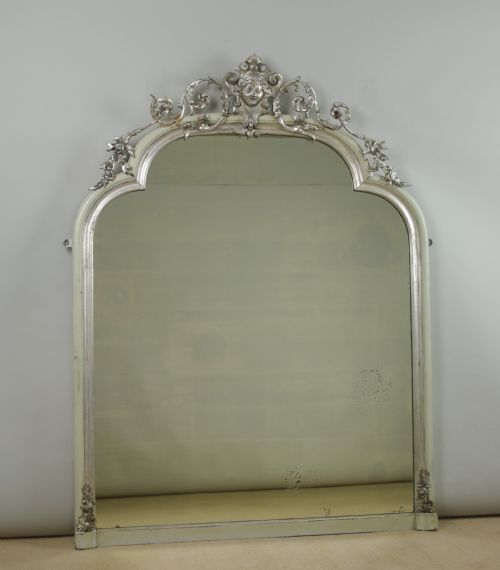
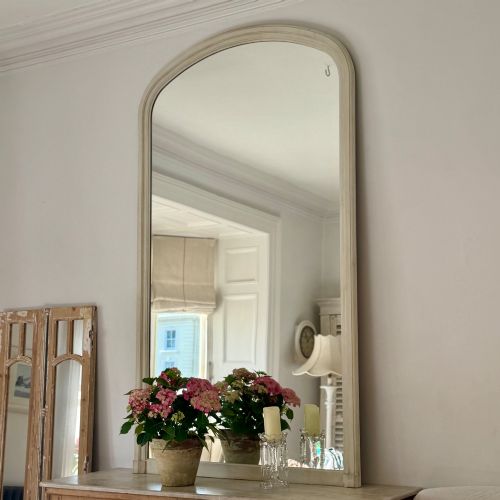
A cream arched mirror combines a curved upper profile with a pale painted surface, frequently appearing as a substantial overmantel or wall piece. When searching for a cream arched mirror, a buyer encounters nineteenth-century examples originating from English country houses and French chateaux.
The form is dominated by large overmantel mirrors designed to sit above a fireplace, alongside wall mirrors and occasional dressing mirrors. These pieces rely on nineteenth-century proportions, featuring shaped and arched tops that soften the geometry of a room.
How they were made
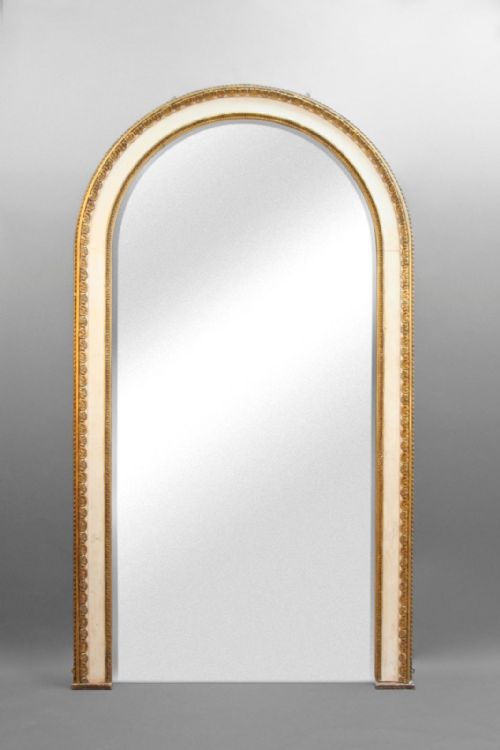
Frames are constructed from carved wood, often built up with moulded gesso to create crisp architectural details and floral motifs. Artisans then applied layers of paint, commonly in cream, alongside portions of gold leaf, parcel gilt, or silvered finishes.
The glass sits within these timber structures, sometimes retaining original silvering that displays the gentle darkening of age. Paint and gilt layers interact over carved wooden substrates to create depth across the arched frame.
Several mirrors sport secret splashes of red gesso lurking beneath their cream coats, proving even antiques enjoy a bold undergarment.
What varies in quality
Quality rests in the crispness of the carved wood and gesso ornament, where deeper relief moulding indicates superior craftsmanship. The handling of the cream paint and the integration of gilt or silvered highlights also distinguish finer examples from simpler provincial work.
Proportion and scale dictate the visual weight of the mirror, with well-balanced arches creating a more harmonious presence on the wall. The preservation of original surface treatments rather than modern repainting elevates the integrity of the piece.
The Cream Arched Mirror Glossary
- Overmantel mirror
- A large mirror specifically designed to hang on the wall directly above a fireplace mantelpiece. These pieces often feature wide horizontal proportions and arched or shaped tops.
- Gesso
- A plaster-like mixture applied to carved wood frames to provide a smooth base for gilding and painting. It allows craftsmen to model intricate decorative mouldings.
- Giltwood
- Wood that has been coated with a thin layer of gold leaf or metal powder. It catches candlelight and daylight alike.
- Louis Philippe
- A nineteenth-century French style characterised by understated elegance, simple curves, and minimal ornamentation compared to earlier extravagant reigns.
- Pier mirror
- A tall mirror designed to hang on the narrow section of wall between two windows. They reflect natural light back into the centre of the room.
Cream Arched Mirror: Frequently Asked Questions
Where should I hang a cream arched mirror?
These mirrors traditionally sit above a fireplace mantelpiece where their curved tops draw the eye upward. They also function well on principal living room walls to amplify natural light.
Because many examples are substantial in scale, they require secure wall fixings directly into masonry or heavy timber studs. Placing one opposite a window maximises the reflection of light across the space.
Are these mirrors French or English?
The selection includes both nineteenth-century English country house pieces and French chateau mirrors. French examples frequently incorporate elaborate gesso flower mouldings and silvered highlights.
English pieces tend to focus on carved wood and gesso overmantel designs with painted cream finishes. Both traditions share the characteristic arched top profile seen across the period.
How do I identify a nineteenth century mirror?
Nineteenth-century mirrors reveal their age through the construction of the wooden frame and the composition of the gesso mouldings. Hand-carved details and layered paint surfaces display subtle irregularities distinct from modern manufacturing.
The glass itself often shows age through slight foxing or uneven silvering behind the pane. Examining the backboards and fixings provides further confirmation of nineteenth-century origin.
What is the difference between gilt and parcel gilt?
Full gilt describes a frame entirely covered in gold leaf or gilt paint, creating a continuous metallic sheen. Parcel gilt indicates that only specific carved details or mouldings are highlighted in gold against a painted cream background.
This partial application creates contrast between the pale timber frame and the gilded ornaments. It is a technique frequently found on nineteenth-century French and English wall mirrors.