




Off White Mirror
An off white mirror brings understated warmth to a room, offering softened tones that suit both classical and modern interiors.
Off White Mirror
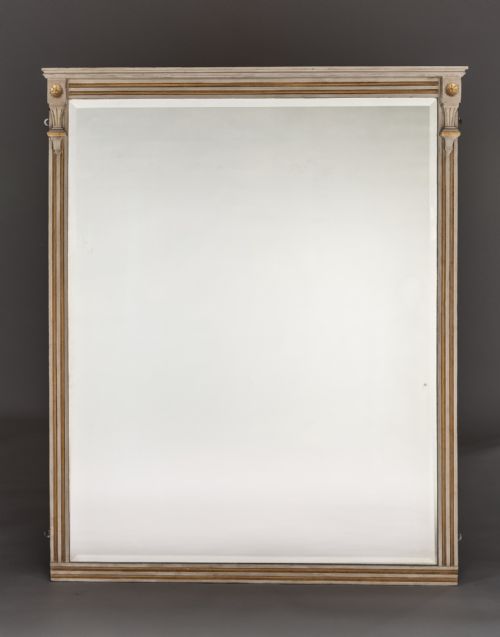
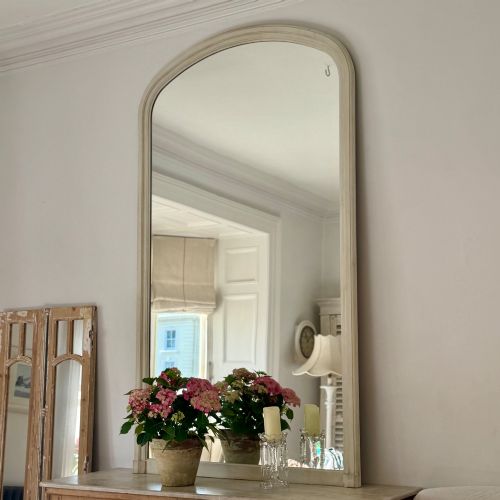
An off white mirror encompasses a range of painted and parcel-gilt wall hangings, overmantles, and dressing pieces dating from the eighteenth century through to the early twentieth century. When searching for this style, buyers most commonly encounter large nineteenth-century overmantle mirrors and architectural wall pieces finished in aged white, cream, or pale neutral paint. These pieces reflect diverse stylistic influences, spanning French provincial designs, Georgian proportions, and ornate Victorian and Edwardian interpretations.
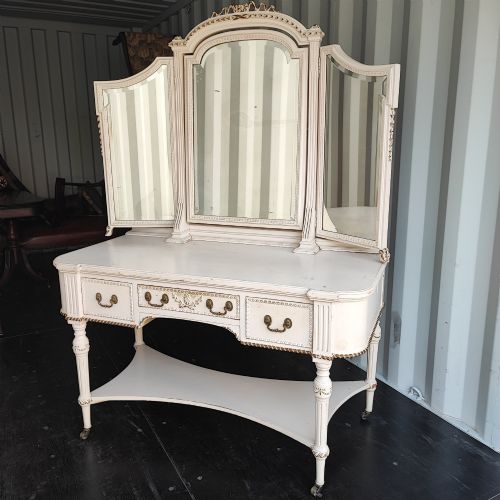
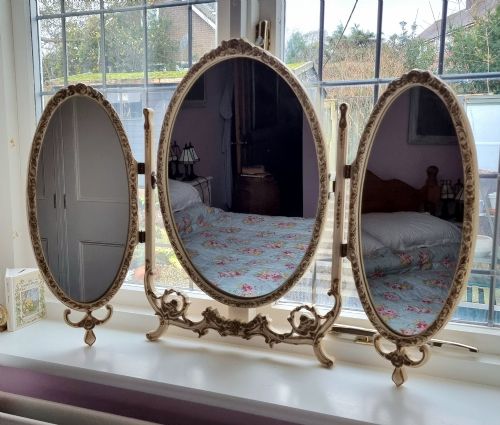
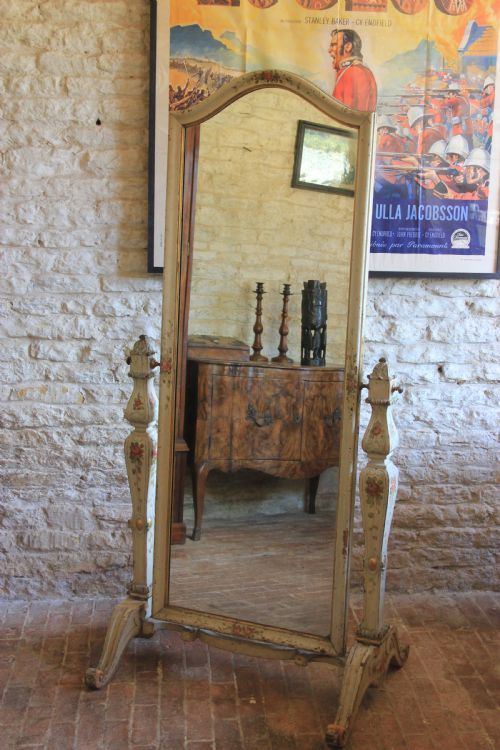
The selection here draws together wall mirrors, overmantles, cheval mirrors, and dressing table mirrors executed in wood, gesso, and glass. Many examples originate from English and French workshops, utilising arched, rectangular, or round formats to suit domestic spaces. The underlying framework often reveals classical revival details such as carved foliage, gilded accents, and architectural moulding beneath the pale painted surface.
How they were made
Traditional construction relies on solid timber frames, frequently layered with applied gesso to build up intricate surface ornamentation. Artisans carved wooden mouldings and applied fine plaster details before finishing the pieces with multiple coats of paint and, in many instances, selective gilding to highlight raised portions.
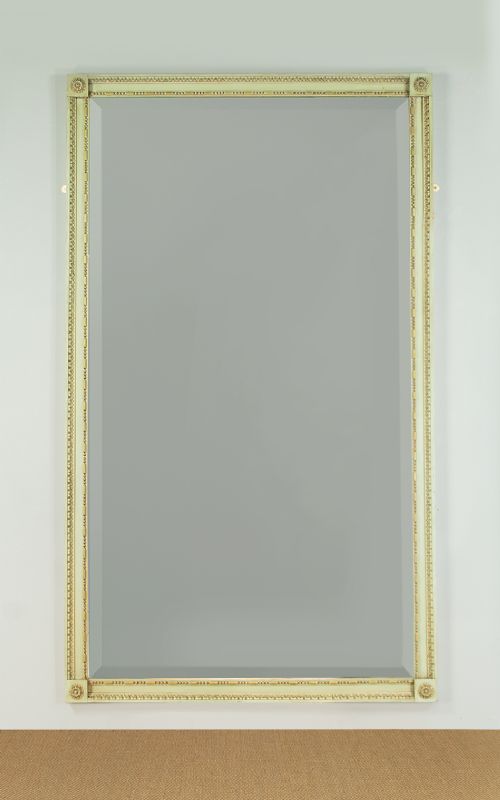
Mirrors of this period incorporate heavy glass plates secured within the rebated frame, sometimes featuring bevelled edges or marginal plates. The pale paint finishes applied to these frames were often built up over centuries or decades, resulting in nuanced patination where the underlying wood or base layers show through.
Materials recorded across the selection include carved wood, applied gesso, brass fittings, and original mirror glass beneath painted finishes.
What varies in quality
The distinction between standard pieces and exceptional examples rests in the crispness of the hand-carved woodwork and the depth of the gesso ornamentation. Superior items display finely defined mouldings and harmonious proportions that integrate the frame shape with the painted surface.
Authenticity of the finish significantly influences the character of the piece, with original or early layered paint surfaces holding greater distinction than later uniform resprays. The clarity and weight of the mirror glass, alongside the integrity of the joinery within large overmantle frames, further separate ordinary items from masterworks.
Maples of London and Paris
The Off White Mirror Glossary
- Gesso
- A plaster mixture applied to wood frames as a base for moulding and gilding. This material allows artisans to carve intricate relief details before painting.
- Overmantle Mirror
- A large mirror designed to hang above a fireplace mantel. These pieces often feature wide horizontal proportions and architectural framing.
- Trumeau Mirror
- An antique decorative mirror combined with a painted panel or artwork within a single architectural frame. Originating in eighteenth-century France, these pieces were built to fit specific wall spaces.
- Parcel-Gilt
- A decorating technique where specific raised details or carved sections of a painted object are partially gilded with gold leaf. This creates a subtle contrast against the pale background.
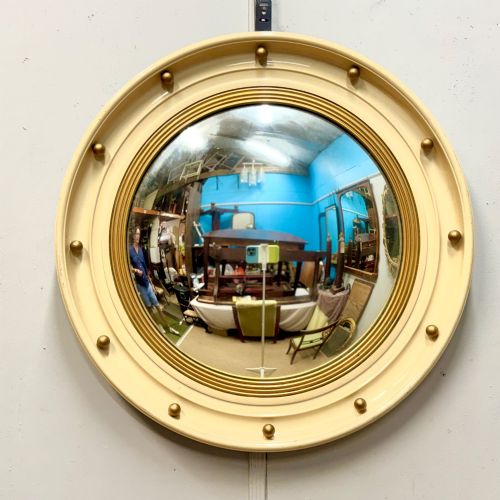
- Convex Glass
- A curved mirror glass that projects outward to capture a wide panoramic reflection of the room. It is typically housed within a round frame.
Off White Mirror: Frequently Asked Questions
How do I hang a heavy overmantle mirror?
Large overmantle mirrors require secure fixing directly into wall studs or masonry using heavy-duty brackets suited to the weight of the timber and glass.
Professional installation is recommended to ensure the frame remains stable and safely supported against the wall.
Are these mirrors original antique glass?
Many nineteenth-century pieces retain their original glass plates, which often display subtle foxing, minor speckling, and gentle distortions inherent to older manufacturing methods.
This aged reflection adds authenticity and character, distinguishing period glass from modern replacements.
How should I clean a painted antique frame?
Painted and gesso surfaces require gentle dusting with a soft, dry cloth to prevent moisture damage to delicate historic finishes.
Avoid chemical solvents or abrasive cleaners that can strip away the aged patina and original layers of paint.
What rooms suit an off white mirror?
Pale neutral frames brighten dark hallways, add depth above living room fireplaces, and create a sense of light in bedrooms.
Their neutral tone allows them to complement both traditional period interiors and contemporary minimalist spaces.