


Cranberry Glass Lamp
A cranberry glass lamp brings a rich, warm glow to a room through deep pink glass paired with polished brass or ceramic columns.
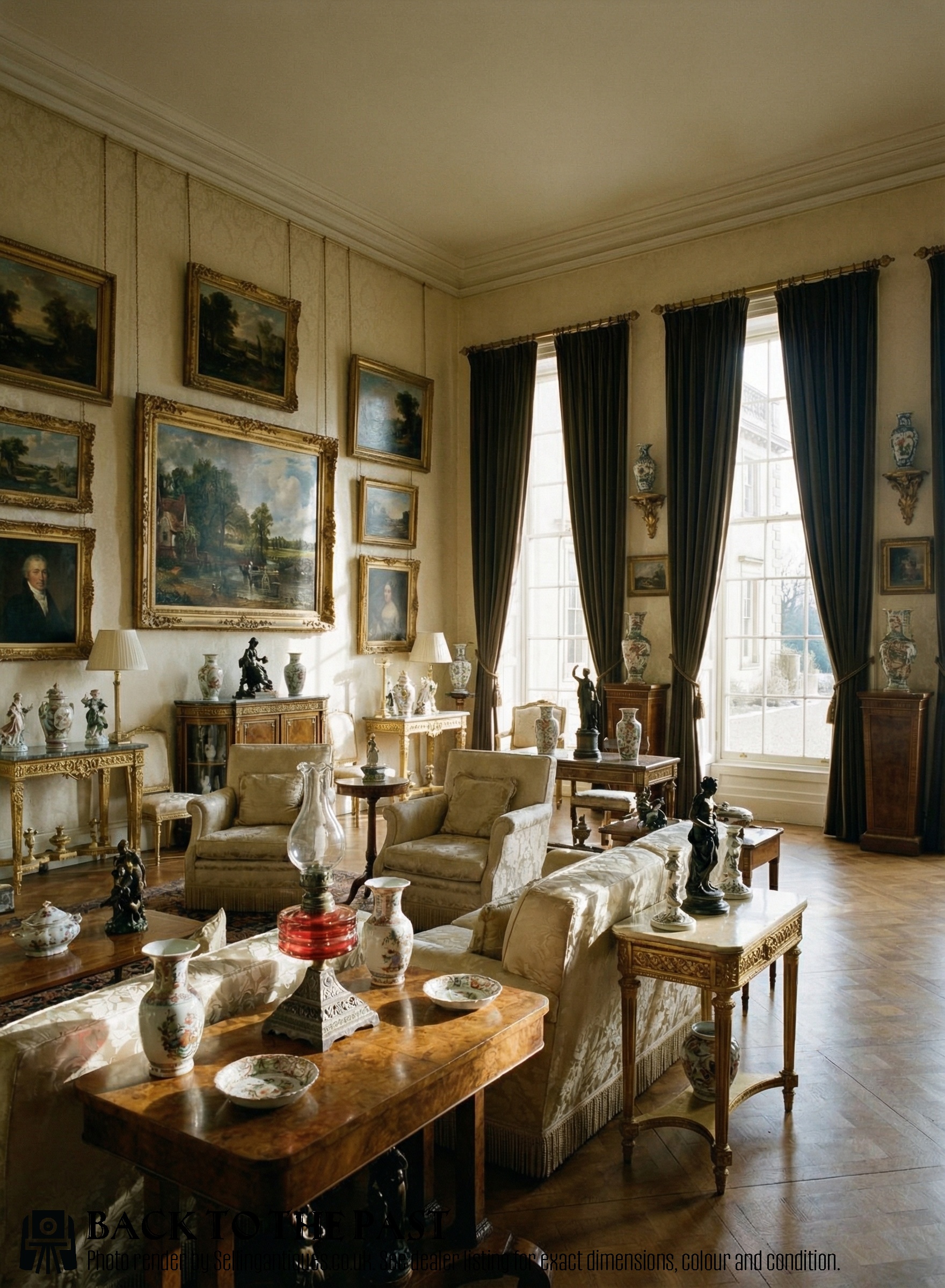
Cranberry Glass Lamp
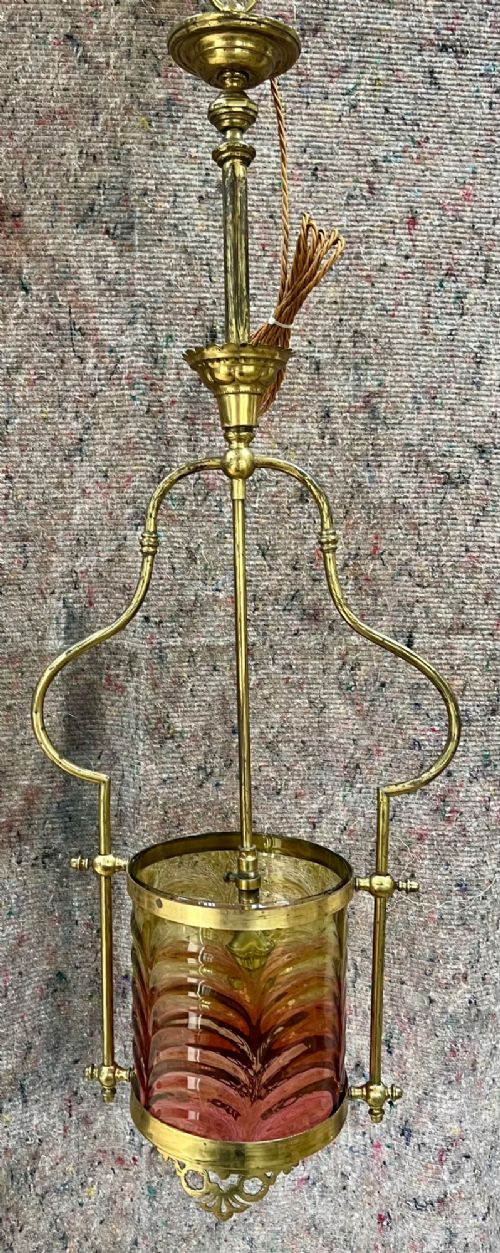
A cranberry glass lamp comprises lighting fixtures created primarily during the nineteenth century and the Edwardian period, encompassing oil lamps, floor lamps, table lamps, and hanging ceiling lights. These pieces combine rich red or pink glass reservoirs and shades with structural metal bases.
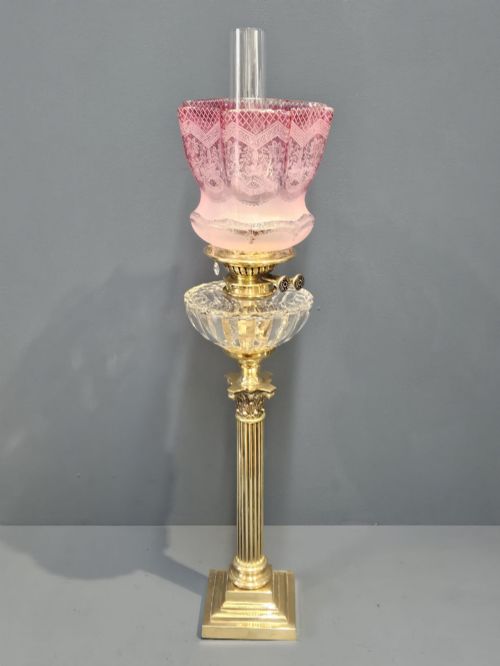
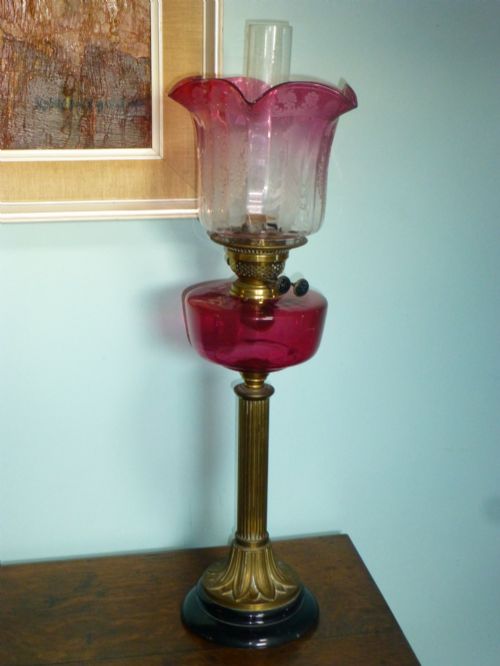
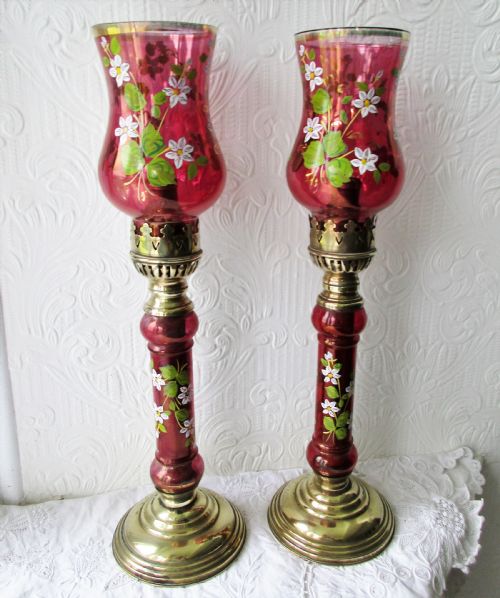
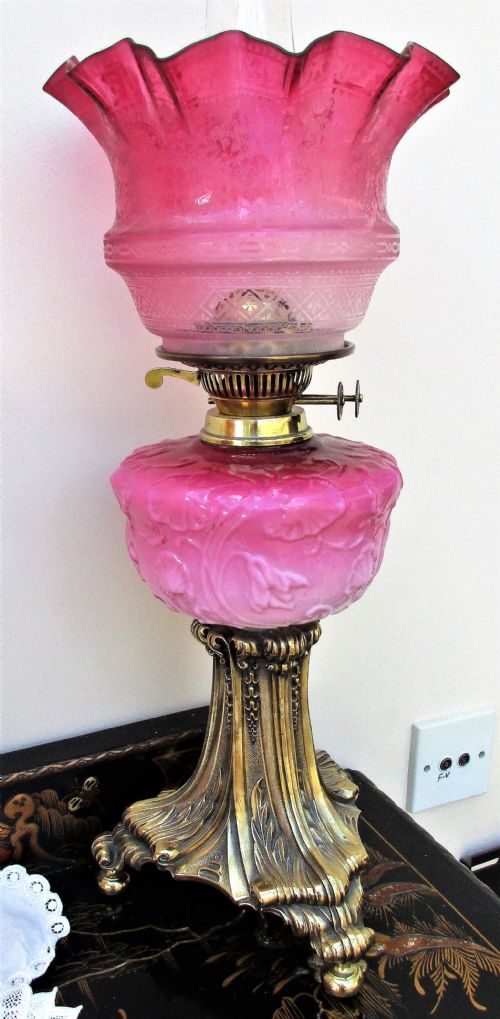
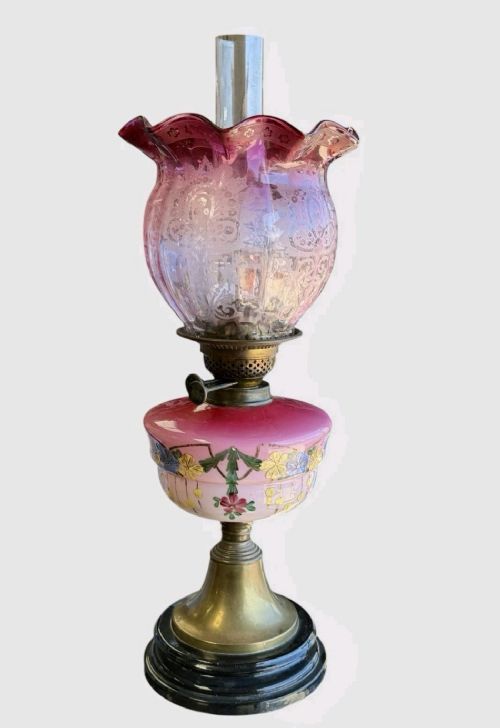
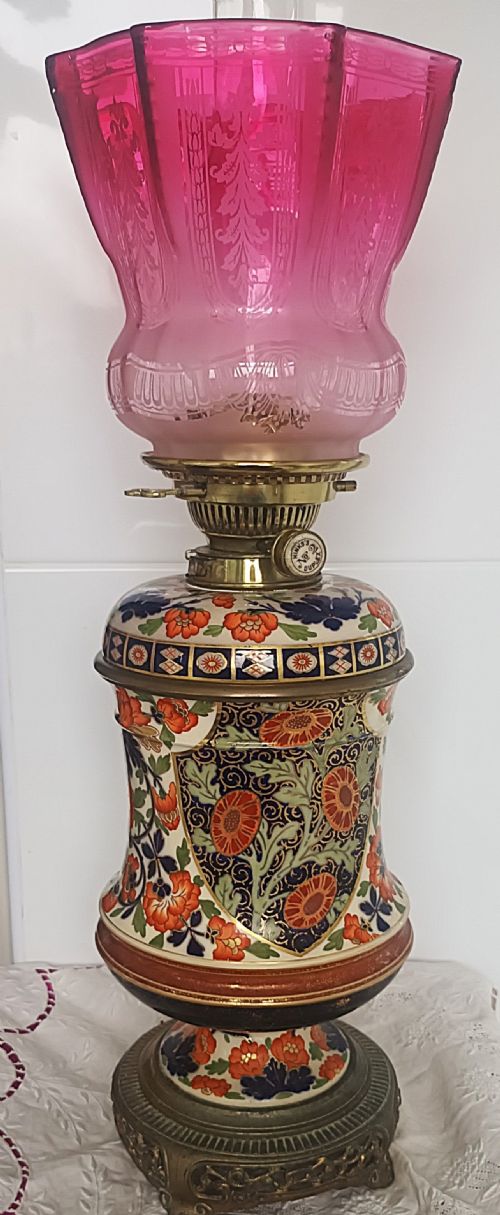
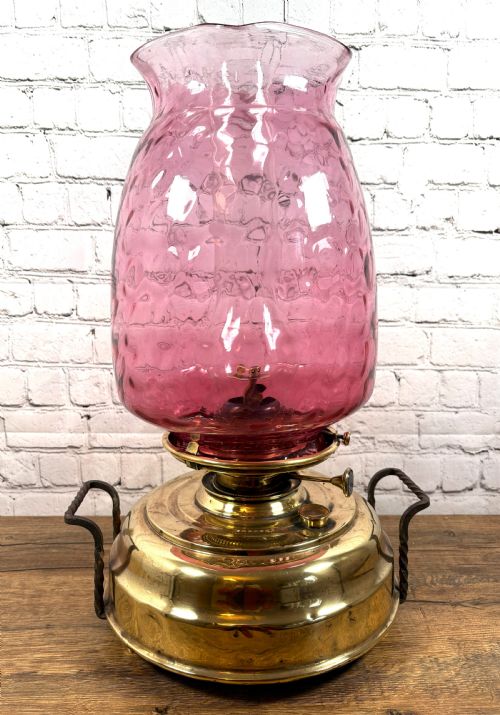
The most common form encountered on this page is the Victorian oil lamp, often elevated on a brass Corinthian column or paired with a matching hand-painted font and shade. Alongside these tall table standards, collectors frequently find smaller finger lamps, candle-lamps, and ceiling pendants.
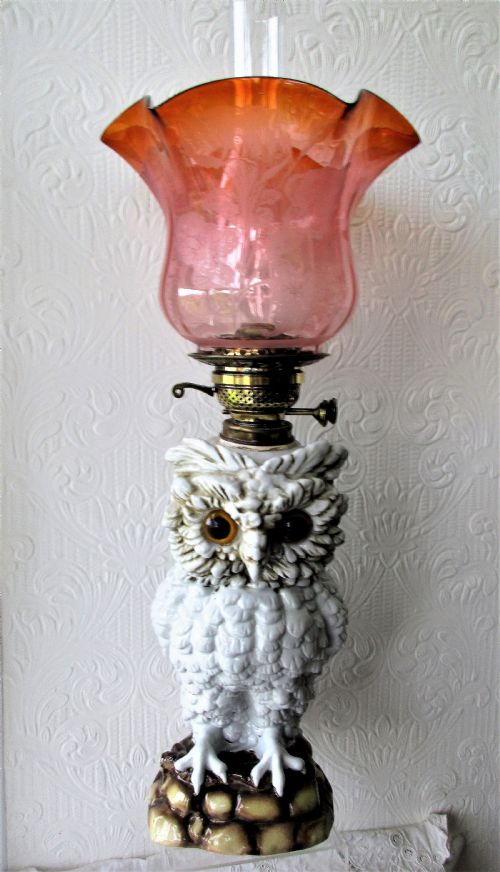
Origins span English workshops alongside continental makers from Germany and Bohemia, reflecting diverse regional manufacturing traditions. Domestic examples often utilise classic column designs, while continental pieces lean towards figural bases or elaborate etched decoration.
How they were made
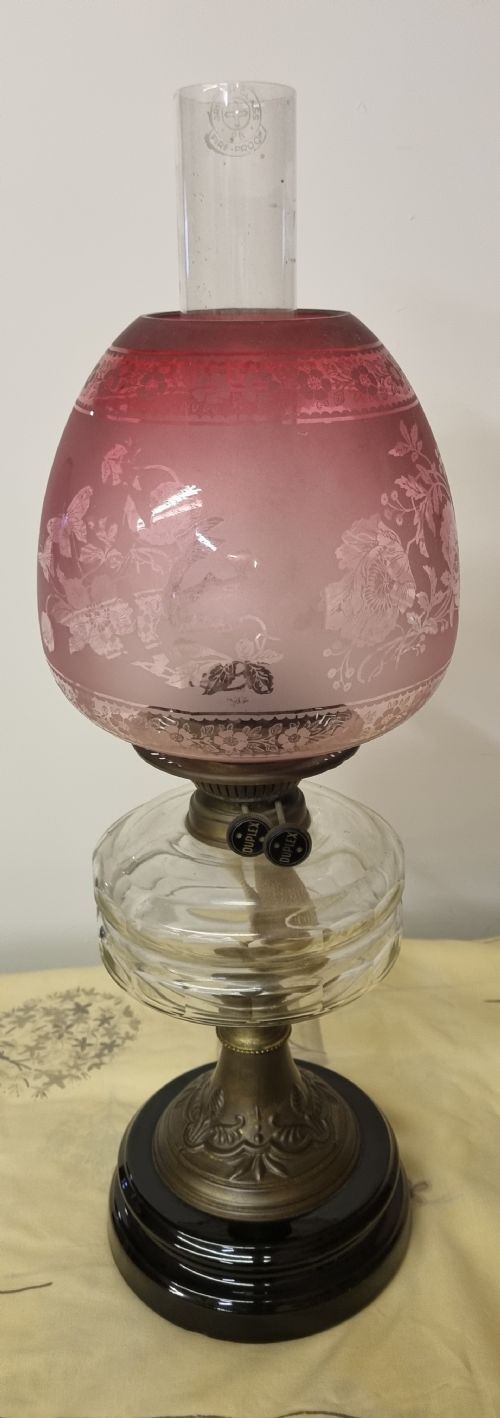
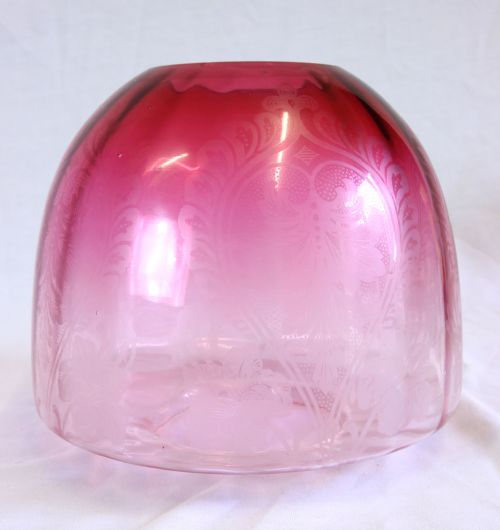
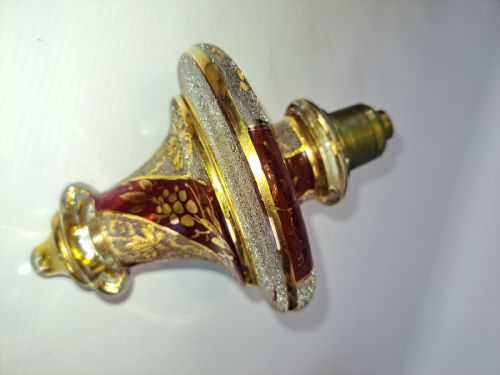
The glass elements rely on the addition of gold chloride to the molten batch to achieve the characteristic rich red or pink coloration, which is then blown into moulds or shaped by hand. Craftsmen frequently decorated these surfaces through wheel-etching, gilding, or applying contrasting opaque glass layers.
Metal components utilise cast or spun brass, copper, and silver plating to form sturdy columns, burners, and galleries that support the heavy glass reservoirs. Burner mechanisms, such as duplex systems, integrate complex brass engineering to control the flame safely.
Cranberry Glass Lamp Retail Price Guide 2026
Typical asking prices for cranberry glass lamp among the pieces listed under this phrase on Sellingantiques today, from the lower quarter to the upper quarter. They describe what is for sale here now, not the wider market.
Materials recur in distinct combinations, pairing rich cranberry glass fonts with cast brass Corinthian columns or delicate porcelain bodies.
What varies in quality
Quality rests upon the depth and uniformity of the glass colour alongside the crispness of any wheel-cut or gilded ornamentation. Superior pieces display heavy, resonant glass free from excessive bubbles, matched with intricately cast brass columns possessing sharp architectural detail.
The integration of components defines the standard of the piece, where original matching fonts, shades, and burners indicate a higher tier of preservation. Maker-marked mechanisms and undamaged brass threading further distinguish the finest examples from standard domestic lighting.
Hinks·Taylor Tunnicliff·Sitzendorf
The Cranberry Glass Lamp Glossary
- Cranberry glass
- A type of transparent glass coloured with gold oxide, producing hues from pale pink to deep ruby red. It was widely utilised for Victorian decorative tableware and lighting reservoirs.
- Corinthian column
- An architectural column style featuring an ornate capital decorated with acanthus leaves. This form was frequently adapted for the brass stems of Victorian table lamps.
- Duplex burner
- A double-wick mechanism designed to produce a significantly brighter flame than single-wick predecessors. It represents a common technical upgrade found on nineteenth-century oil lamps.
- Font
- The oil reservoir of a lamp, typically fashioned from coloured glass or ceramic. It sits atop the metal stem and houses the burner assembly.
- Finger lamp
- A small portable oil lamp featuring a looped handle attached to the body. These pieces were designed to be carried safely by hand between rooms.
Cranberry Glass Lamp: Frequently Asked Questions
How do I date a cranberry glass lamp?
Dating relies upon examining the burner mechanism, metal casting styles, and glass manufacturing techniques. Victorian examples often feature architectural brass columns and manufacturer-marked burners, while Edwardian pieces introduce lighter proportions.
Changes in screw threads and burner patents help narrow the decade of production. Stylistic shifts between mid-century Rococo revival motifs and later Art Nouveau curves also clarify the timeline.
Can these antique lamps be used safely today?
Most surviving oil lamps are now converted to electricity for modern domestic use. Professional conversion preserves the original brass and glass components while concealing wiring safely through the central column.
Collectors should inspect any conversion to ensure modern fittings protect the antique fabric. Wall-mounted and table formats adapt readily to low-wattage LED bulbs.
What is a duplex burner?
A duplex burner uses two parallel flat wicks to generate a wider flame and greater illumination than standard single-wick designs. This innovation became standard on better-quality late nineteenth-century lighting.
Hardware stamps on the brass thumb-turns often name the original patent holders. These robust mechanisms remain prized by collectors for their mechanical complexity.
How should I clean cranberry glass?
Maintenance requires gentle washing with warm soapy water and a soft cloth to remove dust without damaging surface gilding. Abrasive cleaners must be avoided entirely to protect the historic glass finish.
Brass components benefit from minimal intervention to preserve their natural patination. Careful handling prevents chipping the rim of delicate shades and chimneys.