
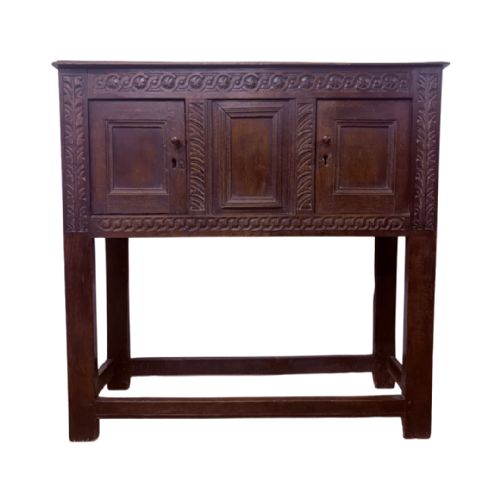
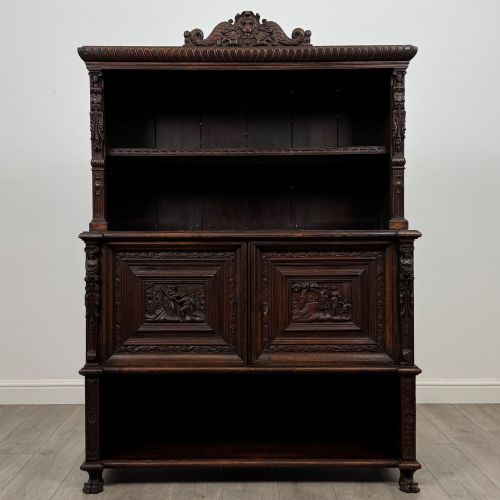
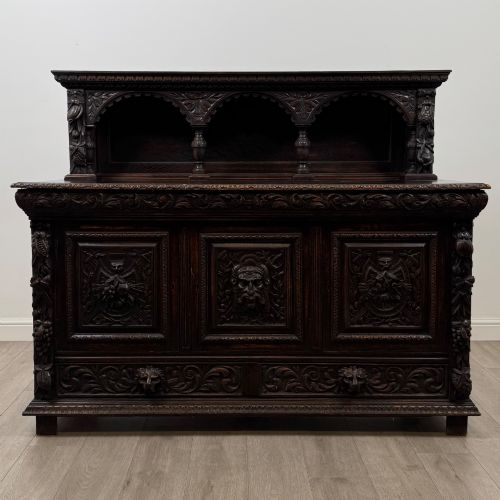
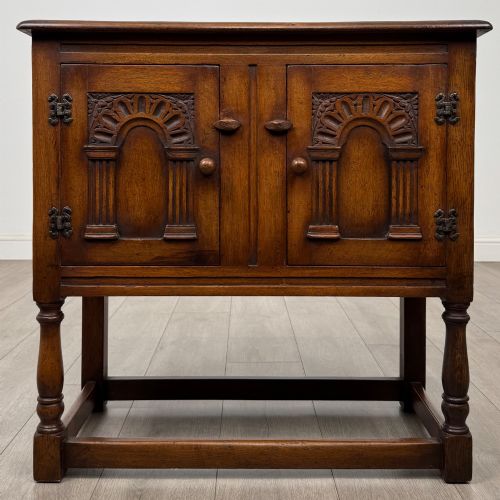

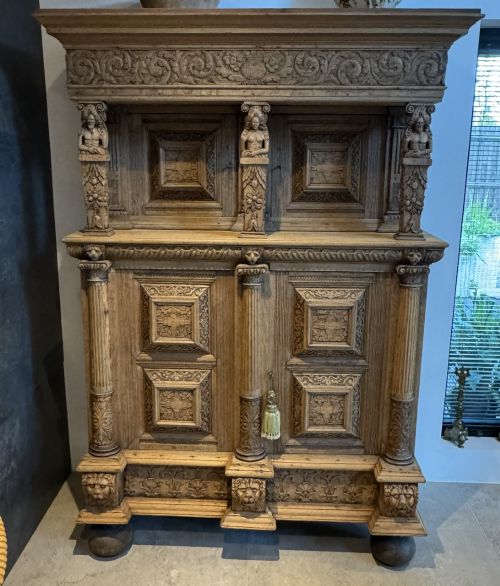
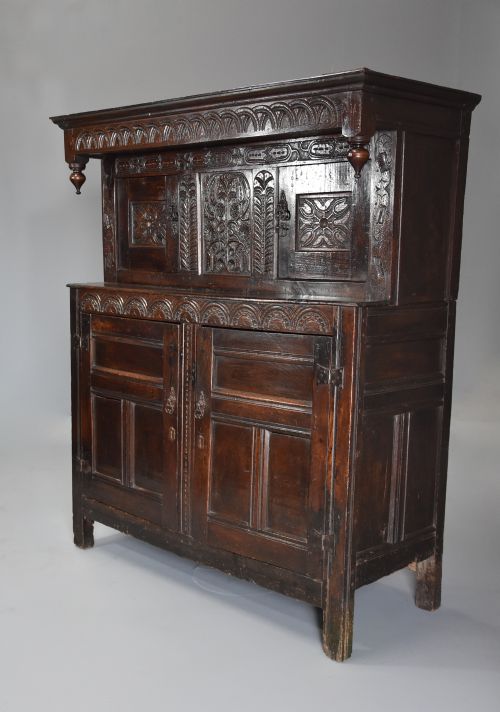
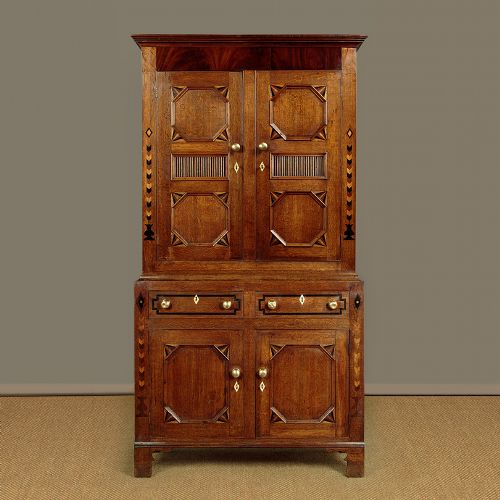
Court Cupboard Cabinet
A court cupboard cabinet brings solid timber presence and centuries of storage history directly into a modern dining room or hallway.
Court Cupboard Cabinet
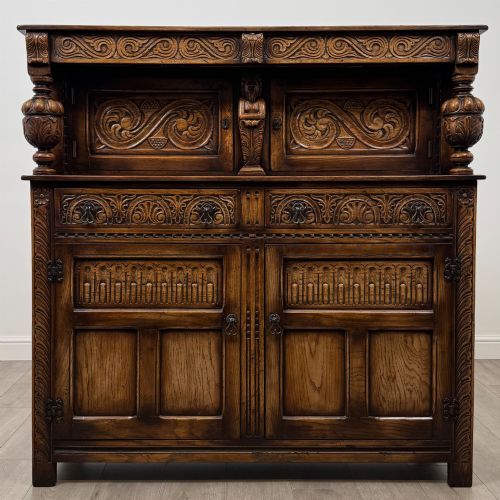
When you search for a court cupboard cabinet, you encounter substantial historical storage furniture built primarily to display plate and store provisions in great houses.
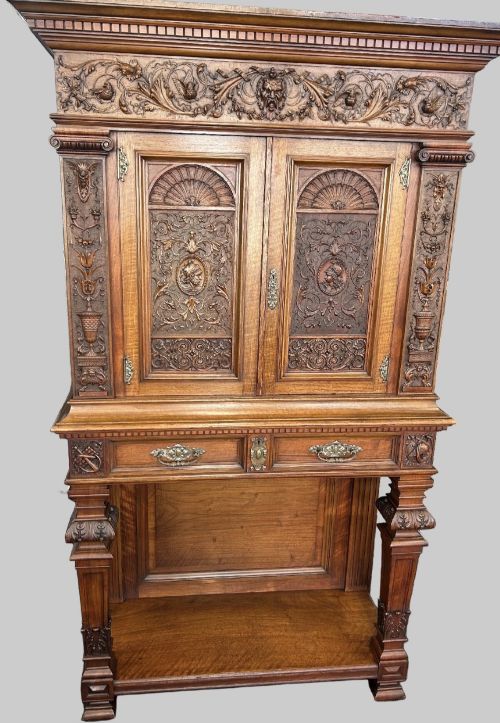
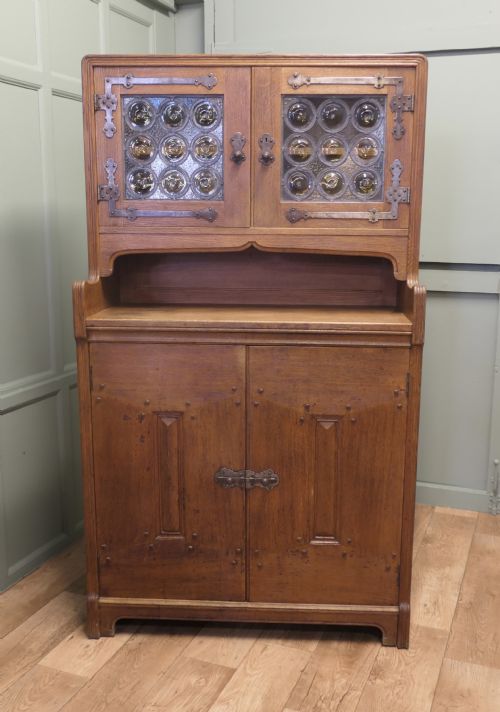
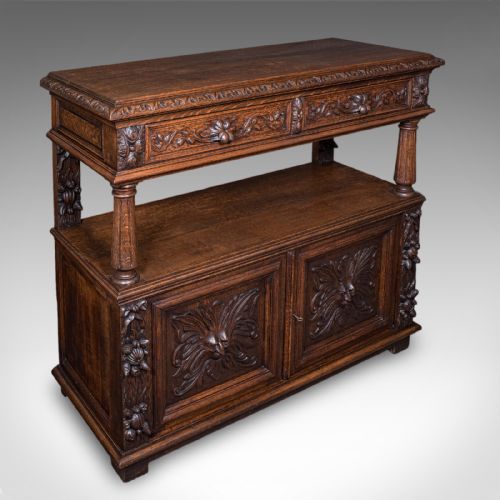
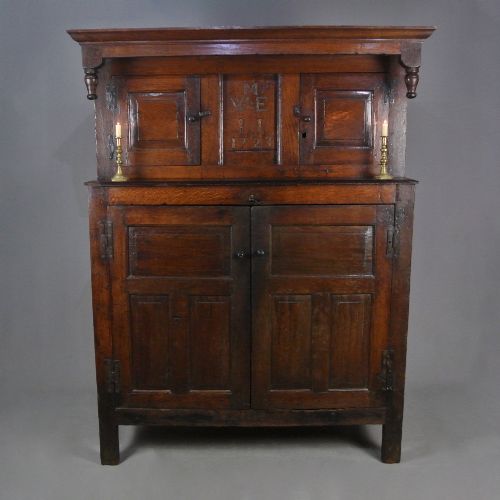
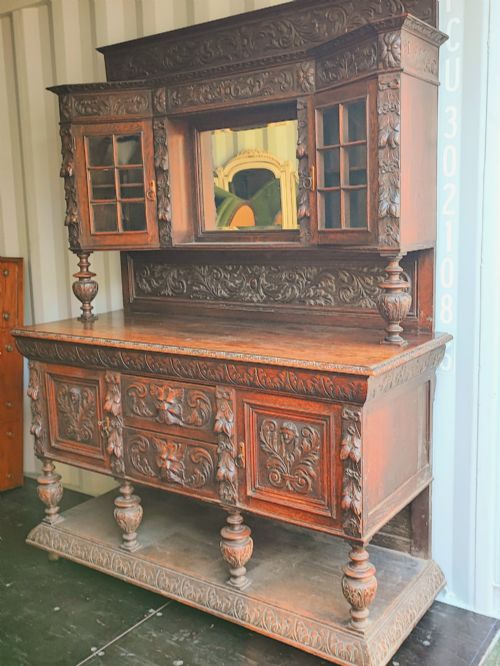
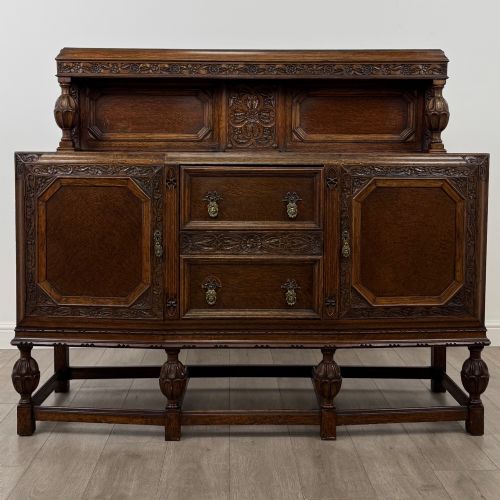
The pieces appearing on this page span from the seventeenth century through to Edwardian revivals, with joined oak and carved decoration dominating the forms.
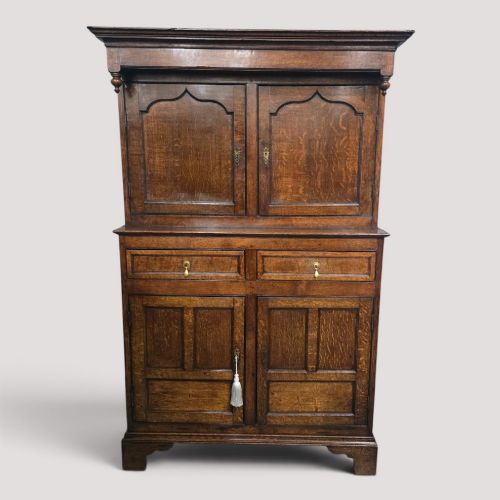
Buyers frequently meet vernacular Welsh examples, regional tridarns, and later revival sideboards that adapt traditional proportions for domestic use.
How they were made
Joiners built these pieces using solid oak panels held together with traditional frame and panel construction, often incorporating walnut, fruitwood, and wrought iron hinges.
Carvers decorated the surfaces with applied mouldings, linenfold patterns, and geometric reliefs, finishing the timber with traditional wax to develop a deep natural patina.
Listings feature oak as the primary timber, alongside walnut, fruitwood, glass, and wrought iron across multiple centuries.
What varies in quality
Quality shows in the depth and crispness of the carved details on the frieze and doors, distinguishing skilled joinery work from simpler vernacular output.
The proportion of original timber against later replacement boards dictates the structural integrity and historical value of surviving seventeenth-century examples.
The Court Cupboard Cabinet Glossary
- Court cupboard
- A traditional open or enclosed set of tiers used for displaying plate. These pieces often feature a recessed upper stage supported by turned columns.
- Press cupboard
- A large enclosed storage piece with upper and lower cabinet sections. These items were designed specifically for linen and household provisions.
- Tridarn
- A traditional Welsh three-tiered piece of vernacular furniture. This form provides open display shelves above enclosed cupboards.
- Livery cupboard
- A small storage piece originally intended for food and candles. These compact cabinets often feature turned spindle galleries for ventilation.
- Linenfold
- A carved wood panel motif resembling folded cloth. Joiners carved this pattern extensively during the sixteenth and seventeenth centuries.
Court Cupboard Cabinet: Frequently Asked Questions
What is a court cupboard?
A court cupboard is an antique storage piece featuring recessed upper tiers and enclosed lower compartments. They originated to display silver and store household provisions.
Today, collectors use them in dining rooms and halls as statement storage pieces that anchor a traditional interior scheme.
How do I date an oak cupboard?
Dating relies on examining the construction methods, tool marks, and wood species visible across the frame. Seventeenth-century pieces show hand-riven panels and pegged joints.
Later revival pieces from the Victorian and Edwardian periods display machine-cut elements and softer secondary timbers behind the main oak facades.
Where were court cupboards placed?
Historically, these items stood in the great hall or dining parlour to display the wealth and status of the household through plate and ceramics.
Modern homes utilise them against large plain walls where their deep carved panels and patinated timber surfaces can be fully appreciated.