


Countryside Watercolour Paintings
Countryside watercolour paintings capture rural life and scenery through delicate pigment washes on paper, offering buyers a genuine window into past agrarian views.
Countryside Watercolour Paintings
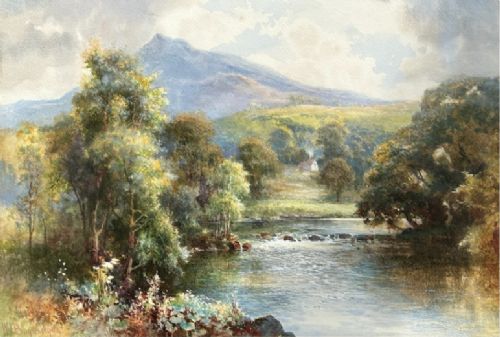
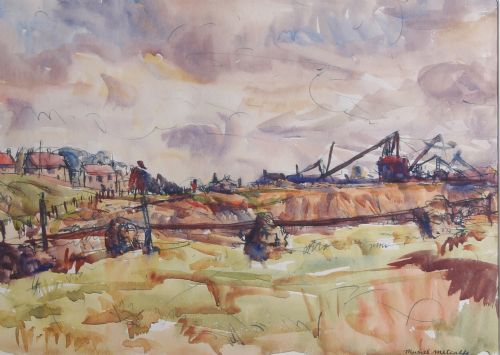
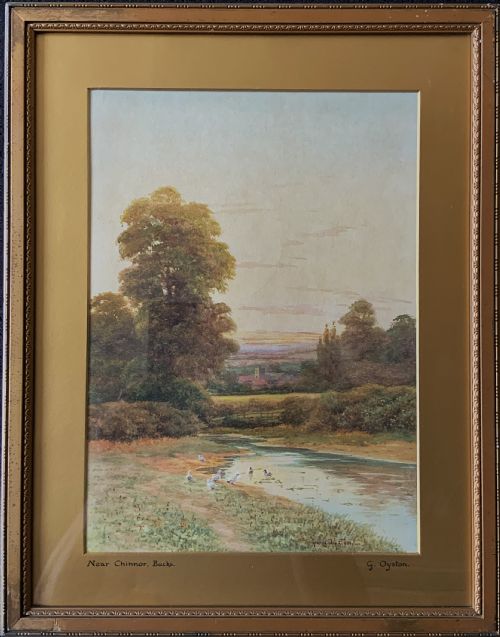
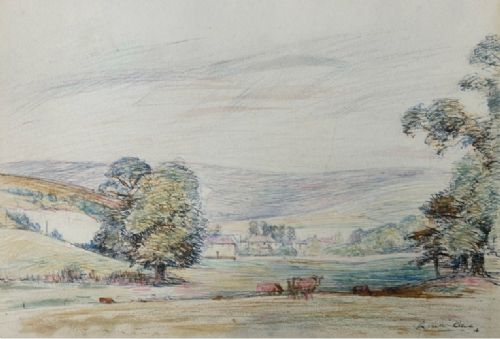
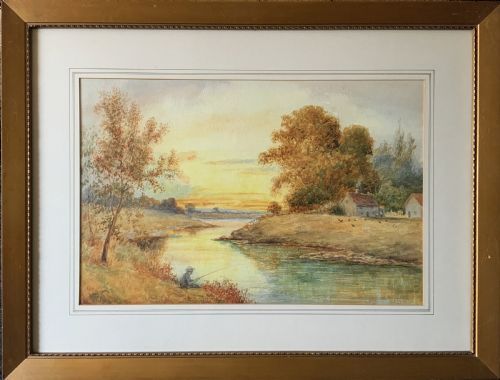
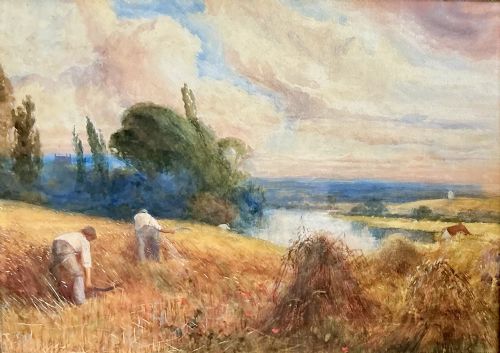
Countryside watercolour paintings represent pastoral scenes, river valleys, and rural villages created during the nineteenth and early twentieth centuries. These artworks often depict daily agrarian life, including harvesting, livestock, and rural cottages set against British and European landscapes.
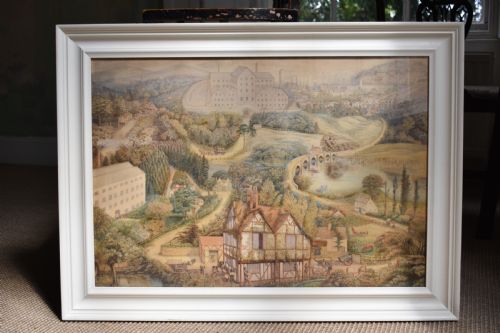
The most common examples encountered on this page stem from the Victorian and Edwardian periods, stretching into early modern British movements. They take the form of framed wall art, ranging from intimate topographical studies to broader pastoral compositions.
The selection reflects both English regional views from Yorkshire, Sussex, and Dorset, alongside Welsh and Irish rural expanses. Buyers find these original paintings framed behind glass, preserving the delicate paper surfaces against environmental wear.
Materials and Technique
Artists constructed these works primarily using watercolour pigment and water applied to prepared paper sheets. Many creators laid down initial compositions in graphite, outlining riverbanks, cottages, and hills before applying washes of colour.
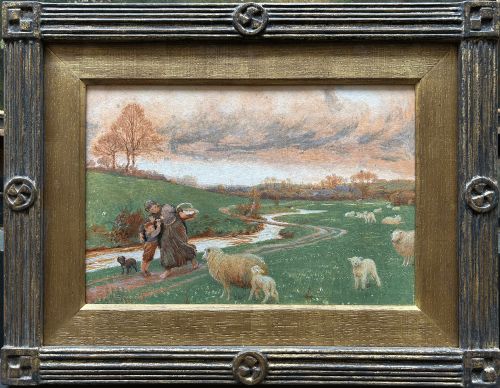
Certain compositions incorporate subtle touches of gold leaf or bodycolour to highlight specific elements within the scene. Finished paintings were secured behind glass within wooden frames to protect the vulnerable paper support from moisture and dust.
The listings feature works created across the nineteenth and twentieth centuries, utilising paper, watercolour pigment, and graphite.
Evaluating Quality
Quality in these watercolours depends upon the artist's brushwork control and the subtlety of the pigment layering. Superior examples demonstrate a confident handling of light, atmosphere, and depth, particularly in depictions of changing weather or evening skies over rural terrain.
The strength of provenance also elevates certain pieces, especially those by established practitioners of British Impressionism or named topographical painters. Preservation matters greatly; works retaining their original frames and vibrant, unfaded pigments stand apart from those damaged by excessive light exposure.
Frederick Walker·George Oyston·Frederick Hines·Charles Gregory·Fred Lawson·Robert Thorne Waite·Harry Sylvester Stannard
The Countryside Watercolour Paintings Glossary
- Watercolour pigment
- The finely ground colouring material mixed with water-soluble binders used to create the image. This medium allows for translucent washes that let the reflective quality of the paper shine through.
- Graphite
- A form of carbon used for initial sketching beneath the pigment layers. Artists employed it to map out perspective and key compositional lines before applying wet washes.
- Bodycolour
- Watercolour paint mixed with a white pigment to make it opaque. Painters utilised this technique to add highlights and solid areas of light to rural scenes.
- Topographical
- Representing specific real-world locations accurately. These paintings document identifiable rural landmarks, villages, and riverways as they appeared in past centuries.
- Pastoral
- Depicting country life in a rural setting, typically featuring idyllic landscapes, livestock, and farming activities. The style focuses on the quiet harmony of nature and human habitation.
Countryside Watercolour Paintings: Frequently Asked Questions
How should I frame and display these watercolours?
Keep these pieces away from direct sunlight to prevent the watercolour pigments from fading over time. Utilise professional framing with acid-free mounts to protect the historic paper from degradation.
Ensure they hang in rooms with stable humidity levels, as excessive moisture damages both the paper support and the wooden frame. Proper glazing with UV-filtering glass helps preserve the integrity of nineteenth and early twentieth-century works.
How do I identify the period of a painting?
Examine the stylistic markers, such as the clothing worn by figures in the landscape or the specific characteristics of the framing. Victorian and Edwardian works often feature distinct brushwork conventions and label remnants on the reverse.
Signatures and dates inscribed by the artist provide the most direct evidence of origin. Comparing the subject matter to known periods of British landscape painting also aids accurate dating.
What subjects are most common in these works?
Rural river valleys, livestock grazing in fields, and thatched cottages form the predominant subjects in these historical landscapes. Artists frequently documented everyday agrarian tasks like haymaking and harvesting.
Regional views spanning Yorkshire, Wales, and the Sussex downs appear repeatedly across the selection. These scenes reflect a period when artists sought out picturesque rural idylls away from industrial centres.
Are these paintings original artworks?
Every piece listed under this category is an original painted work executed by hand on paper. Artists applied liquid pigment directly, meaning no mechanical printing processes were involved in their creation.
Each painting carries unique brushstrokes and tonal variations specific to the individual creator's hand. Archival signatures and period inscriptions further confirm their status as unique historical artefacts.