
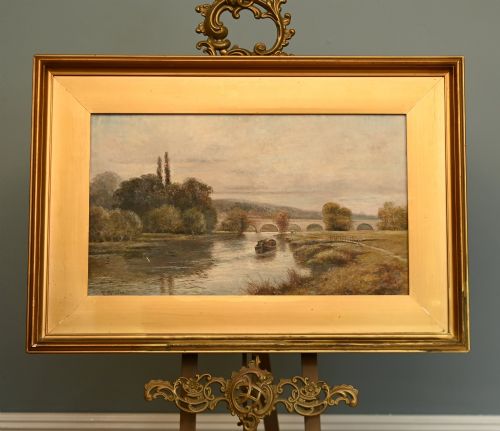
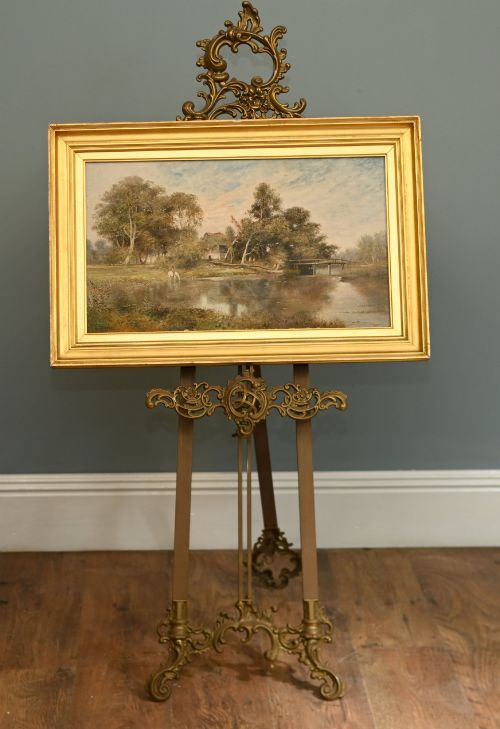
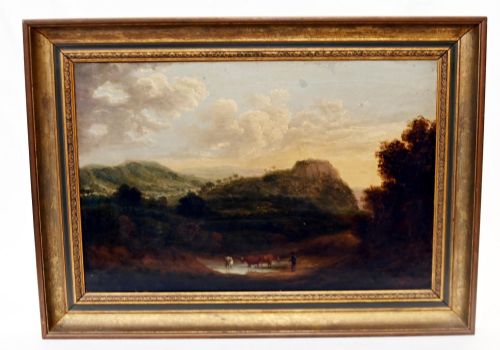
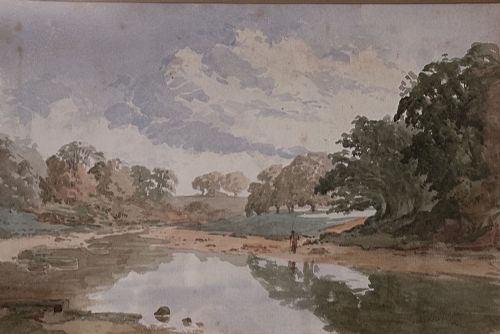
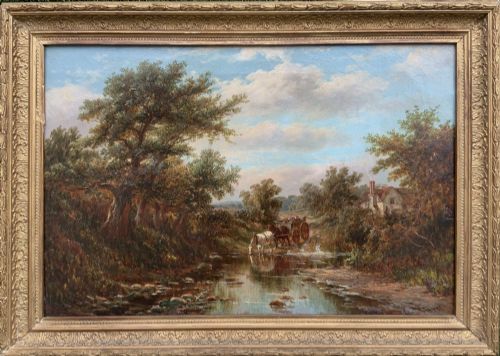
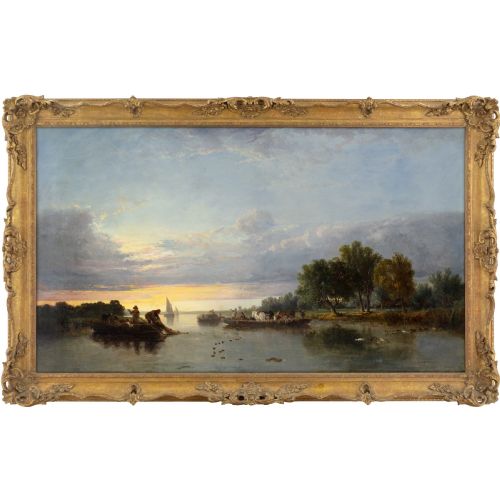

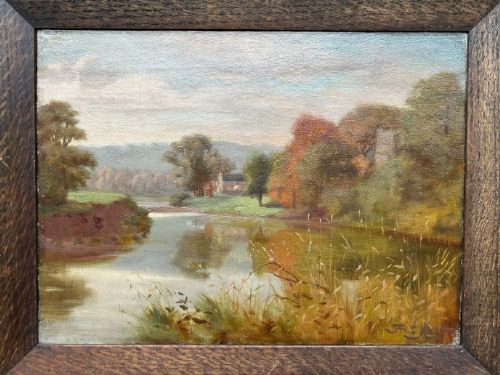
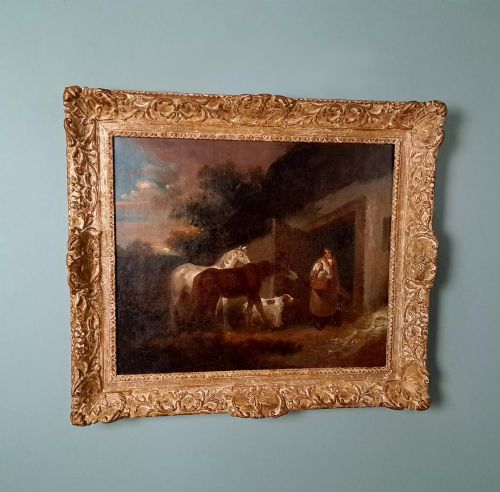
Countryside Scene Artwork
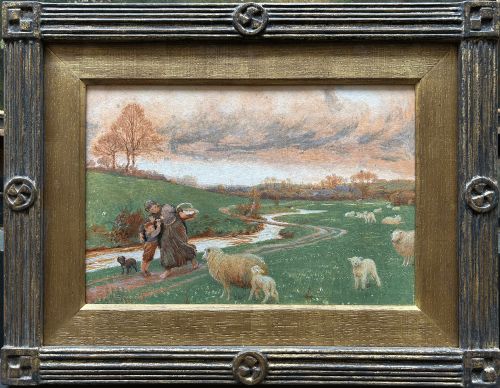
Countryside scene artwork captures pastoral views and rural life, offering buyers a window into historic agricultural landscapes through traditional painting.
Countryside Scene Artwork
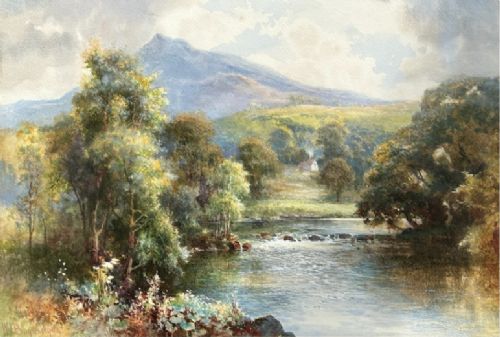
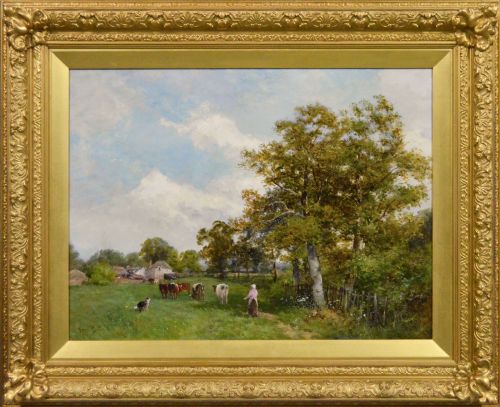
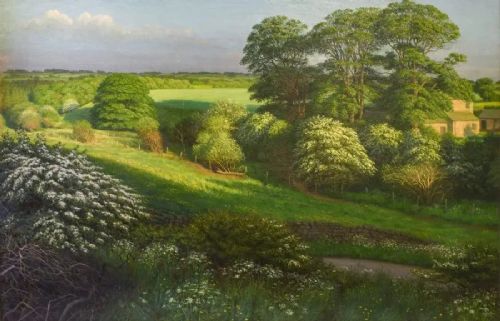
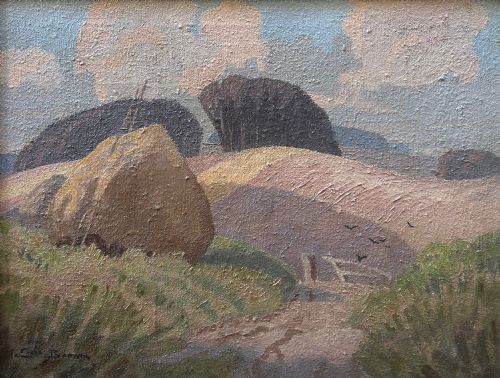
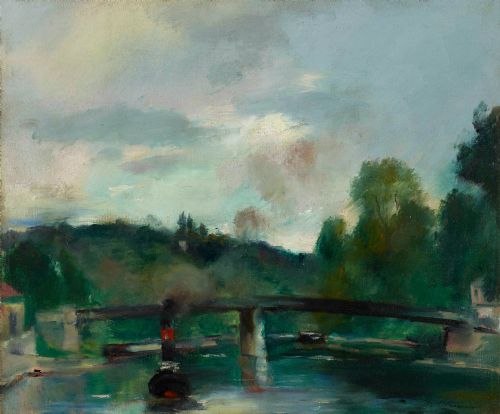
These pieces encompass framed paintings and wall art depicting rural vistas, rivers, farms, and agricultural labour across various historic periods. The selection leans heavily towards nineteenth-century and early twentieth-century works, alongside mid-twentieth-century examples.
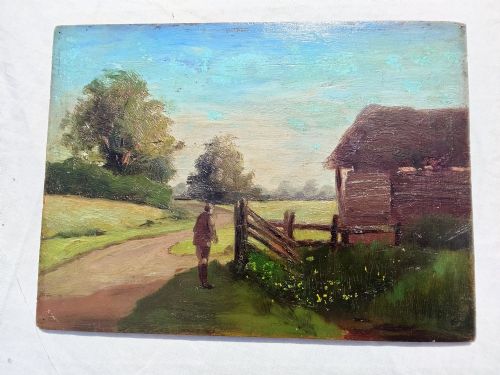
Most entries are oil paintings or watercolours on canvas, paper, or wooden boards, reflecting British and European landscape traditions. Common subjects include cottages, rivers, livestock, and woodland scenes.
Buyers encounter named artists from the Victorian and Edwardian eras as well as anonymous regional pieces categorized under English School or Victorian Pastoral styles.
Materials and construction methods
Artists utilised oil paint on canvas or wooden panels, applying pigments to build texture and depth in natural light. Watercolour paint on paper served for lighter, more fluid depictions of rivers and open skies.
Framing often involved gilt wood, which complemented the traditional palette of the pastoral scenes. Supports varied from stretched canvas to solid wood boards and heavy paper.
Several canvases manage to capture the exact shade of grey used exclusively for stubborn ploughing horses.
Determining quality in rural paintings
Quality rests on the artist's handling of light, atmospheric perspective, and composition within the landscape. Finer works display confident brushwork and a balanced integration of figures or animals into the natural setting.
The sophistication of the palette and the preservation of the original painted surface distinguish superior examples from standard decorative works of the period.
Richard Sebastian Bond·William H Myers·Frederick Marriott·David Bates·George Oyston·Robert John Hammond
The Countryside Scene Artwork Glossary
- Oil on Canvas
- Pigment mixed with drying oil applied to a woven fabric stretched across a wooden frame. This medium allowed artists to rework areas and build rich surface textures.
- Watercolour Painting
- Pigments suspended in a water-soluble vehicle applied to paper. It yields translucent washes of colour well suited for atmospheric skies and rivers.
- English School
- A classification for works produced by artists trained or working within England during a specific period. It groups stylistically similar paintings by known and unknown hands.
- Victorian Pastoral
- A genre focusing on idealized rural life, agricultural labour, and agrarian scenery. These compositions emphasise harmony between humans, animals, and the countryside.
Countryside Scene Artwork: Frequently Asked Questions
How should I clean an old oil painting?
Surface dust can be removed gently with a soft, dry brush, avoiding any pressure on the canvas.
Professional conservation is required for deeper cleaning to prevent damage to the historic oil paint layers.
Where were these landscape scenes typically painted?
Artists often worked outdoors on location to capture natural light, or developed studio watercolours and oils from field sketches.
Locations frequently feature British river valleys, Welsh mountains, and rural farmland.
How do I date a nineteenth-century landscape?
Dates are gathered from artist signatures, exhibition records, and framing styles characteristic of the Victorian era.
Clothing styles of figures depicted in the landscape also offer clues to the decade of creation.
Are watercolours as durable as oils?
Watercolours are sensitive to light and require framing behind glass with acid-free mounts to prevent fading over time.
Oil paintings on canvas are more robust but still benefit from stable indoor humidity levels.