


Countryside Landscape Watercolour
Countryside landscape watercolour paintings capture rural rivers, rolling fields, and pastoral life across Britain.
Countryside Landscape Watercolour
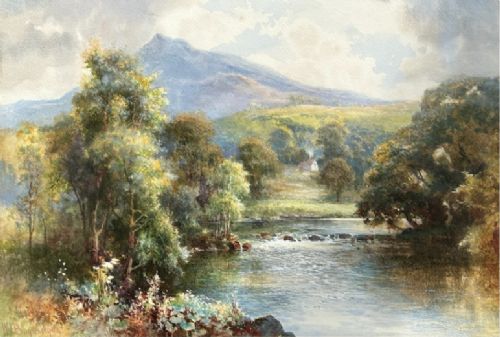
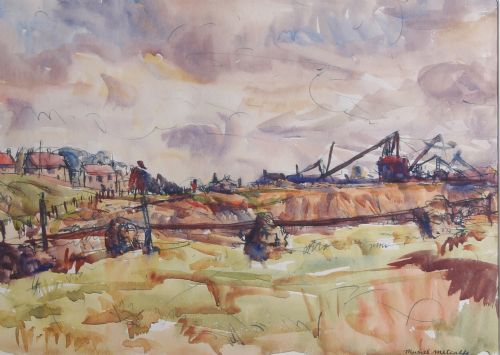
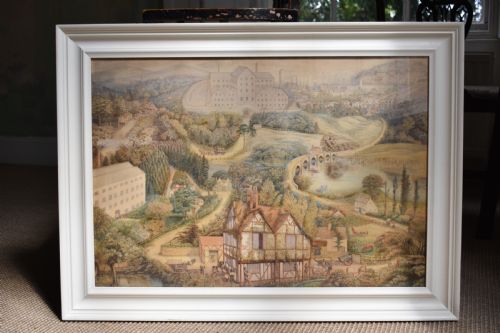
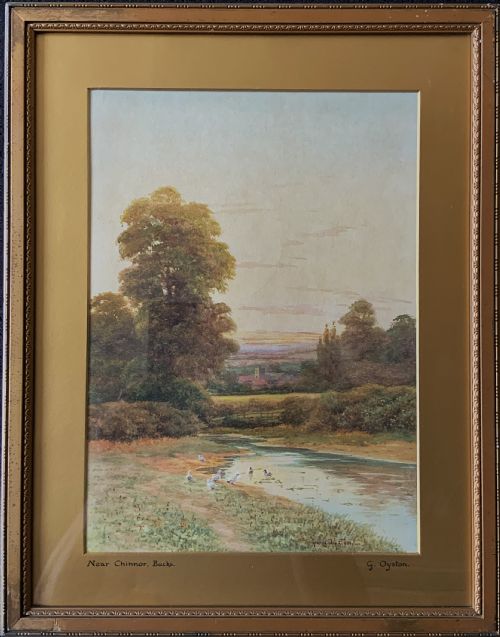
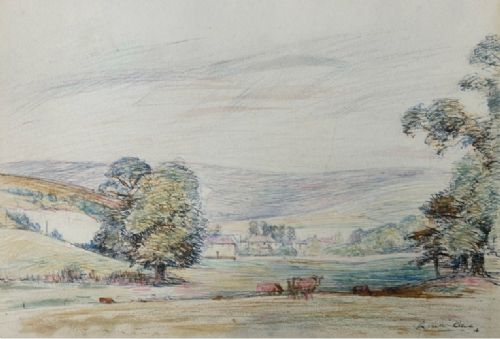
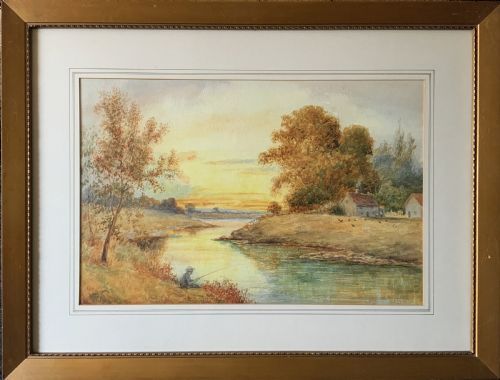
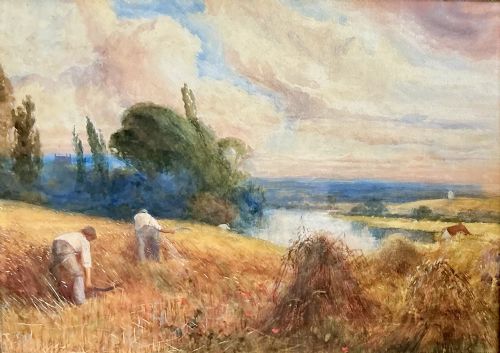
A countryside landscape watercolour presents scenes of rural Britain, featuring rivers, harvested fields, valleys, and cottages set within regional locations from Yorkshire to Sussex.
The pieces on this page span from the nineteenth century through the Edwardian period and into the mid-twentieth century, recording agricultural life, country lanes, and coastal inlets.
Most examples originate from British artists working in regional styles such as Victorian naturalism, pastoral realism, and early twentieth-century British impressionism.
Materials and Technique
Artists applied watercolour pigment and paint onto absorbent paper sheets, frequently mapping underlying compositions in graphite before laying washes.
Makers utilised transparent washes to build atmospheric light, occasionally incorporating touches of bodycolour or gold leaf to heighten focal points within the view.
Listings feature paper supports, watercolour pigment, and graphite across the nineteenth and twentieth centuries.
Distinctions in Quality
Superior works demonstrate confident brushwork and precise topographical observation, capturing shifting light and weather effects across fields and river valleys rather than relying on formulaic compositions.
The highest quality examples maintain luminosity within the paper support, using untouched areas to represent bright skies or water while applying layered washes to create depth.
William Joseph Boyes·Muriel Metcalfe·Frederick Walker·George Oyston·Russell Sidney Reeves·Frederick Hines·Alfred George Morgan·Edgar Woollatt·Charles Gregory·Samuel Timmins·Henry Charles Fox·Fred Lawson·Cuthbert Crossley·George Graham·Arthur Tucker·James William Booth·Frederick Septimus Lewis·William Hoggatt·Thomas Hunn·Stanley Orchart·James Orrock·Robert Thorne Waite·Henry Bailey·Robert Winchester Fraser·George Arthur Fripp
The Countryside Landscape Watercolour Glossary
- Watercolour pigment
- The finely ground colour substance mixed with water-soluble binders used by artists to create transparent paint washes on paper.
- Pastoral landscape
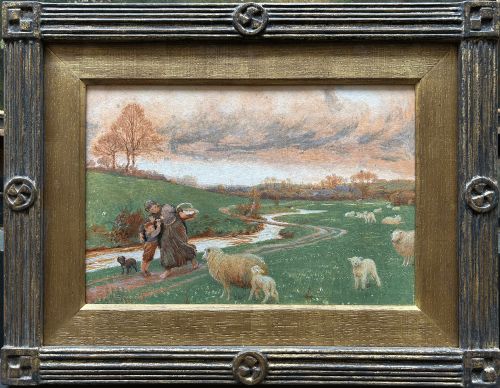
- An artistic genre depicting rural life, shepherds, agricultural workers, and domesticated animals within peaceful countryside settings.
- Graphite
- A form of carbon used in pencils to sketch preliminary compositional lines beneath the final watercolour application.
- Bodycolour
- Watercolour paint rendered opaque by the addition of a white pigment such as chalk, used to create solid highlights.
- Wash
- A thin, fluid layer of diluted watercolour pigment spread evenly across the paper to establish skies, water, or distant hills.
Countryside Landscape Watercolour: Frequently Asked Questions
What subjects do these watercolours show?
These works depict rural British views including Yorkshire dales, Sussex downs, Welsh rivers, and Welsh valleys.
Common motifs feature haymaking, sheep shearing, farm cottages, windmills, and figures traversing country lanes.
How should I frame an antique watercolour?
Watercolours require mounting behind glass with acid-free mats to prevent the paper from touching the glazing.
Keep framed pieces away from direct sunlight to prevent the watercolour pigments from fading over time.
How do I date a nineteenth-century landscape?
Dates are often established through artist signatures, exhibition records, or period inscriptions written on the reverse of the paper.
Paper watermarks and the style of framing also offer clues regarding the decade of creation.
What is Victorian pastoral painting?
Victorian pastoral painting idealises rural existence, focusing on harmonious relationships between agricultural workers, livestock, and the natural landscape.
Artists working in this tradition emphasised calm weather, fertile fields, and traditional farming methods.