


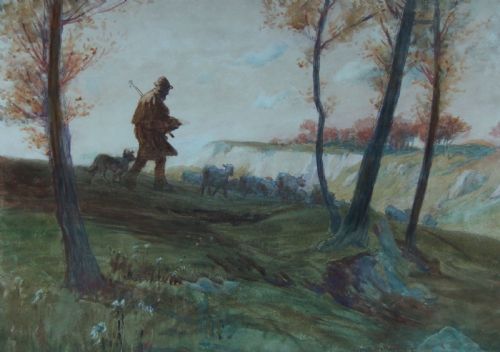


Shepherd and Sheep
These shepherd and sheep pieces bring pastoral quiet and nineteenth-century country life directly onto the wall through oils and watercolours.
Shepherd and Sheep
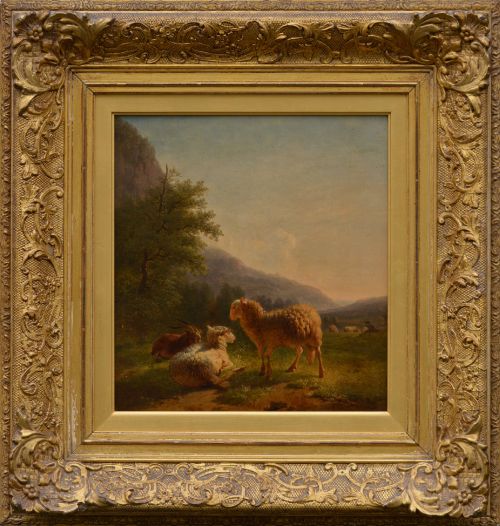
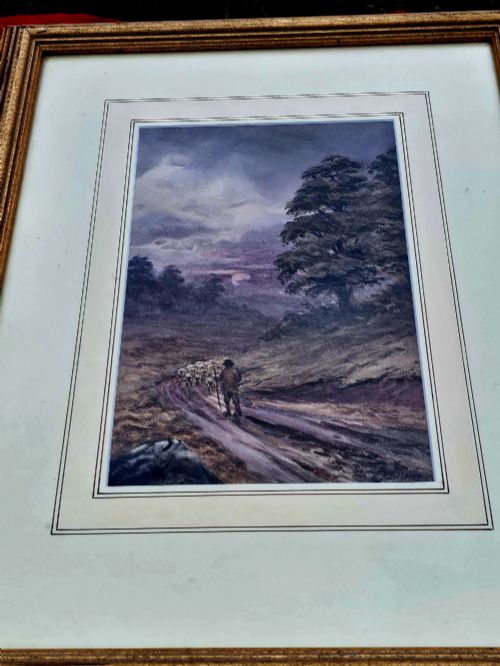
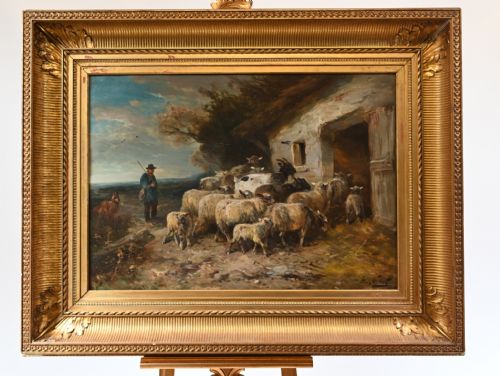
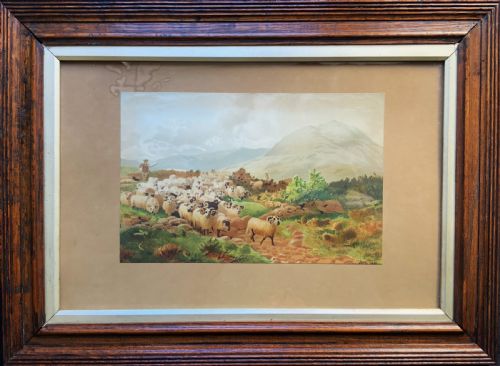
When you search for shepherd and sheep, you encounter pastoral scenes dominated by nineteenth-century and early twentieth-century British and continental European paintings. These works capture drovers, flocks, and handlers navigating rural lanes, highlands, and lowland pastures during changing seasons.
The most common versions on this page are oil paintings on canvas and panel, alongside detailed watercolours framed in period timber. Subjects range from tranquil resting figures with goats to dramatic coastal storms and misty mountain tracks.
Makers and artists span Victorian pastoralism, Edwardian rural life, and British impressionism, reflecting a sustained fascination with agricultural themes. Each piece records a vanished rhythm of manual farming and open-air stewardship.
Materials and Techniques
Artists built these compositions primarily using oil on canvas or delicate watercolour on paper, sometimes employing gesso and giltwood for framing. Canvas surfaces allowed for rich impasto and layered pigment, while watercolours relied on transparent washes to capture pale morning light and distant skies.
Frames frequently utilised carved wood with gilt or painted finishes, designed to complement the tonal depth of the artwork within. Surviving pieces retain these original mounts, preserving the structural context of nineteenth-century presentation.
Periods represented span from the nineteenth century through the 1950s.
Distinctions in Quality
Quality rests upon the artist's command of light, atmosphere, and anatomical proportion in both figures and animals. Stronger pieces convey motion and weather convincingly, whereas lesser works rely on formulaic foliage and static arrangements.
The integration of the shepherd and flock into the broader landscape separates accomplished pastoral painting from routine decorative output. Finer examples demonstrate careful handling of pigment that creates genuine depth and atmospheric tension.
Eugène Verboeckhoven·Henry Schouten·Henry Charles Fox·Herbert Royle·George Turner·Owen Bowen·Anthonij Anton Mauve·James Stark·John Carlisle·Fedor Van Kregten
The Shepherd and Sheep Glossary
- Pastoral
- A genre of art depicting country life, shepherds, and agricultural landscapes in an idealized or romanticized manner. This term defines the primary subject matter found across these listings.
- Gesso
- A plaster-like mixture applied to wood frames as a base for painting or gilding. It provides a smooth surface for ornate decorative mouldings.
- Impasto
- Paint applied in thick layers that stand out from the surface, giving texture to wool, foliage, or clouds. This technique adds tactile dimension to oil paintings.
- Watercolour
- A painting method in which the paints are made of pigments suspended in a water-based solution. It produces translucent washes ideal for atmospheric skies and misty rural backdrops.
Shepherd and Sheep: Frequently Asked Questions
What periods do these paintings come from?
The available works span the nineteenth century up through the mid-twentieth century, capturing distinct shifts in pastoral art from romanticism to impressionism.
Most pieces concentrate heavily on the Victorian and Edwardian eras, reflecting sustained public interest in rural scenery.
How should I frame and display them?
These works suit traditional living spaces, studies, or hallways where natural light complements the earthy tones of oil and watercolour.
Many retain their period giltwood or gesso frames, which should be preserved alongside the canvas or paper to maintain historical integrity.
Are watercolours as durable as oils?
Watercolour paintings require protection from direct sunlight and moisture to prevent fading of the paper and pigments over time.
Canvas and panel oil paintings offer greater resilience, though both mediums benefit from stable indoor humidity and professional framing.
How do I identify a regional school?
Regional styles often reveal themselves through specific landscapes, such as Wharfedale valleys, Scottish highlands, or southern chalk downs.
Artist signatures and framing styles further help connect individual works to British, Belgian, or German painting traditions.