

Country Vernacular Table
These honest country vernacular table pieces bring unpretentious domestic utility and centuries of plain regional character directly into your interior.
Country Vernacular Table
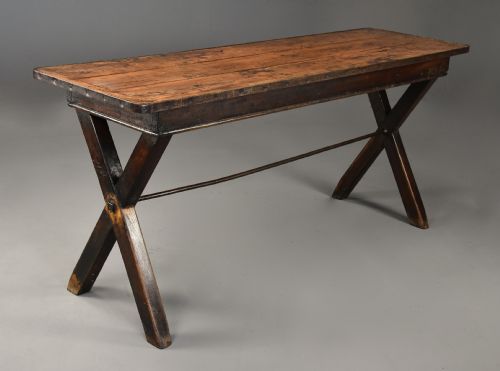
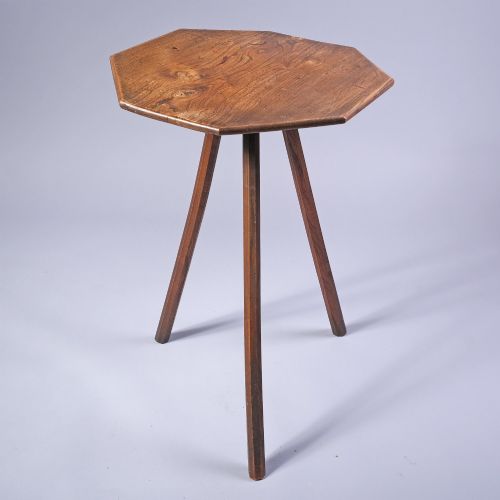
A country vernacular table encompasses practical domestic furniture made by regional joiners rather than urban workshops. These pieces include sturdy cricket tables, tavern tables, and occasional forms shaped by local needs.
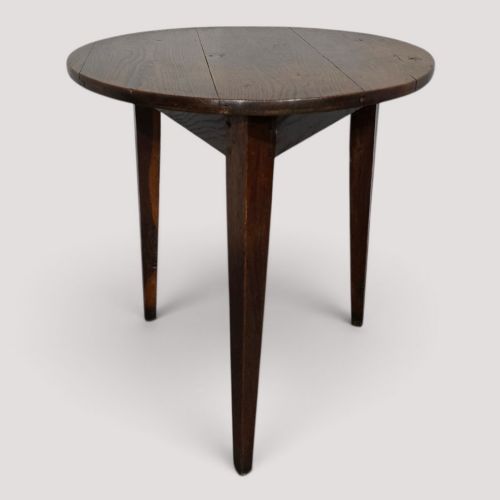
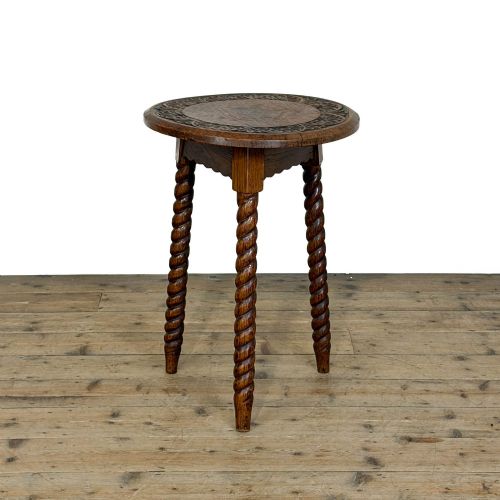
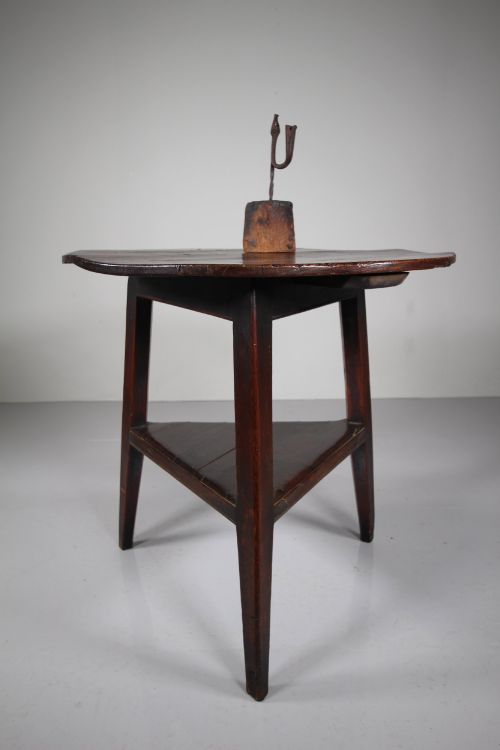
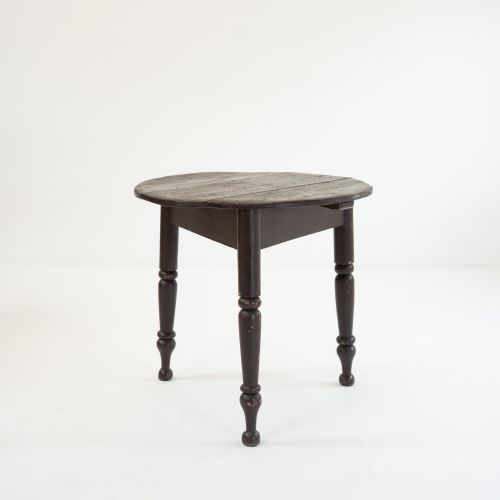
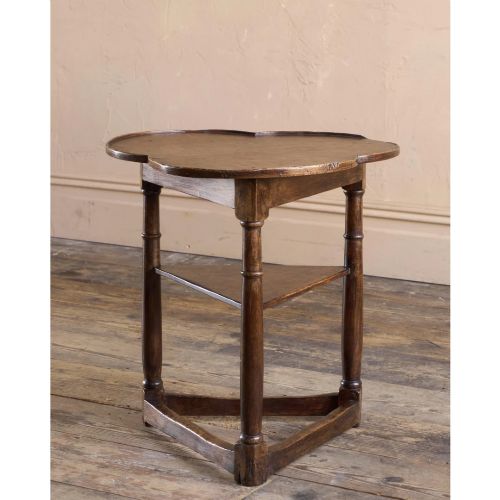
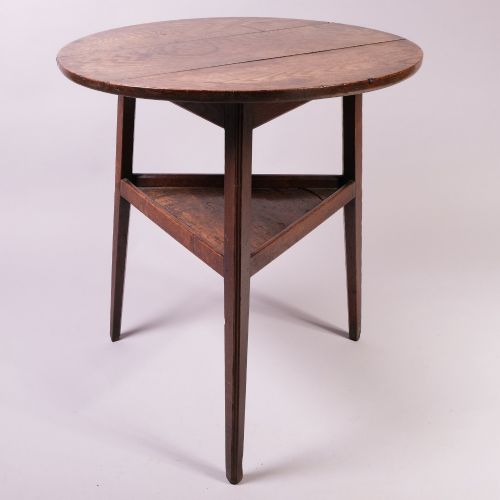
The version you meet most frequently on this page is the oak or pine cricket table, standing on three splayed legs to maintain stability on uneven flagstone floors. They span from the seventeenth century through the Georgian era and into the nineteenth century.
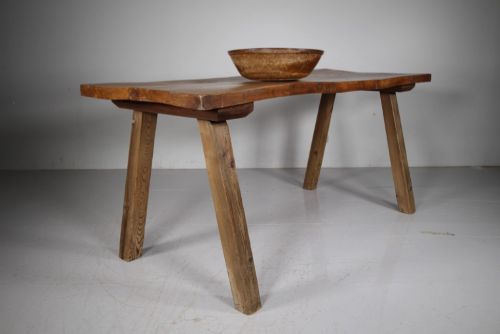
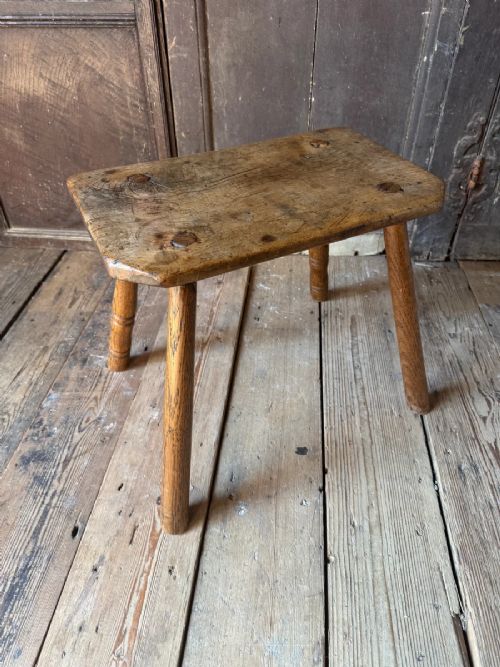
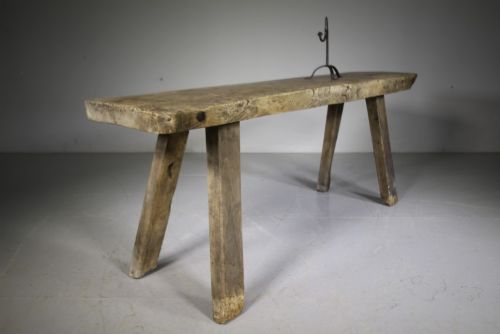
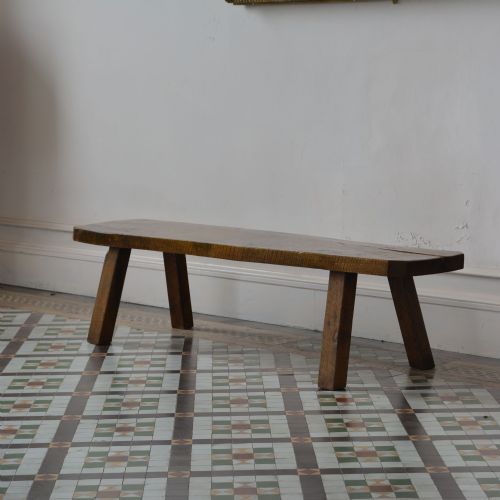
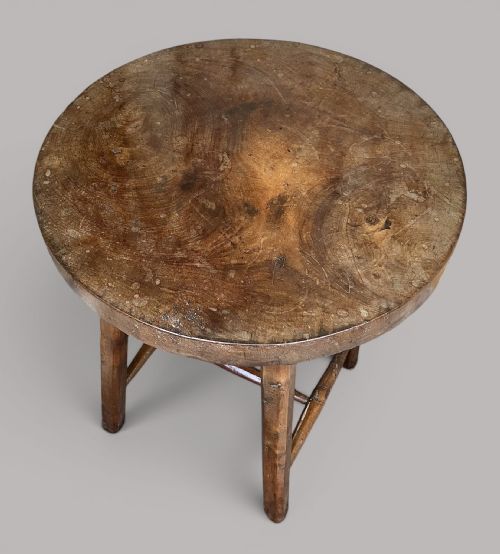
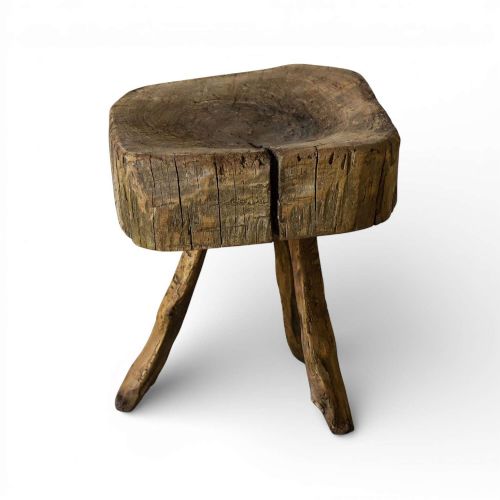
Alongside tables, the selection embraces related utility forms such as elm chopping blocks, pig benches, and primitive stools. Each object carries the specific marks of provincial utility rather than high-style court design.
Materials and construction
Local timbers dictate the build, with solid oak, pine, elm, ash, and sycamore selected for toughness and availability. Makers joined plank tops to turned or tapered legs using traditional pegged joints and wedged tenons.
Surfaces often show traces of early paint, such as Swedish Falu red, or develop a deep natural patina from generations of scrubbing and daily use. Iron brackets and brass fixings appear sparingly, usually as later repairs or functional reinforcements.
The listings on this page span from the seventeenth century to the Edwardian period, utilising native woods including oak, ash, elm, and pine.
Quality variations
The division between ordinary utility items and superior pieces rests on the integrity of the timber and the harmony of proportion. A well-balanced trefoil top joined to cleanly turned legs shows greater care from the regional maker.
Surviving original surfaces separate honest untouched examples from those heavily stripped or sanded in later decades. The depth of the patina and the firmness of the three-legged stance determine the lasting character of the piece.
The Country Vernacular Table Glossary
- Cricket table
- A small three-legged round table originating in the seventeenth century, named for its resemblance to a cricket stool or three-legged milking stool. They were designed to stand firmly on uneven cottage floors.
- Pig bench
- A low, sturdy wooden bench utilised in rural kitchens for food preparation or seating. They typically feature thick plank tops and simple splayed legs.
- Vernacular
- Furniture made by local tradesmen using regional traditions and materials rather than following academic pattern books. These objects prioritise direct utility over metropolitan fashion.
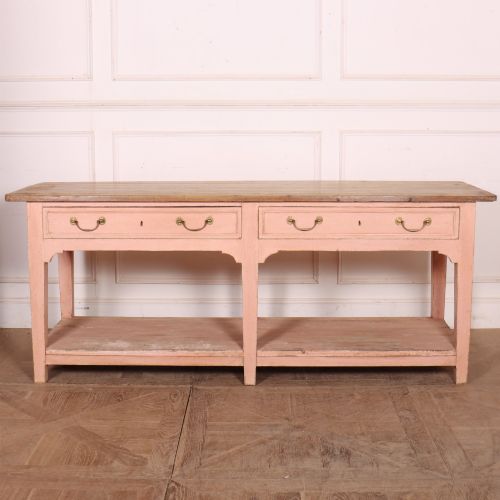
- Potboard dresser base
- A heavy low base fitted with an open lower shelf for storing pots and pans. They form a staple of Welsh and Scottish farmhouse kitchens.
- Patina
- The glossy sheen and mellow colour developed on wooden surfaces through decades of handling, polishing, and natural ageing. It serves as a visual record of an object's longevity.
Country Vernacular Table: Frequently Asked Questions
What is a country vernacular table?
A country vernacular table is an everyday utility piece made by regional craftsmen using local woods like oak, pine, and elm. These items were built for farmhouse kitchens and cottages without reference to metropolitan styles.
They include three-legged cricket tables, tavern tables, and low work tables designed for robust daily service.
How do I use a cricket table at home?
Cricket tables fit easily beside armchairs or in small hallways because their three-legged design occupies minimal floor space. Their circular tops provide a stable surface for lamps, books, or small plants.
Avoid placing them in areas with extreme temperature fluctuations to protect the old timber.
How do I date an old pine table?
Dating relies on examining construction methods, tool marks, and the quality of the timber grain. Hand-sawn boards, pegged joints, and square-headed nails point towards earlier periods.
Surface wear and the depth of the patina also help indicate whether a piece dates to the Georgian era or the nineteenth century.