

Country Scene Painting
A country scene painting captures rural life, quiet villages and agricultural landscapes across Victorian and Edwardian Britain.
Country Scene Painting
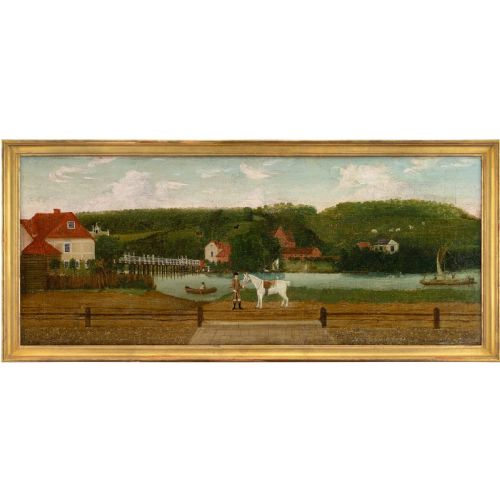
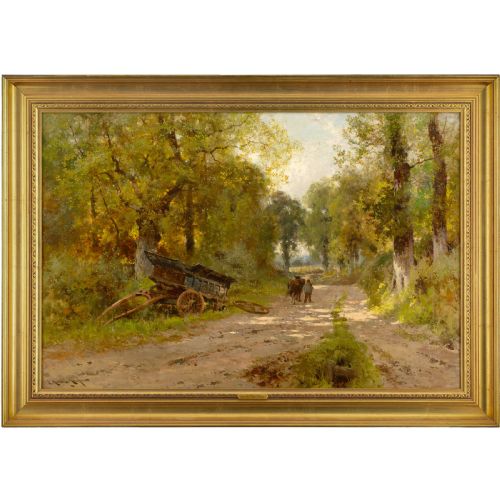
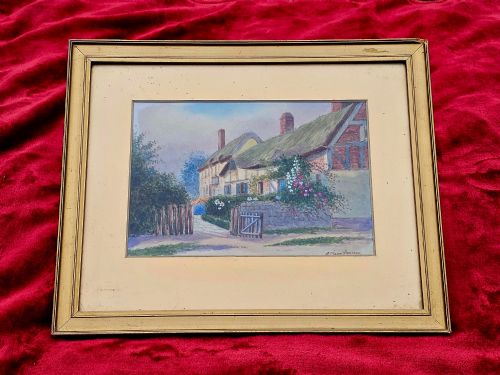
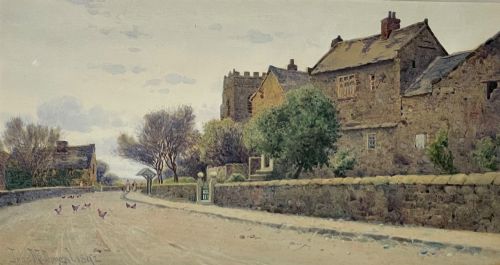
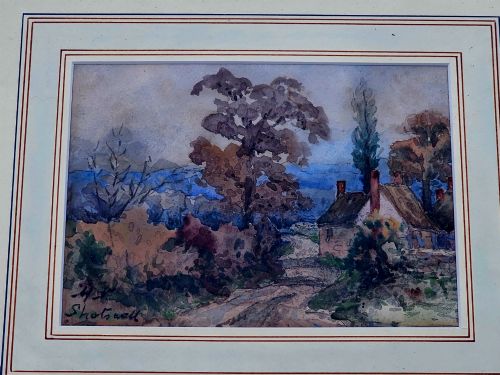
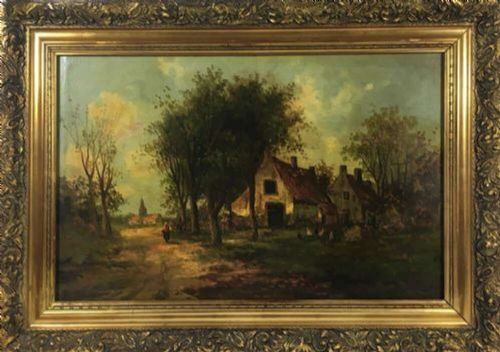
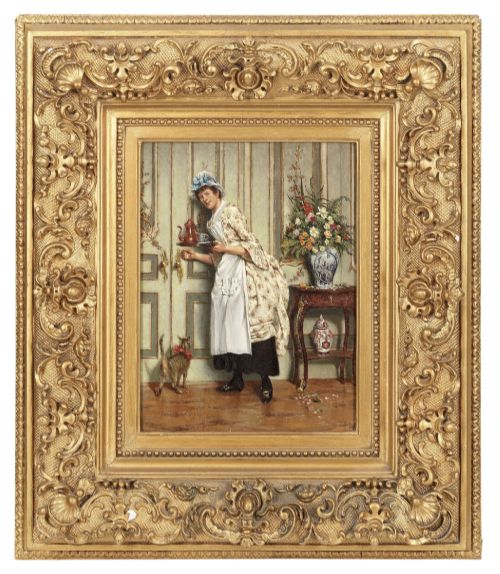
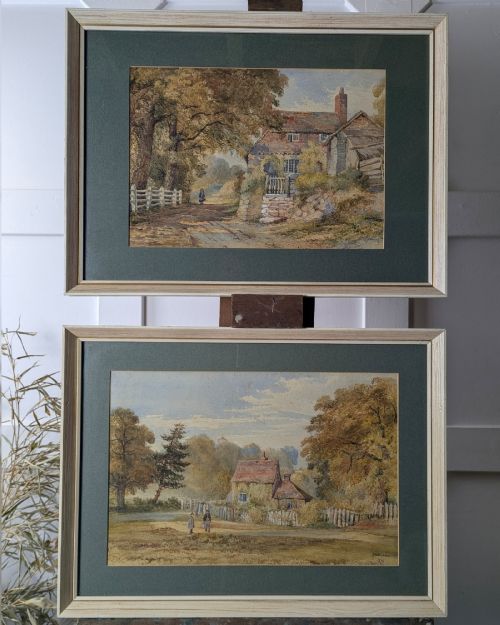
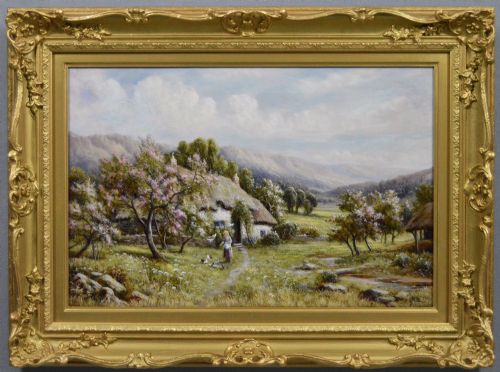
A country scene painting depicts rural life, agricultural labour, farmyards, and English or continental countryside landscapes. The selection spans the nineteenth century through the early twentieth century, taking the form of framed oils and watercolours.
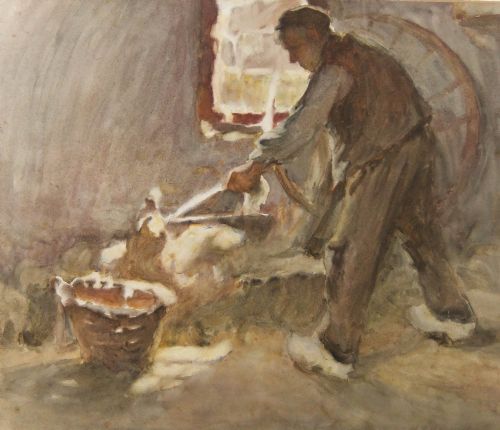
Most examples originate from British and European schools, showing cottages, livestock, rivers, and agricultural workers. Works range from naive folk art to detailed academic realism and impressionist studies.
Buyers encounter pastoral subjects executed on canvas, wood panel, board, and paper. These pieces reflect a sustained nineteenth-century and early twentieth-century artistic preoccupation with rural existence.
How they were made
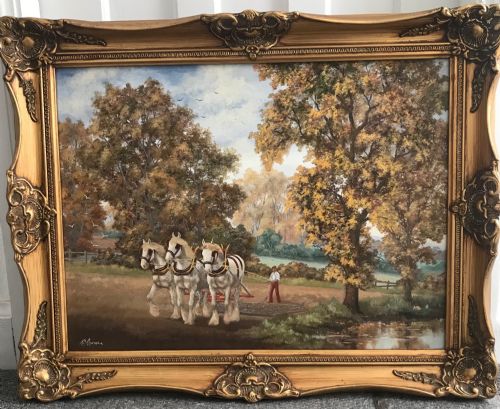
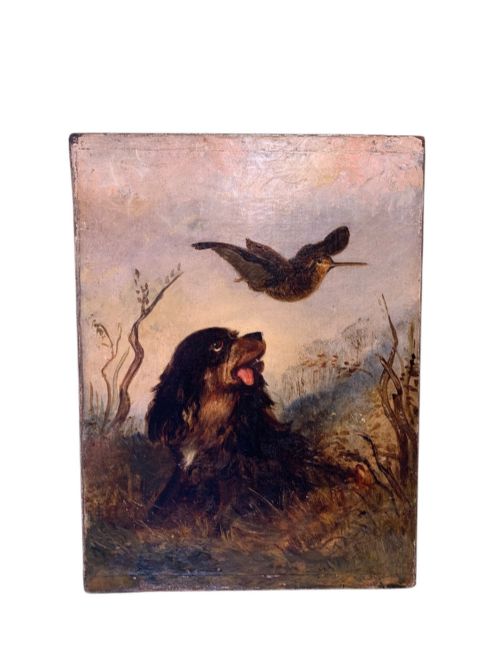
Artists painted primarily with oil paint or watercolour, applying pigment to stretched canvas, wooden panels, card, or paper supports. Oil mediums allowed for rich layering and texture, particularly in nineteenth-century academic and realist works.
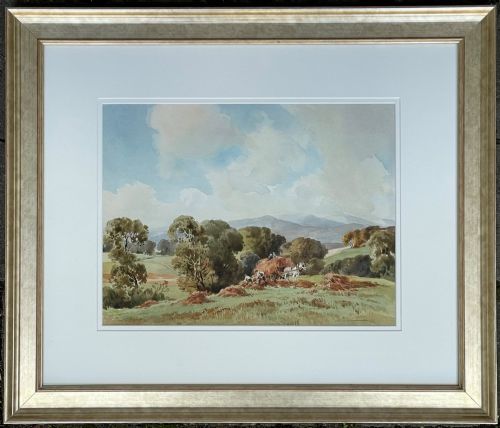
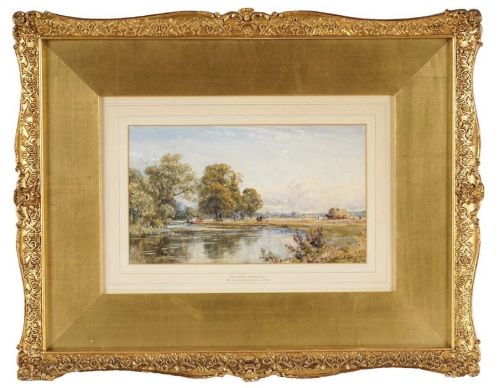
Watercolour works utilised transparent washes on paper to capture light and atmosphere in rural landscapes. Finished paintings were typically housed in period frames constructed from wood and giltwood.
Several canvases manage to capture the stubborn expression of draft horses refusing to hurry past an English country cottage.
What varies in quality
Quality rests in the handling of light, anatomical precision in figures and animals, and compositional balance. Master works demonstrate confident brushwork and acute observation of atmospheric conditions, whereas provincial or naive pieces rely on simpler forms.
The preservation of the original paint surface and the matching period frame influence the integrity of the piece. Finer examples maintain untouched pigment layers and contemporary framing that complements the era of the work.
Percy Lancaster·John McDougal·Stephen Samuel Lewin·Robert John Hammond·Thomas Sidney Cooper·Edgar Hunt·Henry Schouten·Henry H Parker
The Country Scene Painting Glossary
- Oil on Canvas
- Pigment mixed with drying oil applied to a woven fabric support stretched over a wooden frame. This method was standard for durable, large-scale nineteenth-century works.
- Watercolour
- Pigments suspended in a water-soluble vehicle applied to paper. It is prized for luminosity and fluid handling in landscape studies.
- Giltwood
- Wood carved and coated with gold leaf or metallic powder. It frequently frames nineteenth-century oil paintings.
- Impressionism
- A style focusing on the accurate depiction of light and its shifting qualities. It appears in later nineteenth and early twentieth-century rural scenes.
- Genre Painting
- Depictions of aspects of everyday life by stacking figures in normal settings. These works often show farm workers, blacksmiths, or market scenes.
Country Scene Painting: Frequently Asked Questions
What periods do these paintings date from?
The available works span the nineteenth century through the early twentieth century, with strong representation from the Victorian and Edwardian eras. Earlier examples date to the eighteenth century, while others extend into the mid-twentieth century.
Stylistic shifts reflect changing artistic approaches, moving from detailed academic realism toward impressionistic treatments of rural light and atmosphere.
What subjects appear in country scene paintings?
Common subjects include agricultural workers, farmyard animals, horses, cottages, rivers, and pastoral landscapes. Scenes often feature figures engaged in daily rural tasks such as ploughing, harvesting, or tending livestock.
English countryside settings predominate, alongside continental European farmyards and village views executed in oil or watercolour.
How should I display an antique painting?
These works suit traditional and contemporary interiors alike, particularly when paired with period wooden furniture and neutral walls. Hanging them away from direct sunlight protects vulnerable watercolours and oil pigments from fading.
Consider the original frame when placing the piece, as giltwood and carved wooden surrounds require stable humidity levels to prevent cracking.
How can I tell the difference between oil and watercolour?
Oil paintings feature thicker pigment layers with visible brush texture applied to canvas, wood, or board. They often possess a glossy or satin sheen and require no glass protection.
Watercolours utilise thin, translucent washes on paper that reveal the texture of the sheet underneath. These works are traditionally mounted behind glass to prevent moisture damage.