



Agricultural Oil Painting
An agricultural oil painting captures the labour, livestock and landscapes of rural life through the brushstrokes of past centuries.
Agricultural Oil Painting
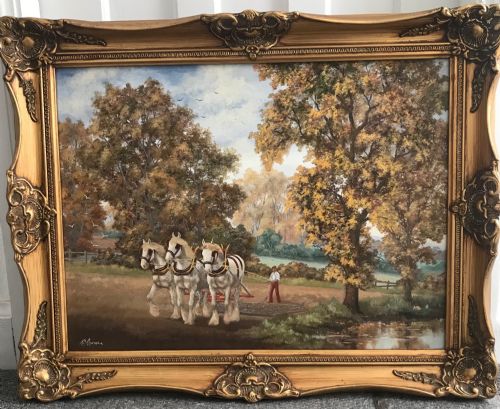
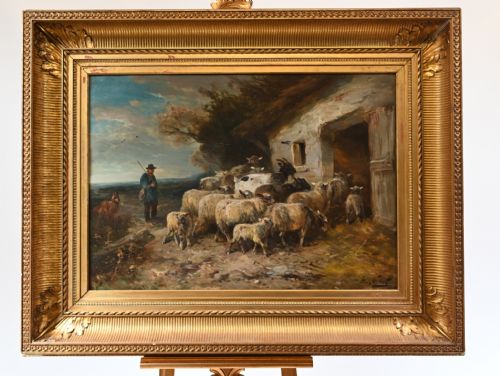
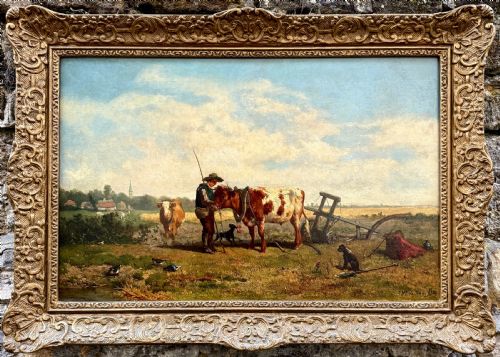
An agricultural oil painting depicts the traditional scenes of the countryside, focusing on working horses, cattle, sheep, and farmyard harvests. When you search for this phrase, you encounter canvases originating from the Victorian period through to the mid twentieth century, including works by the British School and continental painters.
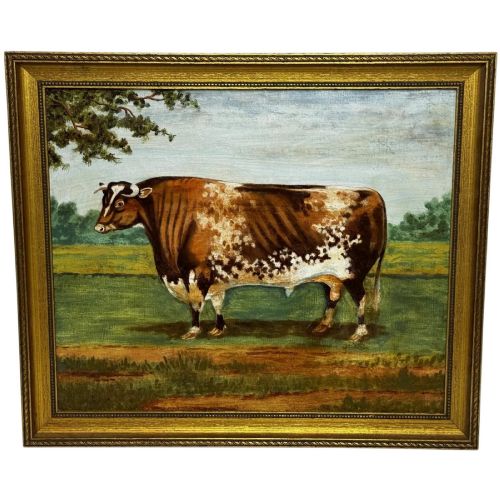
The subjects range from detailed portraits of prized shorthorn bulls and grey shire horses to expansive pastoral landscapes featuring hay wagons and farmworkers. These artworks document rural heritage, recording rural industries and agricultural practices that defined village life across generations.
How they were made
Artists created these works primarily using oil paint applied to stretched canvas or occasionally wood panels, building up layers of pigment to capture the light on fields and livestock. Many pieces retain their original or period frames constructed from wood, often finished with gesso and gilt detailing.
The technical approach spans various traditions, from 19th Century Realism and British Impressionism to naive styles. Painters manipulated oil mediums to render the textures of animal coats, harvested wheat, and rustic timber barns with careful observation.
Listings feature works spanning from the Victorian era through the 1960s, executed primarily in oil on canvas.
What varies in quality
The distinction in these paintings lies in the artist's command of anatomy, light, and atmosphere, separating competent records from masterly compositions. Works by established named artists demonstrate a sophisticated understanding of animal form and natural lighting.
Subtlety in palette and brushwork distinguishes finer canvases from simpler naive school pieces. The integrity of the original canvas and the preservation of the paint surface further influence the standing of an individual work.
Henry Schouten·Johannes de Haas·A M Gauci·James Kyd·Herbert Royle·Percival Glenfern·J.C. Grey·James William Booth·Arthur Winter Shaw·Thomas Sidney Cooper·Arthur Charles Dodd·Vernon Stokes·W.A. Clark·Joseph Paulman·J L VAN Leemputten·Frederick William Jackson·John Percy Cooke·W E Millner·Ernest Higgins Rigg·George Cole·William Greaves·Owen Bowen·William Huggins·William Sidney Cooper·Louis Marie Dominique Robbe
The Agricultural Oil Painting Glossary
- Oil on Canvas
- A traditional painting medium where oil paints are applied to a woven fabric support stretched across a wooden frame. This combination allows for rich colour depth and subtle blending.
- Gesso
- A plaster-like mixture applied to wooden frames or panels to prepare a smooth surface for gilding or painting. It provides a stable base that often develops a characteristic craquelure over time.
- British Impressionism
- An art movement focusing on everyday subject matter and the play of natural light, often executed outdoors. In agricultural subjects, it captures transient atmospheric effects during harvesting or fieldwork.
- Naive Art
- Characterised by a childlike simplicity in perspective and proportion, often produced by self-taught painters. These works offer direct, honest depictions of farm life and livestock without academic restraint.
- Pastoral
- Pertaining to rural life and the countryside, particularly portraying a romanticised or peaceful view of farming. These scenes typically feature herds, pastures, and agricultural labourers.
Agricultural Oil Painting: Frequently Asked Questions
What subjects appear in these paintings?
The canvases predominantly show shire horses ploughing, prize bulls, sheep flocks, and workers harvesting hay in rural landscapes.
Scenes also encompass farmyard interiors, stables, and pastoral village life across different European regions.
How do I date an agricultural painting?
Dating relies on stylistic evidence, signatures, costume details of the farmworkers, and the type of canvas or stretcher used.
Many works include legible signatures, artist dates, or period framing that help place them within the nineteenth or twentieth century.
Where were these artists from?
The creators include members of the British School alongside continental European painters working in France, Belgium, and elsewhere.
Regional British painting groups and local schools are well represented among the recorded signatures.
How should I frame and display them?
These works suit traditional spaces, often displayed in wooden frames finished with ebonised details or gilt moulding.
Placement should avoid direct sunlight and excessive moisture fluctuations to protect the oil paint and canvas substrate.