
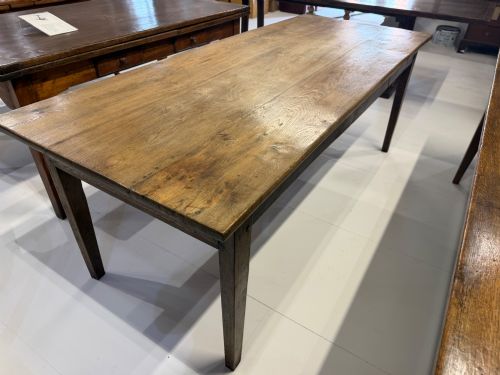
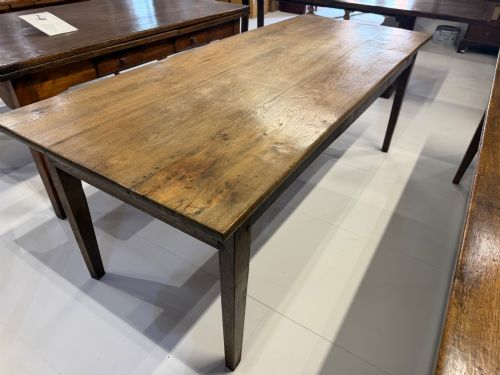
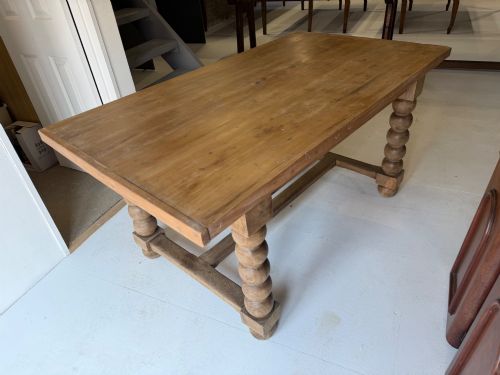
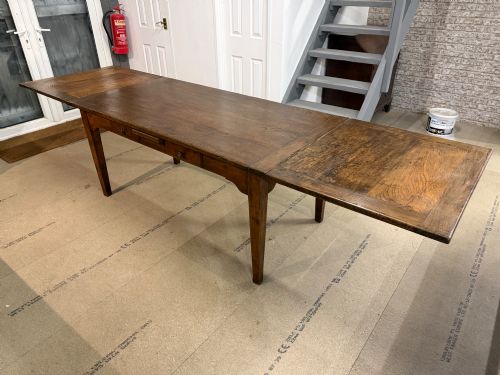
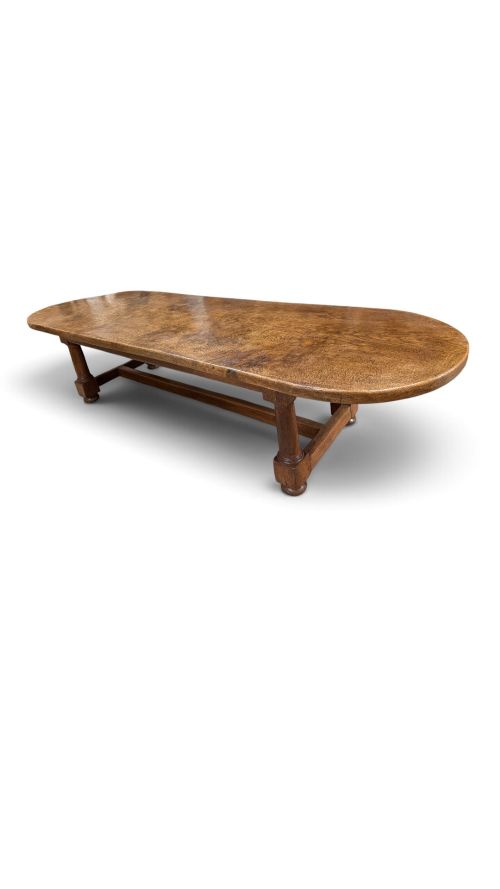
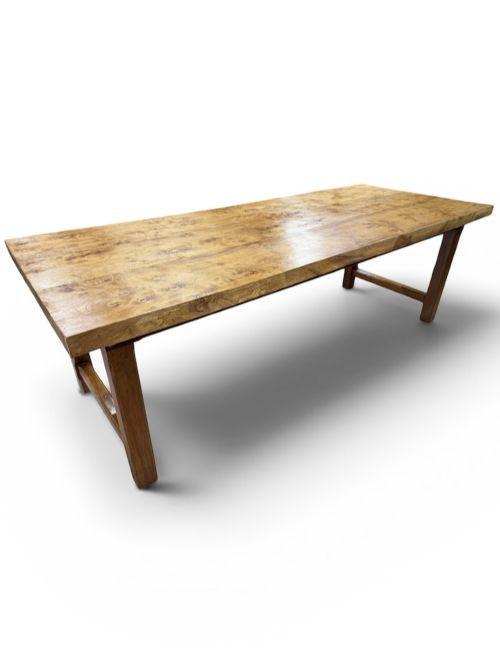
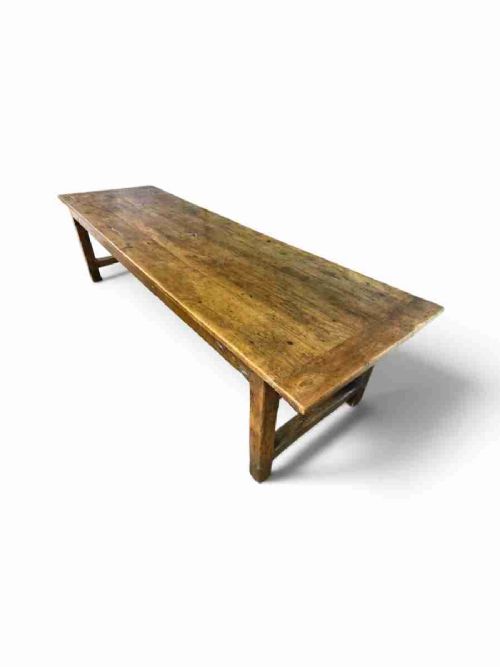
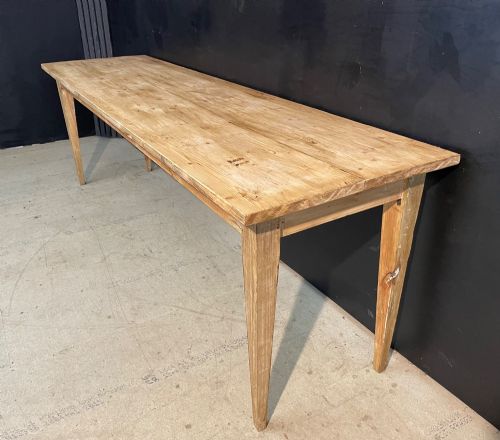
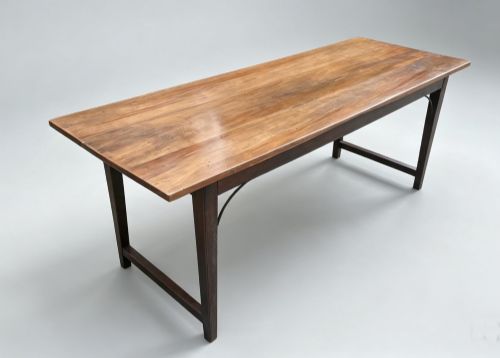
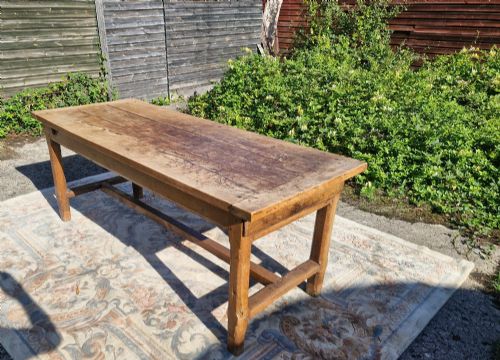
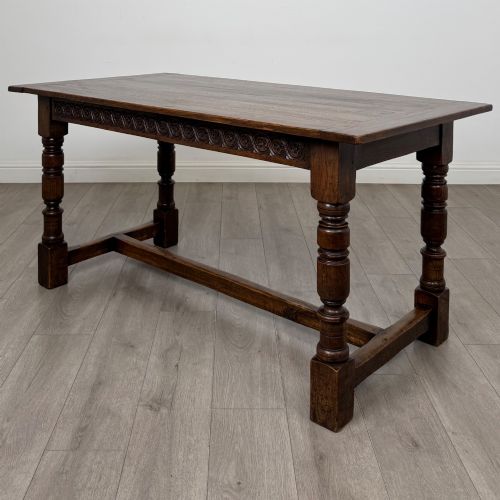
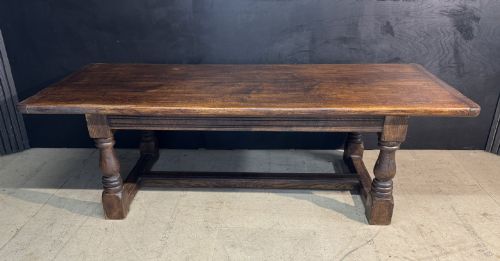
Country Refectory Dining Table
When you need a country refectory dining table, you are looking for a sturdy gathering board shaped by centuries of communal meals.
Country Refectory Dining Table
A country refectory dining table provides a long, functional surface designed originally for communal dining in large halls and later adapted for domestic farmhouse kitchens. The pieces found here span centuries of craftsmanship, connecting modern spaces with older traditions of utility.
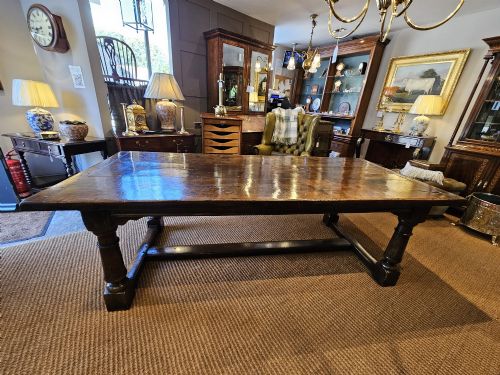
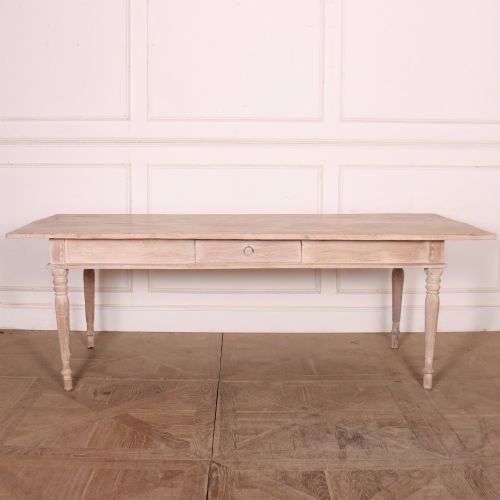
The version most commonly met on this page is the nineteenth-century or early twentieth-century oak or pine farmhouse refectory table. These examples often feature generous proportions capable of seating eight to ten people comfortably.
Makers and regional workshops across England, France, and Spain produced these tables using local timber to suit rural domestic life. Styles range from plain rustic forms to revivals of Jacobean and Georgian aesthetics.
How they were made
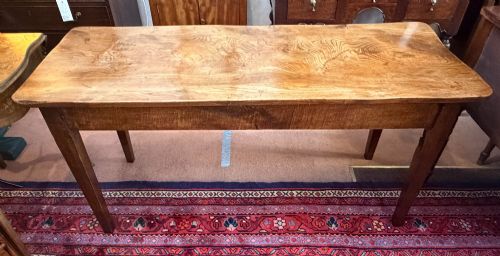
Makers relied heavily on native hardwoods and softwoods such as oak, elm, fruitwood, and pine. Timber selection depended on regional availability, resulting in solid single-plank tops or multi-board surfaces joined securely.
Joinery techniques included peg-joined framing and stretcher bases designed to stabilise long, heavy spans of wood. Metal elements like iron hardware occasionally reinforced structural joints under high-stress areas.
A four-metre French refectory table listed here offers enough surface area to host a small village feast.
What varies in quality
The grade of timber and the integrity of the original construction set tables apart. Dense, mature oak or figured fruitwood boards command higher regard than soft pine, though utility dictated both.
Proportion and restraint in revival detailing distinguish finer provincial pieces from simpler vernacular workshop output. Original surface patination accumulated through decades of use also marks the distinction between ordinary utility and exceptional character.
The Country Refectory Dining Table Glossary
- Refectory table
- A long dining table historically used for communal meals in monastic or large domestic halls. Later variations brought this long format into rural farmhouses and country kitchens.
- Plank top
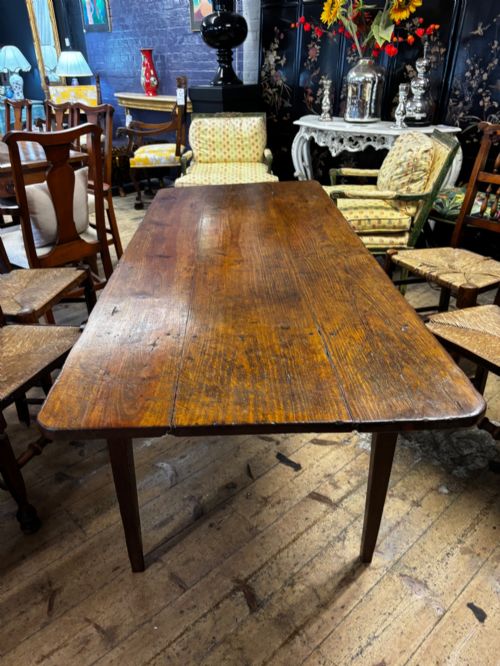
- A table top constructed from wide boards running the full length of the piece. Single plank versions are particularly valued for their uninterrupted grain.
- Stretcher
- A horizontal wooden brace connecting the legs of a table for added stability. These often run close to the floor on country refectory designs.
- Peg joined
- A method of securing mortise and tenon joints using wooden dowels instead of metal nails. This traditional technique allows the wood to expand and contract naturally.
- Fruitwood
- Timber sourced from fruit-bearing trees such as pear, cherry, or apple. It offers a dense grain and warm tone seen in many continental provincial tables.
Country Refectory Dining Table: Frequently Asked Questions
What is a country refectory table?
A country refectory table is a long, sturdy dining table rooted in monastic and rural vernacular traditions. Built primarily for communal meals, it uses strong timber frames and stretchers to support extended surfaces.
These pieces served as the heart of domestic life in farmhouses and country houses. Their enduring design accommodates large gatherings while maintaining a grounded, practical aesthetic.
How do I seat guests around one?
Measuring the length and the clearance beneath the apron helps determine comfortable seating arrangements. Long refectory formats naturally accommodate benches or multiple chairs along each side.
Consider the position of supporting legs and stretchers when placing seating. Tables with recessed legs or H-form stretchers offer more flexibility for foot placement.
How do I care for the wood?
Maintaining these surfaces involves regular dusting with a dry cloth and occasional application of traditional wax to nourish the timber. Avoiding excessive moisture protects the historic patination.
Keeping tables away from direct heat sources prevents the old boards from splitting or warping. Gentle care preserves the honest surface wear accumulated over generations.
How do I tell periods apart?
Examining the joinery, timber selection, and overall proportions reveals clues about a table's age. Earlier pieces often display hand-sawn markings, pegged joints, and heavier oak construction.
Later nineteenth and twentieth-century examples frequently utilise softer pine or show machine-planed consistency. Stylistic revival cues, such as Jacobean turning, point towards specific nineteenth-century revival movements.