


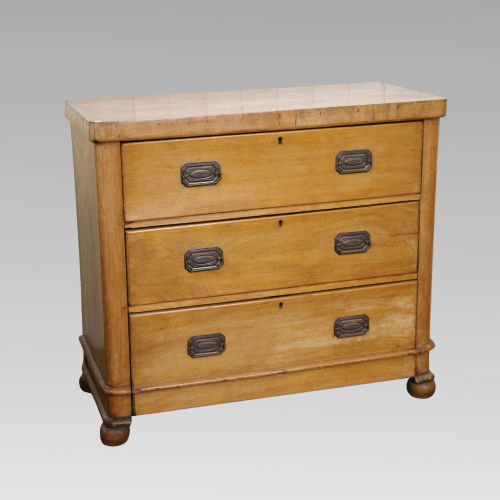
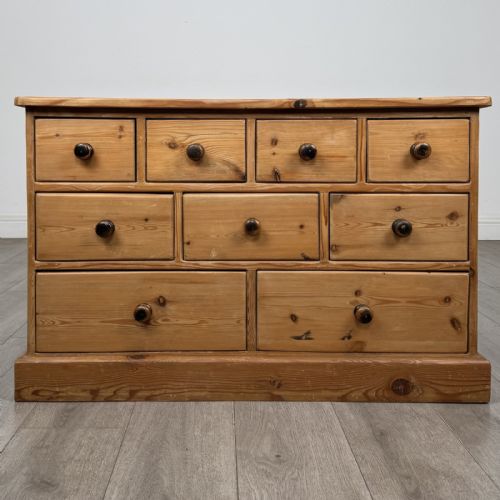

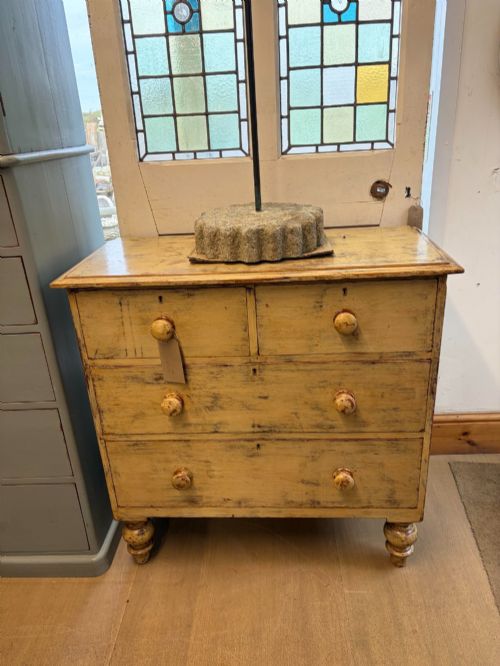
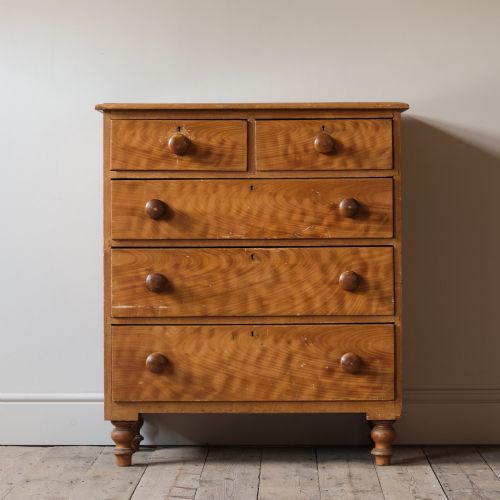
Country Pine Storage Drawers
Country pine storage drawers bring honest utility and warmth to a room, offering sturdy timber construction shaped by generations of domestic use.

Country Pine Storage Drawers
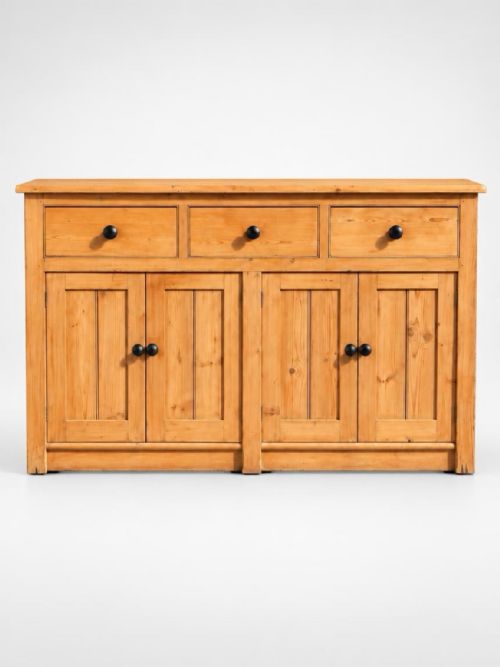
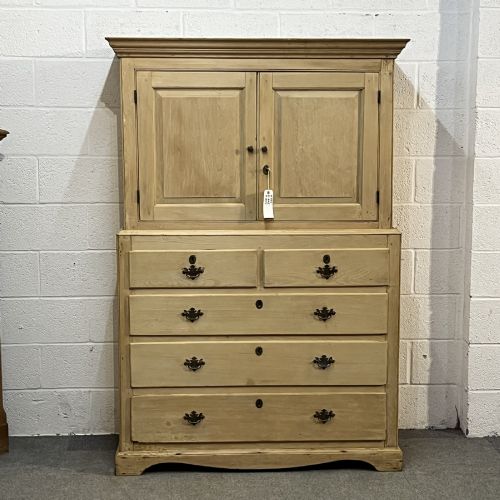
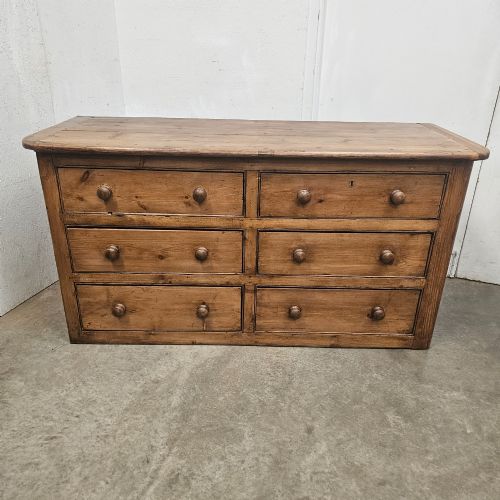
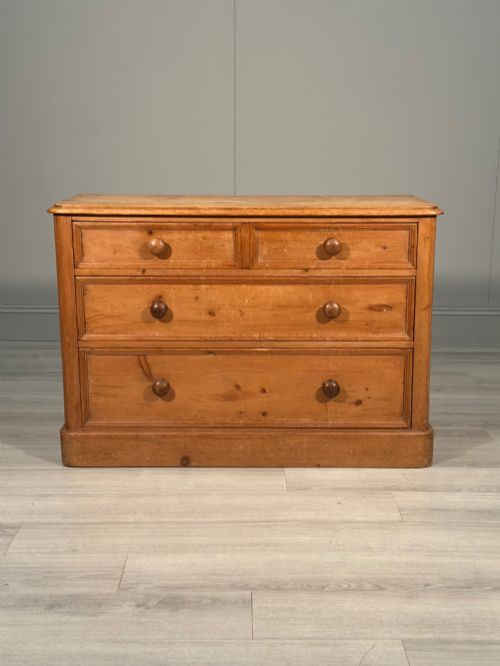
Country pine storage drawers encompass practical chests, dressers, and sideboards shaped by regional domestic needs during the Georgian and Victorian periods.
The pieces on this page are predominantly Victorian and nineteenth-century examples, though earlier Georgian items and later Edwardian pieces also appear.
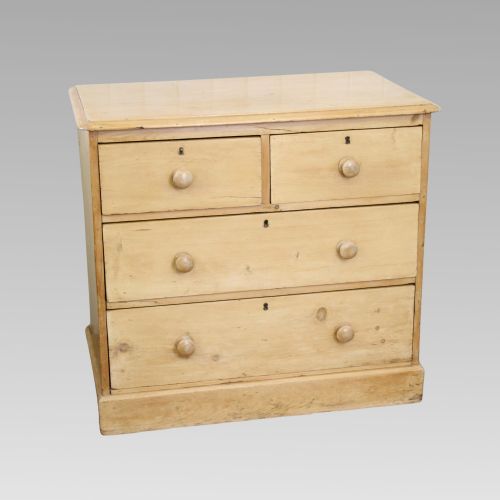
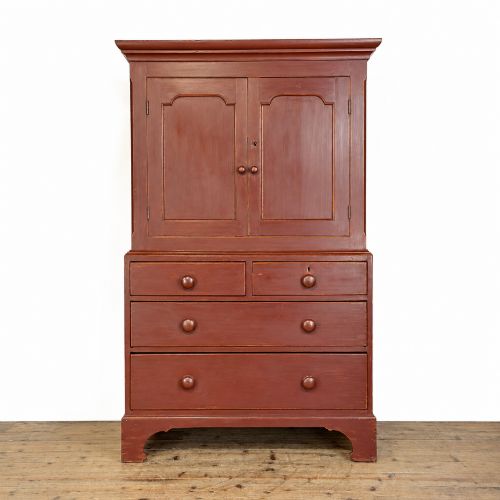
Forms range from low four-drawer chests and kitchen dresser bases to large wardrobes and blanket boxes, reflecting the varied storage requirements of historical homes.
Materials and construction
Construction relies primarily on solid pine and pitch pine, selected for accessibility and workability, complemented by secondary timbers for internal framing.
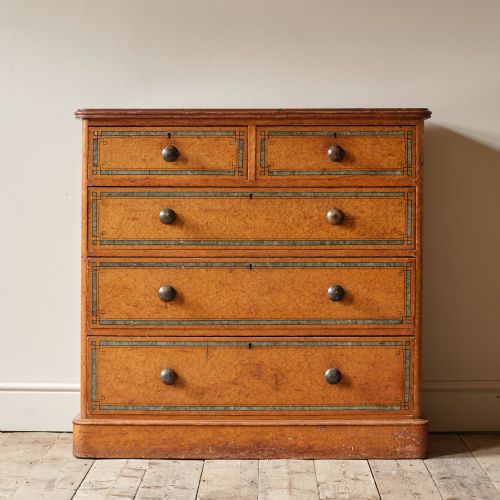
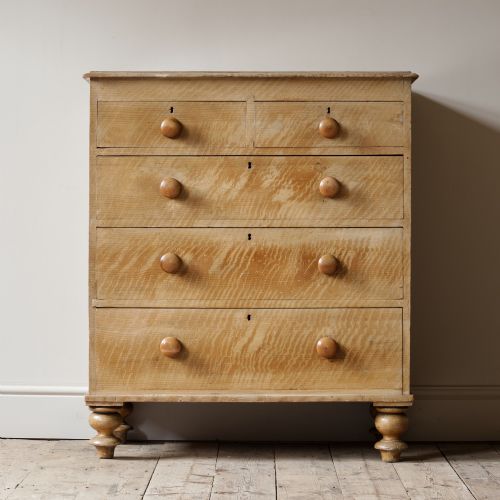
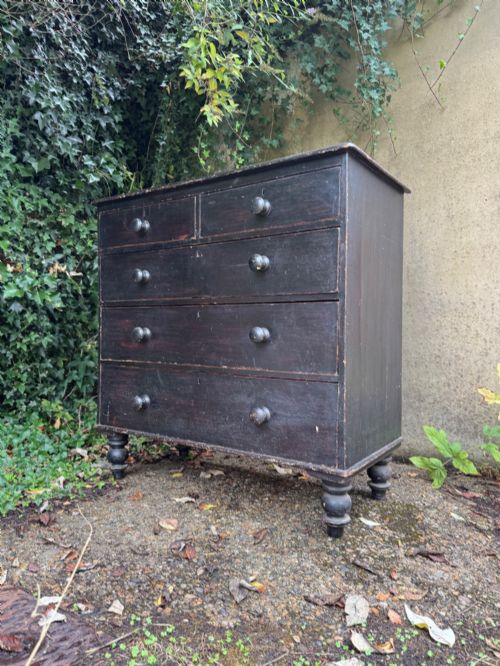
Surfaces show various historical treatments, including traditional wax finishes, painted or scumbled decoration, and scrubbed bare wood.
Hardware typically includes turned wooden bun handles, brass pulls, and iron fittings that secure drawers and doors.
Country Pine Storage Drawers Retail Price Guide 2026
Typical asking prices for country pine storage drawers among the pieces listed under this phrase on Sellingantiques today, from the lower quarter to the upper quarter. They describe what is for sale here now, not the wider market.
Listings span multiple eras from the Georgian period through the Victorian age to nineteen hundred, constructed primarily in pine, pitch pine, and oregon pine.
Factors that distinguish individual examples
Quality rests on the integrity of the timber, the retention of original surface treatments such as early paint or scumbling, and the survival of period handles.
Proportion and scale distinguish finer vernacular pieces, where careful joinery and well-balanced proportions elevate utilitarian furniture into desirable decorative objects.
The Country Pine Storage Drawers Glossary
- Scumble
- A decorative paint technique applied over a base coat to imitate the grain of more expensive hardwoods. It creates a mottled or textured surface popular on nineteenth-century vernacular furniture.
- Dresser base
- The lower portion of a kitchen or dining room dresser, featuring cupboards and drawers beneath a flat top. These sturdy units served as primary work surfaces and storage in domestic settings.
- Pitch pine
- A dense, resinous softwood with pronounced grain patterns utilised for durable furniture. It offers greater strength and weight than standard white pine.
- Mule chest
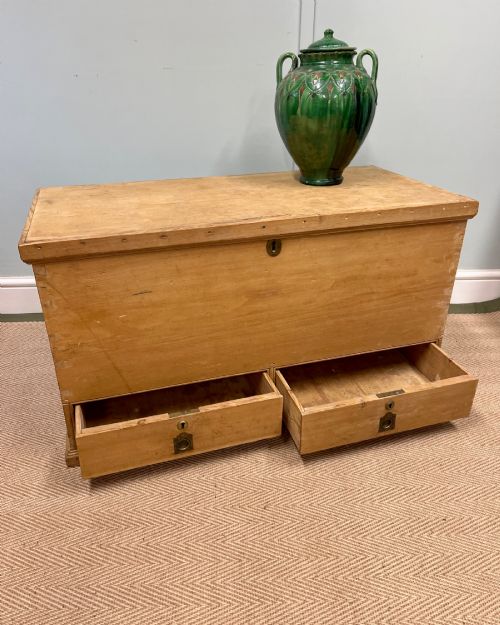
- A storage chest fitted with one or more drawers at the base, bridging the transition between a traditional blanket box and a chest of drawers.
Country Pine Storage Drawers: Frequently Asked Questions
How do I date a pine chest of drawers?
Dating relies on observing construction methods, timber choice, and handle types, alongside overall style indicators. Georgian pieces often display different proportions and drawer linings compared to later Victorian examples.
Secondary woods, nail types, and the presence of original paint or wax finishes also help establish the approximate decade of manufacture within the nineteenth century.
Are these drawers suitable for daily use?
These historical storage pieces were built for rigorous domestic service and generally remain robust. Drawers run on timber runners that benefit from occasional waxing to ensure smooth operation.
Checking the internal depth and drawer action helps determine how the furniture will accommodate modern clothing and household items.
How should I care for a waxed pine surface?
Waxed pine requires periodic application of a quality beeswax to nourish the timber and maintain a soft sheen. Avoid placing pieces near direct heat sources or strong sunlight to prevent the wood from drying out.
Gentle dusting with a dry cloth preserves the accumulated patina developed over centuries of domestic life.