




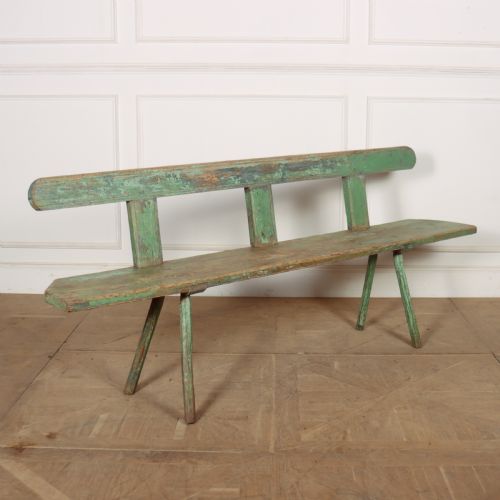
Country Pine Hallway Seat
A country pine hallway seat provides practical seating and storage in a passage while bringing honest timber grain or historic painted finishes to the home.
Country Pine Hallway Seat
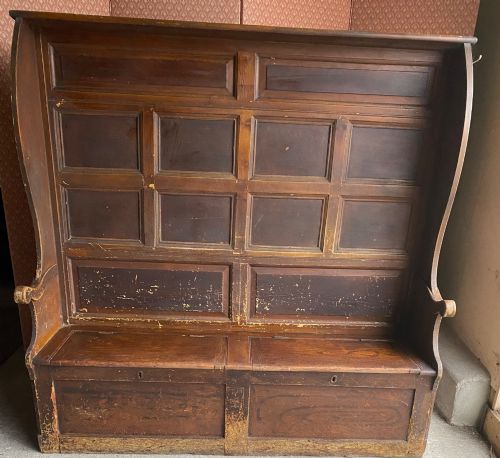
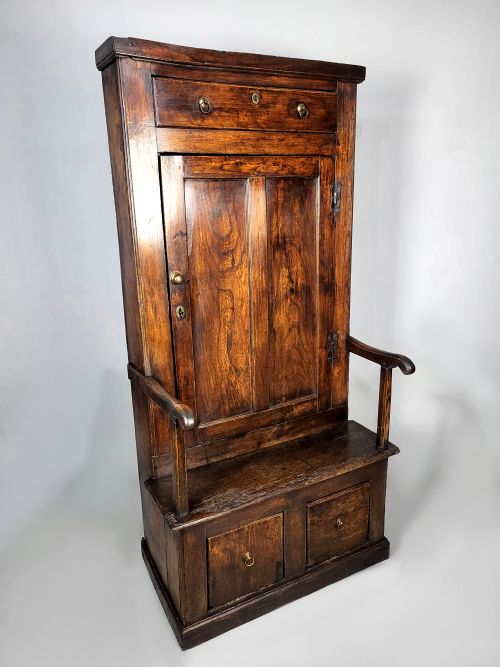
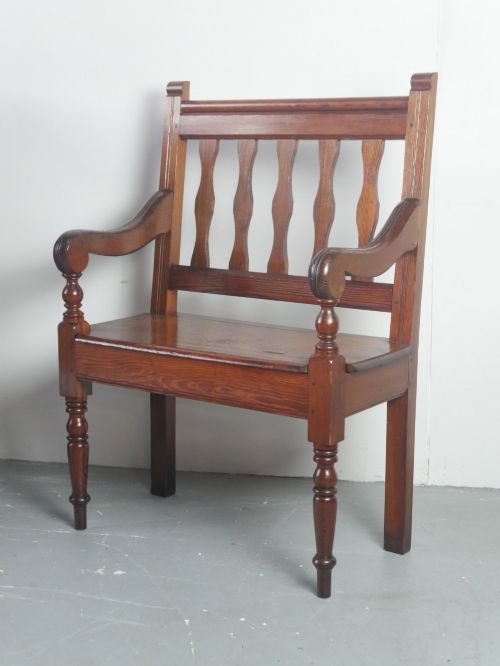
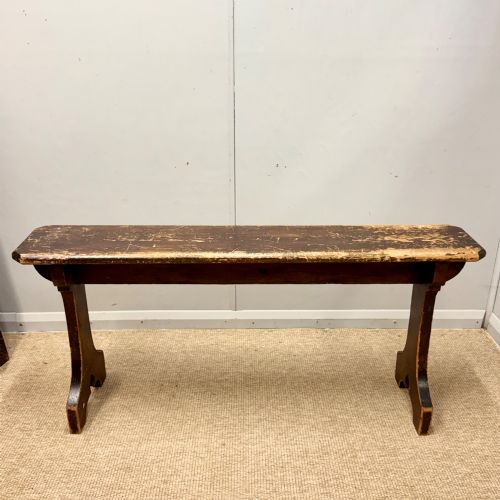
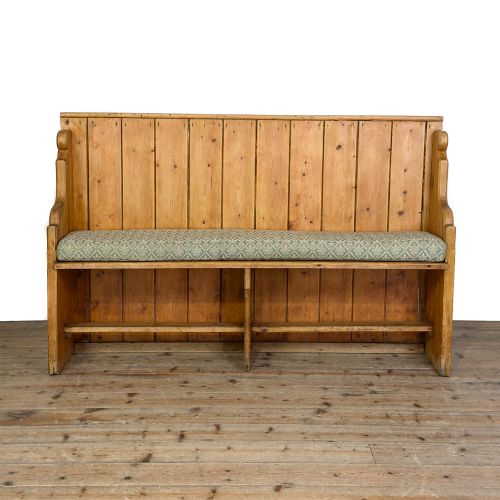
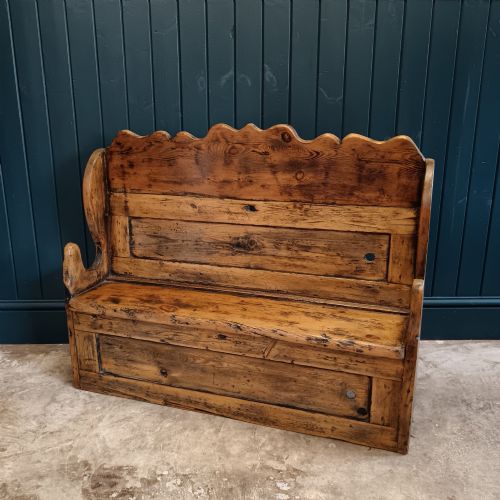
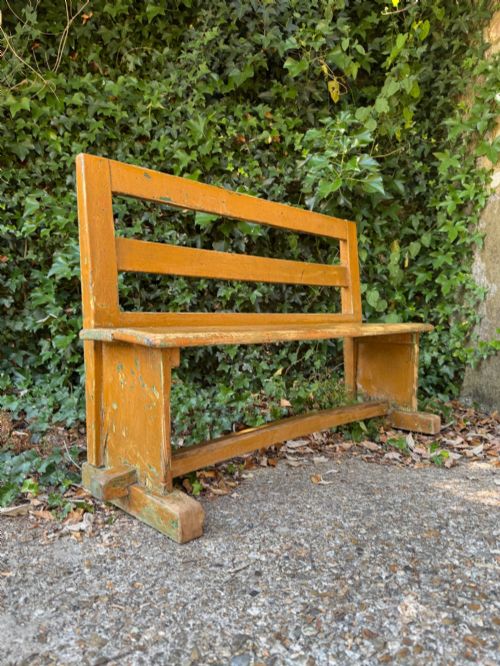
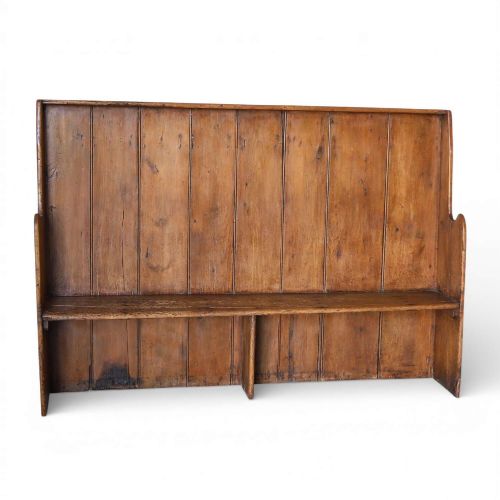
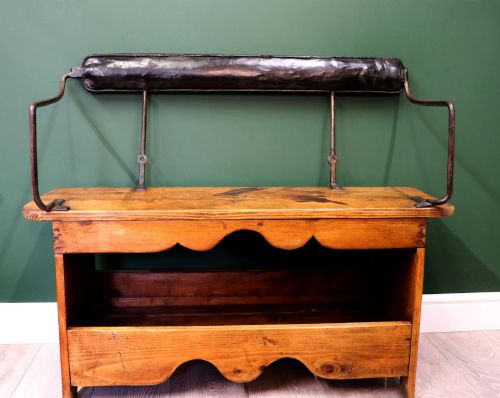
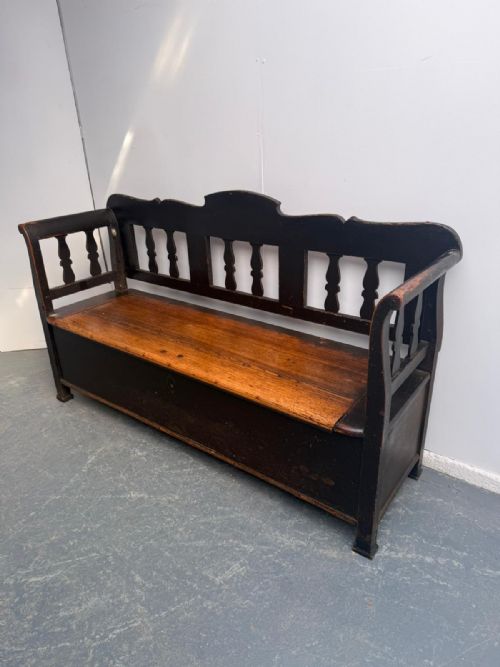
A country pine hallway seat encompasses various forms designed for narrow spaces, including long benches, high-back settles, and box settles that provide hidden storage beneath the seat. These practical items appear in diverse regional styles such as English, Welsh, Hungarian, Swedish, and Austrian, reflecting local vernacular traditions from the eighteenth, nineteenth, and early twentieth centuries.
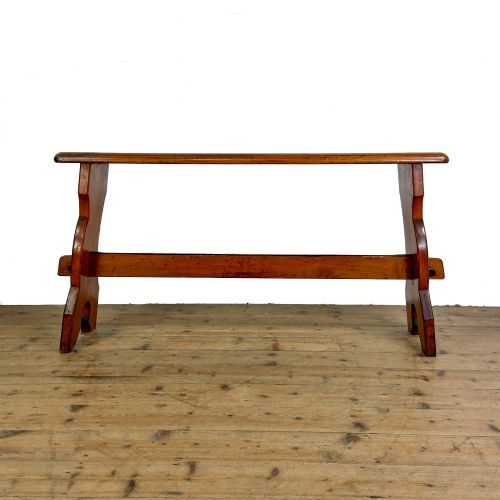
Buyers meet numerous variations on this page, ranging from simple church pews and slender elm-and-pine benches to painted box settles with original coloured finishes. Forms extend from compact two-seater examples to substantial four-seater benches measuring over two metres in width, suiting different hallway proportions.
How they were made
Constructed primarily from solid pine, softwood, pitch pine, and occasionally elm for seating boards, these pieces rely on traditional joinery suited to robust domestic use. Makers built them using durable timber frames, pegged joints, and solid planking designed to withstand daily wear in busy hallways and farmhouses.
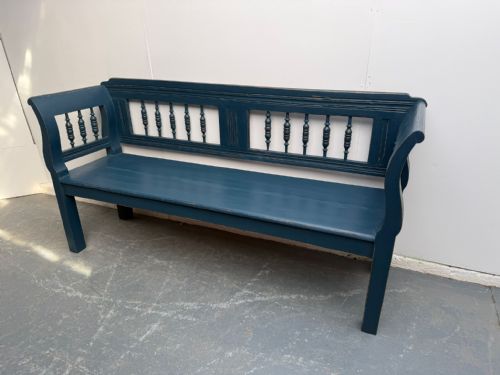
Surfaces receive different treatments according to regional origin and period, including natural waxed finishes that enhance the honey brown patina of the wood, alongside original painted finishes in blue, grey, black, or multi-layered historic colours.
Country Pine Hallway Seat Retail Price Guide 2026
Typical asking prices for country pine hallway seat among the pieces listed under this phrase on Sellingantiques today, from the lower quarter to the upper quarter. They describe what is for sale here now, not the wider market.
Geographic origins represented on this page include England, Wales, Sweden, Hungary, and Austria, showing diverse regional joinery.
What varies in quality
Quality rests primarily in the survival of original surface treatments, such as untouched early painted finishes or deep waxed patinas accumulated over generations of use. Pieces retaining their initial structural integrity, original hardware, and unaltered proportions command greater interest among collectors.
The sophistication of regional vernacular design also sets examples apart, distinguishing utilitarian workshop output from more resolved architectural settles with high panelled backs and integrated storage compartments.
The Country Pine Hallway Seat Glossary
- Settle bench
- A wooden bench featuring a high back to block draughts and solid side arms, often incorporating a box seat for storage. These versatile seats stood near firesides or in hallways across European farmhouses.
- Box settle
- A form of seating where the bench base encloses a lidded storage compartment beneath the seat boards. This design allowed households to store heavy blankets, boots, or dry goods.
- Church pew
- A long, fixed wooden bench traditionally built for ecclesiastical settings, often constructed from heavy pine or softwood. Many later found domestic use in large hallways and passages.
- Patina
- The surface sheen and colour depth developed by timber over long periods of handling, light exposure, and waxing. A desirable patina shows genuine age and honest domestic use.
- Softwood
- Timber derived from conifers, including pine and pitch pine, which served as the primary material for vernacular furniture making. It provided an accessible, workable medium for regional cabinet makers.
Country Pine Hallway Seat: Frequently Asked Questions
Where did country pine hallway seats originate?
These practical seats emerged from rural workshops across Britain and continental Europe, including England, Wales, Sweden, Hungary, and Austria. Local craftsmen built them to serve everyday needs in domestic homes, farmhouses, and churches.
Regional preferences shaped their construction, resulting in distinct forms like the high-backed English tavern settle or the painted box settles typical of Hungarian and Scandinavian traditions.
How do I choose the right size bench for a narrow hall?
Measure the available floor space carefully, noting doorway clearances and radiator positions before selecting a bench. Slender forms and church pews offer minimal depth, making them suitable for restricted passageways.
Consider the length of the piece against your wall dimensions, remembering that larger four-seater models require substantial clearance to avoid dominating the entrance area.
What is the difference between a settle and a standard bench?
A settle incorporates a high wooden back and solid winged arms designed to shield occupants from cold draughts in unheated rooms. Standard benches lack these protective side wings and high backs, offering a more open profile.
Many settles also include a lidded box base for storage, whereas traditional benches feature open underframes or simple legs.
How should I care for an antique pine bench?
Maintain waxed pine surfaces by applying traditional beeswax sparingly to nourish the timber and preserve its natural sheen. Avoid placing wooden furniture near direct heat sources or in strong sunlight, which can cause the pine to dry out or split.
Dust regularly with a soft cloth and handle painted surfaces gently to protect historic finishes from unnecessary wear.
How can I tell if the paint on a settle is original?
Examine the surface for natural wear patterns, minor craquelure, and integration with the underlying timber structure that indicate long-term ageing. Original paint often shows subtle variations in tone and honest abrasions around high-contact areas like armrests and seat edges.
Professional evaluation can help distinguish genuine historic finishes from later decorative overpainting.