
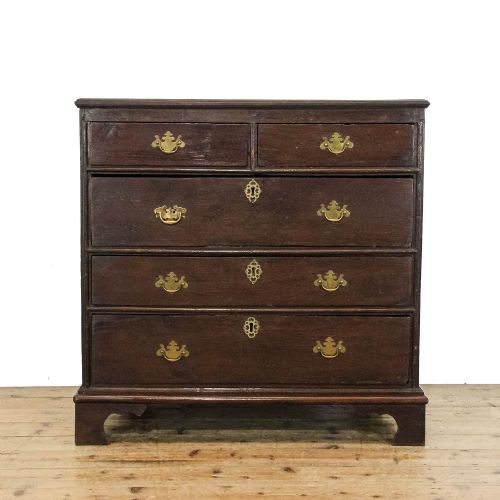
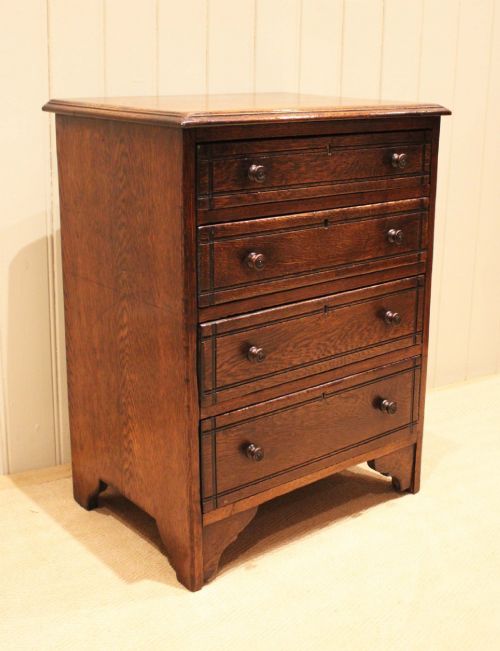
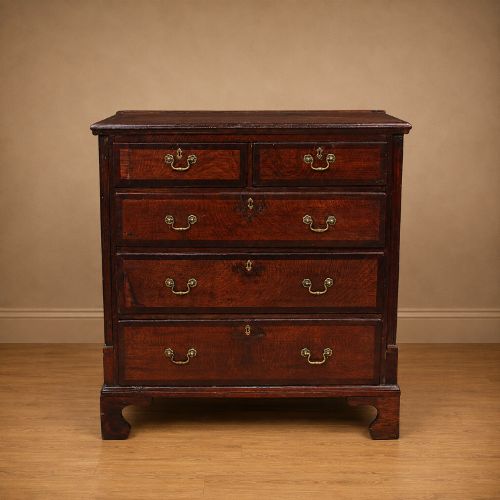
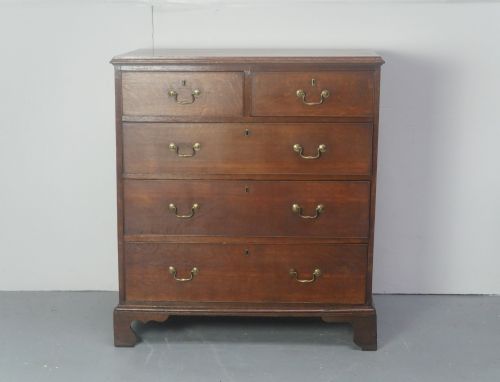

Country Oak Tallboy
A country oak tallboy combines generous vertical storage with the honest grain and warmth of regional cabinet-making.

Country Oak Tallboy
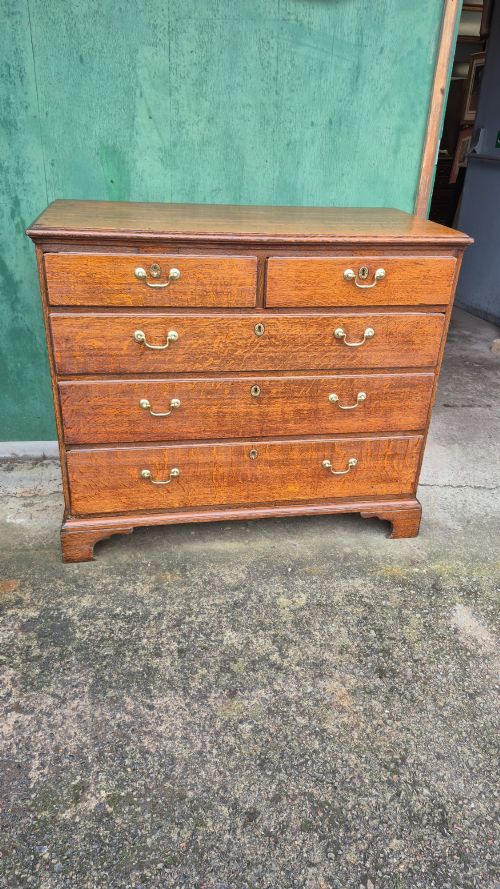
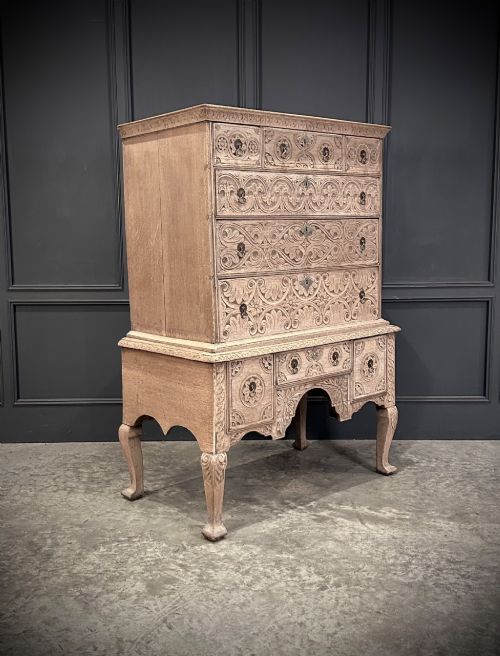
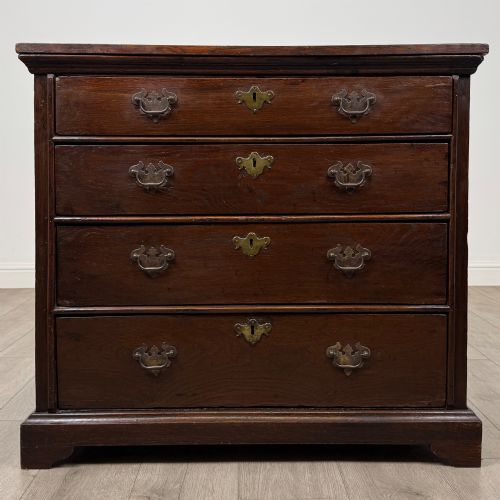
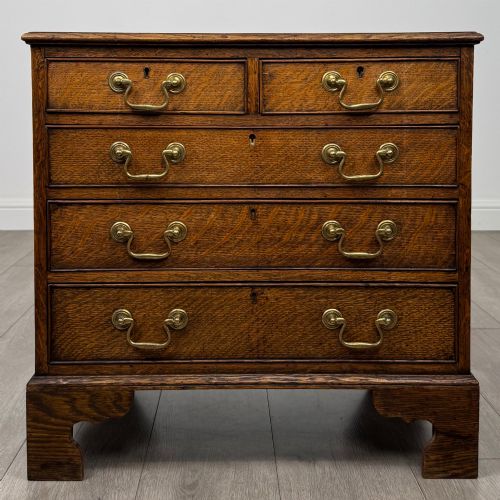
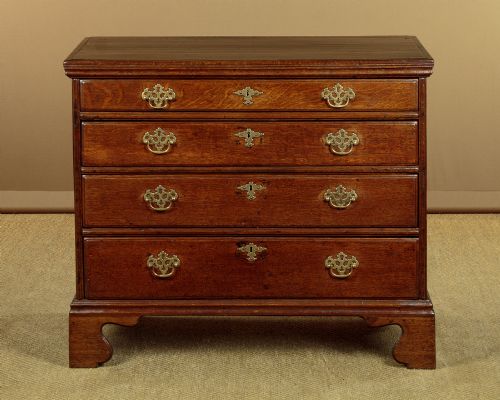
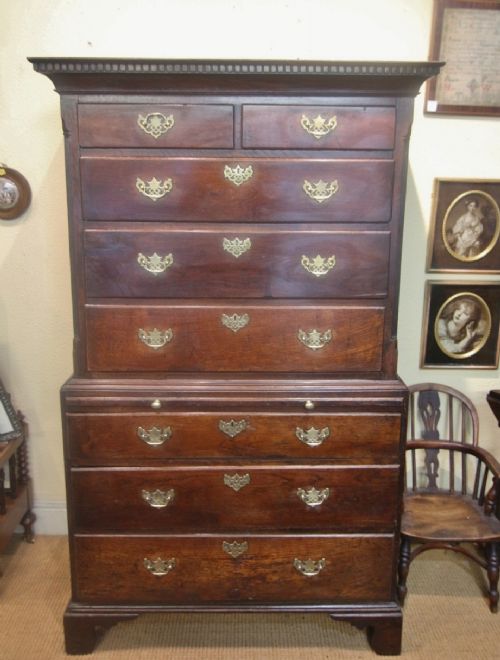
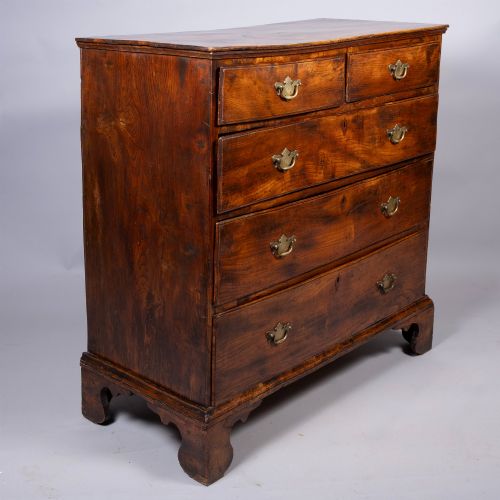
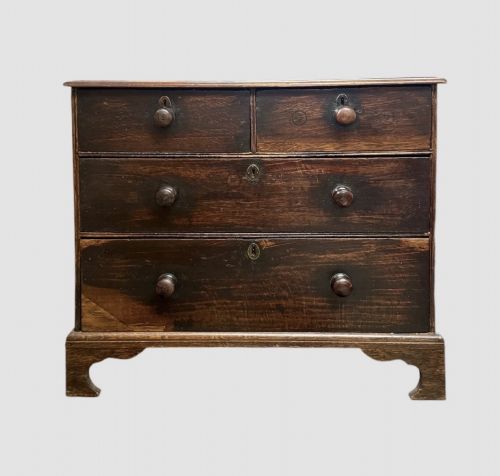
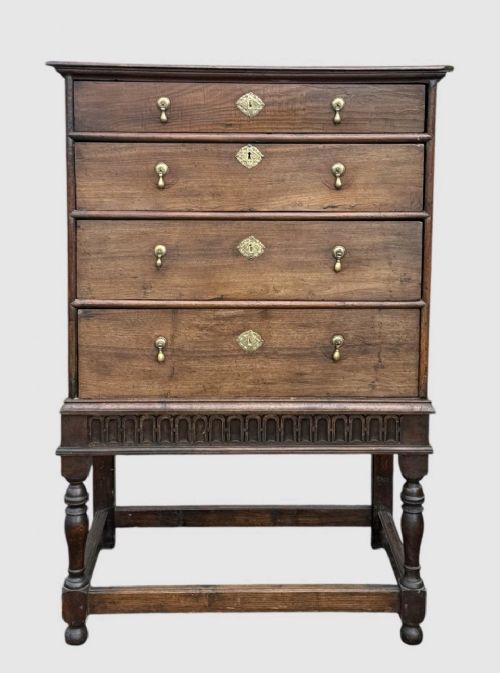
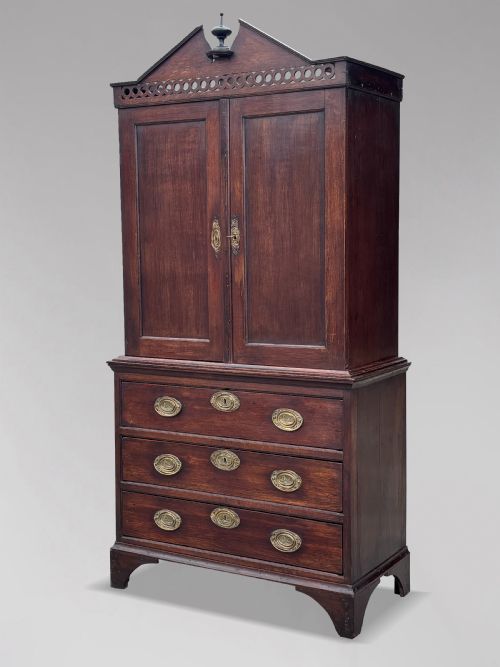
A country oak tallboy represents a commanding category of storage furniture, appearing primarily as chests on chests, linen presses, and multi-drawer carcases originating across the eighteenth and nineteenth centuries. These pieces emerge from both English regional workshops and continental traditions, reflecting practical domestic needs through varying heights and proportions.
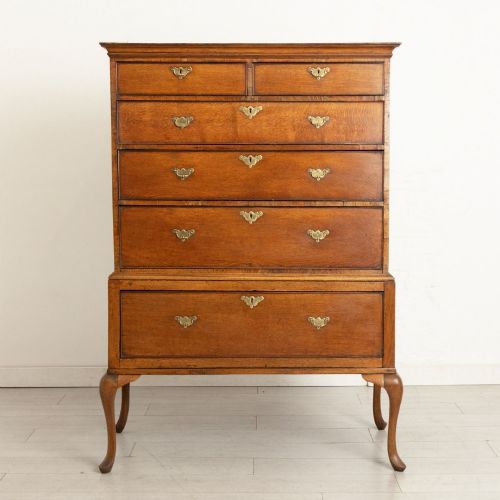
The selections on this page centre heavily on eighteenth-century Georgian examples alongside related nineteenth-century iterations. Buyers frequently encounter standard chests of drawers alongside elevated forms on stands and miniature variants originating from Wales and wider provincial centres.

Materials and Construction
Cabinet-makers relied principally on solid oak, frequently augmented with secondary timbers like elm, yew, and mahogany for crossbanding and panel details. Iron and brass hardware, including drop handles and escutcheons, secure the functional integrity of each drawer and door.
Construction techniques involve traditional joined framing, pegged tenons, and hand-cut dovetails on drawer carcases. Surfaces exhibit the natural effects of time, ranging from bleached patinas to traditional wax finishes and occasional painted treatments.
Country Oak Tallboy Retail Price Guide 2026
Typical asking prices for country oak tallboy among the pieces listed under this phrase on Sellingantiques today, from the lower quarter to the upper quarter. They describe what is for sale here now, not the wider market.
The listings demonstrate a strong presence of eighteenth-century Georgian craftsmanship executed in solid oak, elm, and yew wood.
Judging Quality
The standard of a piece rests in the integrity of its timber selection and the crispness of its surface figure, where rich grain patterns elevate provincial utility into exceptional design. Proportion dictates distinction, rewarding pieces that maintain balanced heights and slender feet without heavy restoration.
Originality of hardware and surface finish determines the upper tiers of the range, distinguishing untouched period patinas from later alterations. Subtle decorative elements such as crossbanding, fielded panels, or inlay mark the work of more ambitious regional makers.
The Country Oak Tallboy Glossary
- Tallboy
- A tall storage piece comprising one chest stacked upon another, or upon a dedicated stand. This form maximises vertical storage capacity while maintaining a smaller floor footprint.
- Chest on stand
- A drawer carcase elevated on an open frame with legs. This configuration provides a lighter visual appearance than a floor-standing chest.
- Linen press
- A tall cupboard featuring upper doors enclosing sliding trays or shelves, positioned above lower drawer storage. These units were designed specifically for household textiles.
- Crossbanding
- A decorative border technique where thin strips of veneer are laid around the edges of drawer fronts so that the grain runs perpendicular to the main panel. This detail adds visual contrast to the primary timber.
- Fielded panel
- A wooden panel with bevelled edges designed to fit within a grooved frame. This construction method allows the timber to expand and contract safely with humidity changes.
Country Oak Tallboy: Frequently Asked Questions
How do I care for a country oak tallboy?
Maintain the timber by applying a microcrystalline wax polish sparingly to nourish the dry grain. Keep the piece away from direct heat sources and dramatic humidity fluctuations to prevent splitting.
Ensure drawers remain lightly lubricated on their runners using bees wax rather than synthetic oils. Clean surfaces simply with a soft, dry cloth to preserve the historic patina.
What is the difference between a tallboy and a chest on chest?
Cabinet terminology often uses these terms interchangeably to describe a tall storage unit built in two stacked sections. Historically, a chest on chest specifically denotes a larger drawer section sitting directly upon a second, wider drawer base.
Tallboys can also refer to single tall carcases or pieces elevated on open stands. Both forms served the same primary bedroom storage function in period homes.
How do I date an oak tallboy?
Examine the construction methods visible inside the drawers and along the backboards for signs of hand tools such as pit saws and early planes. Hand-cut dovetails, rosehead nails, and timber shrinkage patterns typically indicate eighteenth-century origin.
Stylistic cues like restrained mouldings, bracket feet, and brass batwing handles point toward the Georgian era. Later nineteenth-century examples often display machine-sawn elements and standardised fixings.
Where were these pieces made?
Regional workshops across England, Wales, and parts of France produced these practical storage items using locally available timber stocks. Welsh makers frequently turned out distinctive miniature or inlaid variants using native oak.
Provincial cabinet-makers adapted metropolitan London styles to suit rural tastes, resulting in robust furniture with distinct local characteristics.